Unraveling Activity-Induced Hip Pain: Causes, Symptoms, and Solutions for Lasting Comfort

Ever notice how a gentle morning ache in your hip turns into a sharp, nagging pain after a walk, a workout, or even just a long day on your feet? You're not alone. Hip pain that escalates with activity is a common and often frustrating experience. It's like your body is trying to tell you something, but understanding the message can feel incredibly complex.
Here's the truth: your hip isn't just one simple joint. It's a marvel of engineering, a complex ball-and-socket structure supported by a network of muscles, tendons, ligaments, and cartilage. When pain flares up with movement, it often signals that one or more of these components isn't quite happy under the stress of activity. It's not just about "overdoing it"—it's about understanding what specific part is struggling and why.
Think of this article as your friendly guide to decoding those messages. We'll dive into the most common culprits behind activity-induced hip pain, explore their unique warning signs, and empower you to connect your symptoms to what might be happening inside your body.

The Core Categories of Hip Pain: Mechanical, Inflammatory, and Degenerative
Before we pinpoint specific conditions, let's understand the three big categories of hip pain that typically worsen with activity:
- Mechanical Pain: This is often about stress, strain, and overuse. Imagine pulling a muscle, overstretching a ligament, or placing unusual stress on a joint. The pain usually starts during or immediately after a specific movement or activity.
- Inflammatory Pain: Here, the body's immune response kicks in. The area becomes swollen, red, warm, and painful. Inflammatory pain tends to be worse after periods of rest (like first thing in the morning) and can sometimes ease slightly with gentle movement, only to worsen again with increased activity.
- Degenerative Pain: This category refers to the gradual "wear and tear" of tissues over time, primarily cartilage. The pain often progresses slowly, becoming more consistent and severe with activity as the protective cartilage diminishes.
Understanding these distinctions is your first "aha moment" in recognizing your hip pain. Now, let's explore some specific conditions within these categories.
Common Causes: Decoding Your Hip's Distress Signals
When your hip hurts, it's not always a mystery. The location of your pain, the type of sensation, and the activities that make it worse are all vital clues.
1. Bursitis: The Inflamed Cushion
What it is:
Bursae are small, fluid-filled sacs that cushion between bones, tendons, and muscles, reducing friction. The hip has several bursae, with the trochanteric bursa (on the outer hip bone) being the most commonly affected.
How activity worsens it:
Repetitive friction or direct pressure irritates the bursa, causing inflammation. Activities like running, cycling, or even prolonged standing can repeatedly rub tendons over the bursa. Lying on the affected side also puts pressure on it, explaining why pain can be worse at night or after waking.
Typical symptoms & early warning signs:
- Pain Location: Outer hip and thigh, sometimes radiating down the leg.
- Pain Type: Sharp and intense at first, becoming a dull ache. Tenderness to the touch on the outer hip.
- Worsening Activities: Walking, climbing stairs, getting up from a chair, lying on the affected side. You might notice hip pain after walking long distances or when you push off the ground.
- Early Warning Signs: A subtle ache on the side of your hip after exercise, stiffness after sitting, or mild tenderness when you press on your outer hip. You might be wondering how long does bursitis last if you've recently experienced these symptoms.
2. Tendinopathy (Tendonitis): Strained Connections
What it is:
Tendons are tough, fibrous cords that connect muscles to bones. Tendinopathy (often called tendonitis, though tendinopathy is a broader term for chronic tendon issues) means the tendon is inflamed or degenerating due to overuse or improper loading. Common culprits around the hip include the gluteal tendons (outer hip/buttock), hip flexor tendons (front of hip/groin), and hamstring tendons (back of thigh near buttock).
How activity worsens it:
Repetitive motions, sudden increases in activity, or movements that place excessive strain on the tendon can cause micro-tears and inflammation. For example, running puts repeated stress on gluteal tendons, while cycling or sit-ups can strain hip flexors. Poor technique in weightlifting or sports can also overload these tendons.
Typical symptoms & early warning signs:
-
Pain Location: Depending on the affected tendon:
- Gluteal: Outer hip, buttock, sometimes radiating down the side of the thigh.
- Hip Flexor: Front of the hip, groin area.
- Hamstring: Under the buttock, radiating down the back of the thigh.
- Pain Type: Aching, burning, or sharp pain, especially when the affected muscle contracts or is stretched. Often feels stiff in the morning.
- Worsening Activities: Specific movements that engage the affected muscle (e.g., lunging, squatting, running, kicking). You might feel discomfort in your hips when walking or after prolonged standing.
- Early Warning Signs: A mild, localized ache that appears during or just after activity but subsides quickly. Stiffness after resting that improves with movement.
3. Labral Strain/Tear: Damage to the Hip's Seal
What it is:
The labrum is a ring of tough cartilage that lines the rim of the hip socket, deepens it, and creates a suction seal that helps stabilize the joint. A strain or tear in this labrum can be painful and lead to mechanical problems.
How activity worsens it:
Twisting motions, pivoting, deep squatting, or hyperextension of the hip can pinch or tear the labrum. This is particularly common in sports that involve sudden changes in direction (e.g., soccer, hockey) or repetitive hip flexion.
Typical symptoms & early warning signs:
- Pain Location: Often deep in the groin, but can also be in the buttock or side of the hip.
- Pain Type: Sharp, catching, clicking, locking, or giving-way sensation. A dull ache can also be present.
- Worsening Activities: Deep squats, pivoting, running, prolonged sitting, getting in and out of a car.
- Early Warning Signs: Intermittent clicking or catching in the hip that doesn't necessarily hurt at first, or a mild, deep ache in the groin after hip-intensive activities.
4. Early Osteoarthritis (OA): Cartilage Wear
What it is:
Osteoarthritis is a degenerative joint disease where the protective cartilage that cushions the ends of your bones wears down over time. In the hip, this means the cartilage in the ball-and-socket joint becomes rough, thin, or completely gone, leading to bone-on-bone friction.
How activity worsens it:
Weight-bearing and high-impact activities increase the stress on the already compromised joint surfaces, leading to pain. Unlike inflammatory conditions that might ease with initial movement, OA pain often increases the longer you're active.
Typical symptoms & early warning signs:
- Pain Location: Deep in the groin, buttock, or outer hip. Can sometimes radiate down the front of the thigh to the knee.
- Pain Type: Aching, stiffness, grinding sensation. Often worse after activity and after periods of rest (like morning stiffness that lasts less than 30 minutes).
- Worsening Activities: Walking, standing for long periods, climbing stairs, bending, deep squats.
- Early Warning Signs: A subtle stiffness in the hip, especially in the morning or after sitting, that improves with light movement but then returns with prolonged activity. A dull ache in the groin after a long walk. If you're concerned about this, you might explore if is there a brace for hip arthritis.
The Interplay: When One Problem Leads to Another
Remember that these conditions often don't occur in isolation. For example, a weak core or tight hip flexors (mechanical issues) can lead to compensatory movements, putting extra strain on the gluteal tendons (tendinopathy) or irritating the trochanteric bursa (bursitis). Similarly, an arched back can alter hip mechanics, contributing to various hip pains. Understanding these connections helps you see the bigger picture of your body's mechanics. You might want to consider how to fix an arched lower back if you suspect a link.
Symptom Mapping: Connecting Your Experience to Potential Causes
This framework helps you visually connect your unique pain experience to the common causes we just discussed. Use it as a guide to better understand what might be going on, but always remember to consult a healthcare professional for a definitive diagnosis.

When to Seek Professional Help
While understanding your symptoms is a powerful first step, some situations warrant a professional medical evaluation:
- Sudden, severe hip pain after an injury or fall.
- Inability to bear weight on your leg.
- Deformity around the hip joint.
- Hip pain accompanied by fever, chills, or redness.
- Pain that doesn't improve with rest and self-care after a few days.
- Pain that worsens progressively over time.
- New or worsening sciatica hip pain symptoms. If you're experiencing this, you might want to learn how to relieve hip pain from sciatica.
FAQ: Your Common Questions Answered
Q: Why does my hip feel stiff after I sit for a while or wake up, but then it hurts more when I move or become active?
This is a common pattern, often indicating inflammation or early degenerative changes like osteoarthritis. Stiffness after rest (such as in the morning or after prolonged sitting) can signal inflammation or that the joint's lubricating fluid isn't distributing effectively. While gentle movement might help "warm up" the joint and reduce stiffness, continuing excessive or high-impact activity can aggravate already sensitive tissues, leading to increased or sharper pain as the activity continues. This distinction is key to understanding whether your pain is more inflammatory or degenerative, as described in the article.
Q: Is it better to rest completely or try to keep moving when I have hip pain?
Generally, complete and prolonged rest is not the most effective long-term approach for activity-induced hip pain. While severe, acute pain might require a brief rest, extended inactivity can increase stiffness, muscle weakness, and poorer joint function, making the problem worse when you try to resume activity. The recommended strategy is usually modified activity. This means reducing impact, avoiding movements that directly worsen your pain (like deep squats for labral tears or repetitive running for bursitis), and doing gentle, pain-free exercises such as swimming, cycling at low resistance, or walking on soft surfaces. The goal is to maintain hip mobility and strength without overstressing injured or irritated tissues, supporting gradual recovery.
Q: Can my posture or how I stand affect my hip pain and make it worse with activity?
Yes, absolutely. Your posture and biomechanics play a significant role in hip health. Issues like an excessive forward tilt of the pelvis (often called an arched back or swayback), or consistently putting more weight on one leg, can dramatically alter your hip joint's natural mechanics. This imbalance can place undue stress on specific muscles, tendons (potentially leading to tendinopathy), or bursae (contributing to bursitis). Over time, these compensatory movements can worsen existing conditions or even trigger new pain, especially during activities that require proper alignment and muscle engagement. Addressing postural habits is often a critical component of managing and preventing chronic hip pain.
Q: When should I seek professional medical help for my activity-related hip pain?
While understanding your symptoms is valuable, certain warning signs indicate you should consult a healthcare professional. Seek immediate attention if you experience sudden, severe hip pain after an injury or fall, an inability to bear weight on your leg, a visible deformity around the hip joint, or if your hip pain is accompanied by fever, chills, or redness. Additionally, if your pain doesn't improve with rest and self-care after a few days, worsens progressively over time, or if you develop new or worsening sciatica hip pain symptoms, it's crucial to get a professional evaluation for an accurate diagnosis and appropriate treatment plan.
Q: How can I determine if a hip support solution is right for me, and what kind should I look for?
The right hip support depends on the nature of your pain. As the article discusses, if your pain is primarily inflammatory (like bursitis or certain tendinopathies), you might benefit from **compression**. This helps reduce swelling, improve circulation, and provide warmth to soothe irritated tissues. If your pain stems from instability or excessive movement (common with some labral issues or early osteoarthritis where alignment is crucial), **stability** is key. A stability-focused support can gently restrict extreme motions, encourage proper alignment, and reduce strain on vulnerable areas. Knowing whether you need more compression or more stability is the first step in choosing an external support that can make a real difference in managing activity-related hip pain and enabling more comfortable movement.
Beyond Awareness: Matching Support to Your Needs
Understanding why your hip hurts with activity is the crucial first step. The next step is recognizing that different types of hip pain require different kinds of support. Not all hip support is created equal!
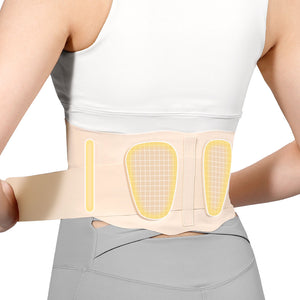
For instance, if your pain is primarily from inflammation (like bursitis or certain tendinopathies), you might benefit from compression. Compression helps reduce swelling, improve blood flow, and provide gentle warmth, which can soothe irritated tissues.
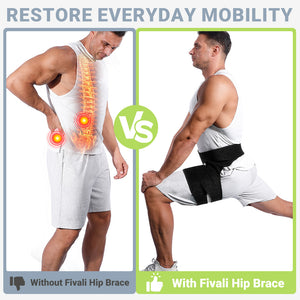
If your pain stems more from a structural instability or excessive movement (like some labral issues or early OA where alignment is key), stability might be what you need. A stability brace can gently restrict extreme movements, support proper alignment, and reduce strain on vulnerable areas.

Making an informed choice about external support, such as a hip brace, can be a game-changer in managing your activity-related hip pain. It's about empowering your body to heal and move more comfortably.
Your Next Step Towards Pain-Free Movement
We hope this deep dive into why your hip pain worsens with activity has given you some valuable "aha moments" and a clearer picture of your own body. Understanding the underlying mechanisms—whether mechanical stress, inflammation, or degenerative changes—is the foundation for effective management.
Ready to explore how specific support can make a difference in your hip health journey? Head over to our comprehensive guide on understanding hip brace design. There, you'll learn more about the different design elements of hip braces and how they specifically address the needs of conditions like those discussed today, helping you match the right support to your exact problem. You can also explore our full range of hip braces to see options for targeted relief. Remember, informed choices lead to better outcomes, and we're here to support your active lifestyle, free from pain.