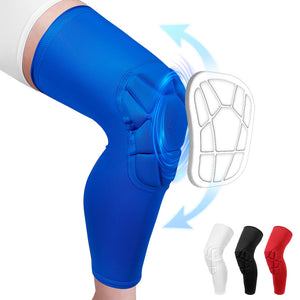
Weightlifting Knee Sleeves
- Black
- Blue
- Green
- Red
- Orange
- Blue
- Dark Blue
- Black
- Blue
- Green
- Red
- Dark Blue
- Grey
- Black
When to Wear Knee Sleeves for Weightlifting?
Knee braces play an important role in weightlifting, protecting and supporting the knee joint in many ways. During high-intensity movements such as squats, knee braces for lifting help share some of the stress on the knee joint, reducing wear and tear and lowering injury risk. In general, here are three situations in which knee braces can be considered:
High-intensity Training: The deep squat is an ace exercise for the lower body and one of the most stressful movements on the knee joints. During high-weight squats, knee braces can provide extra support and protect the knees. Also, when performing the hard pull, you need to rely on your knee joints to contribute to the generation of force. Knee braces can reduce stress on the knee joints during high-load, hard pulls.
Joint instability: For athletes with congenital joint laxity, the best knee sleeves for weightlifting can increase joint stability and reduce the risk of dislocation. For knee ligament injuries, knee braces can provide extra support during rehabilitation.
History of an old joint problem: Even if it has recovered, an old knee injury can benefit from a knee brace during high-intensity training to provide additional protection and help limit joint over-movement, preventing a recurrence. For athletes with chronic knee injuries, such as cartilage and meniscus injuries, knee braces can reduce joint pain and improve training comfort.
In short, for people with a history of joint injuries, wearing knee braces during weightlifting is an important protective measure. Be sure to choose and use knee braces properly. Most importantly, while wearing knee braces, strengthen the muscles around the knee joint to improve stability.
Knee Sleeves VS Knee Wraps for Weightlifting?
Both knee sleeves and knee wraps are common pieces of assistive equipment in weightlifting, playing important roles in protecting the knee joint and improving strength and stability. Although both protect the athlete, they serve different functions and have different applications.
Knee Sleeves
Knee sleeves are made of neoprene and are typically very compressive and difficult to put on. The main idea behind using knee sleeves is to protect your knees from potential injuries when performing heavy squats or other exercises that involve knee flexion. The best knee compression sleeve for weightlifting helps by providing compression, increasing blood flow, and reducing joint swelling or pain during or after training sessions. In addition to compression, knee sleeves can improve exercise mechanics by limiting knee movement and providing greater stability.
Knee Wraps
Strength athletes often wear knee wraps because they offer major benefits, especially for squats. Knee wraps are made of the same elastic material as knee sleeves and are designed to be wrapped around the knee to provide support without blocking blood flow. During squats, knee wraps can be extremely helpful because, as the athlete goes down, the wraps store elastic energy that releases as the athlete rises, resulting in faster, heavier squats. Along with that, knee wraps can prevent injuries, as they’re believed to help reduce the stress on the quadriceps muscle that’s attached to the kneecap.
There is no definitive answer in the knee sleeve vs. knee wrap debate. Knee sleeves are for general recreational training, while knee wraps are for more specialized, heavy strength training and other explosive sports. It can boil down to personal preference, fitness goals, and individual needs. The key is to listen to your body, whether you choose the strong support of knee sleeves or the versatile comfort of knee wraps.