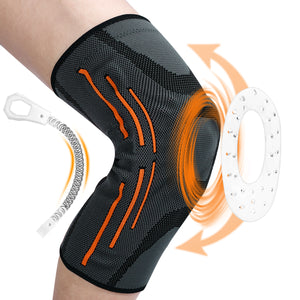
Patella Stabilizing Brace
- Black
- Green
- Orange
- Pink
- Black
- Blue
- Green
- Red
- Orange
- Blue
- Dark Blue
- Black
- White
- Red
- Blue
- Black
- Blue
- Green
- Red
- Dark Blue
- Grey
- Black
- Blue
- Pink
- Grey
- Black
- White
- Light Black
- Black
- Light Grey
- Grey
- Magenta
- Black
Why Won't My Patellar Tendonitis Go Away?
If you are struggling to recover from patellar tendonitis—commonly known as jumper's knee—you might be wondering why that nagging pain at the front of your kneecap persists despite your best efforts to rest. You are not alone. Many people deal with stubborn, chronic knee pain that seems to linger for months. Understanding the root causes of this condition's notorious difficulty to shake is the first step toward finally getting back to your favorite activities.
Understanding the Factors Behind Ongoing Symptoms
When your knee pain refuses to subside, it usually comes down to a combination of daily physical stressors and the biological nature of your tendons.
The Impact of Biomechanical Loading
Every time you take a step, your knees absorb the impact of your body weight. Activities that demand repetitive jumping, heavy lifting, or deep bending place immense, localized stress on the patellar tendon. However, ongoing symptoms aren't limited to athletes. Poor biomechanics, inadequate warm-up routines, or unsupportive footwear can significantly exacerbate the condition in everyday life.
Furthermore, if your job or daily routine requires you to stand on hard surfaces for extended periods, muscle fatigue naturally sets in. This physical exhaustion often alters your normal gait, unintentionally forcing your knee joint to absorb excessive shock and strain throughout the day.
The Body's Slow Tendon Healing Process
One of the primary reasons your patellar tendonitis won't go away boils down to basic human biology. Tendons naturally heal at a much slower pace than muscles because they possess a highly limited blood supply.
If you repeatedly stress the tendon without adequate rest and recovery, the initial inflammation may not subside, preventing you from returning to normal activity. Over time, what started as acute tendonitis can progress to chronic tendinopathy—a condition characterized by cellular degeneration of the tendon. Once tendon degeneration occurs, your knee's structural integrity is compromised, making full recovery significantly more challenging and time-consuming.
How to Treat Patellar Tendonitis Effectively
Relieving chronic knee pain requires a strategic, multifaceted approach that addresses both immediate pain relief and long-term joint health.
The Benefits of Targeted Knee Support
When dealing with relentless knee discomfort, modifying how weight and pressure are distributed across your joint is crucial. An incredibly effective tool for managing these daily stressors is a patella-stabilizing brace. This specialized support is designed to comfortably hug the knee, helping securely stabilize the patella and significantly reduce mechanical strain on the vulnerable tendon during movement.
By reducing direct downward pressure and promoting proper joint alignment, a patella-stabilizing brace can improve daily comfort while creating an optimal, protected environment for tissue healing. Paired with targeted rehabilitation exercises, it becomes a valuable cornerstone of a holistic treatment plan.
Building a Comprehensive Rehabilitation Plan
Relying on just one method rarely cures chronic jumper's knee. A comprehensive approach is absolutely essential to overcome the injury for good. In the early stages of a flare-up, utilizing active rest and localized ice application can help manage swelling and sharp pain.
However, the key to lasting recovery is dedicated physical therapy. A strong rehabilitation routine should focus heavily on strengthening the surrounding muscle groups, particularly the quadriceps, hamstrings, and glutes, allowing these muscles to absorb daily impact rather than your tendons. Eccentric strengthening exercises—where the muscle lengthens under tension—are highly proven to aid tendon recovery. Additionally, incorporating daily stretching routines will drastically improve your lower-body flexibility, ultimately reducing pulling strain on your kneecap during high-impact activities and preventing future injuries.