Compression vs Stabilization vs Leg‑Wrap Designs: What Each Feature Actually Does to Nerve‑Related Pain

As summer officially kicks off and we start preparing for outdoor adventures, family barbecues, and Fourth of July celebrations, the last thing anyone wants is to be sidelined by unpredictable nerve pain. If you have ever felt that sudden, shocking jolt radiating down your leg, or a constant dull, burning ache in your lower back, you know how quickly it can ruin your plans.
When you start searching for relief, you are immediately bombarded with different types of supports, belts, sleeves, and wraps. It's incredibly frustrating to guess which one might actually help your specific situation. Many people find themselves wondering, do sciatic nerve leg braces work, or are they just a gimmick?
The truth is, they do work—but only if you match the correct design feature to the specific mechanical problem causing your pain. Nerve pain is not a one-size-fits-all issue, and neither is the solution.
To find real relief, you don't need a medical degree. You just need to understand the basic mechanics behind three core design features: Targeted Compression, Stabilization, and Leg-Wraps. By the end of this guide, you will experience an "aha" moment, finally understanding exactly which feature is built to target your unique symptoms.
The Foundation: Why Does the Nerve Hurt?
Before we look at the solutions, let's briefly look at the problem. Nerve pain, like sciatica, usually happens for one of three reasons:
- Inflammation: Surrounding tissues swell up and physically squeeze the nerve.
- Excessive Movement: Unstable joints (like in your lower back or pelvis) move too much, rubbing against or pinching the nerve.
- Friction and Tugging: As you walk, the nerve doesn't glide smoothly through your muscles, getting caught and stretched like a tight rubber band.
Let's break down how different design features tackle each of these specific problems.
Deep Dive: How Different Designs Defeat Nerve Pain
Targeted Compression: The Swelling Reducer
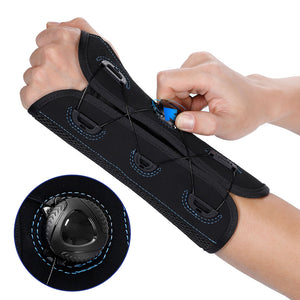
When we talk about targeted compression, we are talking about localized, strategic pressure applied over a specific area.
How it mechanically works: Imagine a swollen, irritated muscle pressing directly onto a nerve. Targeted compression acts like a gentle but firm hand pressing down on that area. This consistent pressure helps push excess fluid out of the inflamed tissues, physically creating more breathing room for the trapped nerve.
Furthermore, compression offers something called "proprioceptive relief." Proprioception is your brain's awareness of where your body is in space. When you wear a compression pad, it sends continuous sensory signals to your brain. This flood of feeling effectively distracts your nervous system, acting like a roadblock that stops pain signals from reaching your brain as intensely.
Best for these symptoms:
- Dull, throbbing aches in a specific spot
- Numbness or tingling that feels like your leg is "falling asleep"
- Pain associated with localized muscle knots
If you're using this method, a common question is how tight should a supportive band feel? It should feel like a firm, reassuring hug—snug enough to stay in place and provide feedback, but never so tight that it cuts off your circulation or worsens the tingling. A basic knee brace for nerve pain often utilizes this gentle compression principle to help soothe localized discomfort around the joint.
Stabilization: The Motion Restrictor
While compression squeezes, stabilization holds. Stabilization designs are built with rigid or semi-rigid elements that physically prevent unwanted, excessive joint movement.
How it mechanically works:Your sciatic nerve runs right through the busy intersection of your lower back, sacroiliac (SI) joint, and pelvis. If these joints are unstable—meaning they wobble or shift more than they should when you bend or twist—they can pinch the nerve with every step.
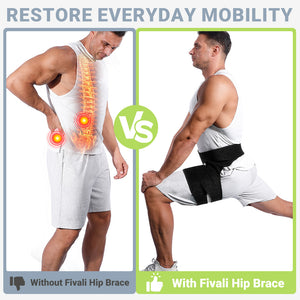
A hip stabilizer brace or a stabilization belt acts like external ligaments. By binding the pelvis or lower back together, it restricts that harmful microscopic twisting and shifting. When the joint stays perfectly aligned, the nerve is protected from sudden pinches.
Best for these symptoms:
- Sharp, breath-catching pain when you bend over, stand up, or twist
- A feeling of "giving out" in your lower back or hip
- Pain that is triggered instantly by a specific movement
Extended Leg-Wraps: The Nerve Glide Controller
This is often the most misunderstood feature, yet it's incredibly effective for classic sciatica. Leg-wraps extend down the thigh, rather than just sitting around the waist or a single joint.
How it mechanically works:Nerves are not static wires; they are meant to slide smoothly (glide) through the tunnels of your muscles and tissues as you move. If you walk with a slight outward or inward rotation of your thigh bone (called femoral rotation), it can pull the sciatic nerve out of its normal path. This creates immense friction.
A sciatica leg wrap anchors at the waist or hip and wraps down around the thigh. This extended design provides gentle directional guidance to your leg, controlling that femoral rotation. By keeping your leg moving in a straight, biomechanically correct line, the wrap ensures the nerve glides smoothly without catching, stretching, or rubbing against tight muscles.
Best for these symptoms:
- Shooting, electric pain that travels from the buttock all the way down the back of the thigh
- Pain that flares up specifically when taking long strides or walking
- The sensation of a tight string being pulled down your leg
The Symptom-to-Feature Decision Framework
Now that you understand the mechanics, choosing the right tool becomes incredibly intuitive. Ask yourself: What does my pain feel like, and when does it happen?
- If you feel a localized, throbbing ache and swelling… You likely need Targeted Compression to push out inflammation and soothe the sensory nerves.
- If you feel a sharp, pinching stab when you bend or shift your weight… You likely need Stabilization to stop the joint from pinching the nerve pathway.
- If you feel a traveling, pulling line of fire when you walk… You likely need a Leg-Wrap Design to control your leg rotation and restore a healthy nerve glide.

Frequently Asked Questions for Beginners
Is tighter always better for nerve pain?
Absolutely not. This is one of the most common mistakes people make. Over-tightening a wrap or band can actually compress the nerve more, making symptoms like tingling and numbness worse. You are looking for a snug, supportive fit—not a tourniquet.
Can I wear these supports all day?
While it depends on the specific design, it is generally recommended to wear external supports during periods of activity that trigger your pain (like walking, working out, or doing yard work). Giving your body a break while resting allows your own muscles to engage and maintain their natural strength.
Are these designs a permanent cure?
External features like compression, stabilization, and leg-wraps are phenomenal tools for managing pain, reducing inflammation, and preventing further irritation so your body can heal. However, they are most effective when paired with a holistic approach, including gentle stretching, posture correction, and strengthening the surrounding muscles.
Next Steps on Your Journey to Relief
Understanding the "why" behind your pain is the most empowering step you can take toward a pain-free lifestyle. You no longer have to guess which design will help you get back to enjoying your summer.
Take a moment to analyze your specific symptoms. Is it a dull ache needing compression, a sharp pinch requiring stabilization, or a traveling pain that requires a wrap to correct your nerve glide? By matching your symptom to the right biomechanical feature, you can move forward with confidence, keeping your body active, healthy, and ready for whatever adventure comes next.