Hip Pain Relief: Does a Hip Support Work for Sciatica or Muscle Strain?

With Memorial Day weekend kicking off the summer season, your mind is likely filled with plans for backyard barbecues, morning jogs, and maybe even a friendly game of beach volleyball. But what happens when a nagging, deep ache in your hip area threatens to put a damper on the fun? The first question that pops into your head is probably, "Did I pull a muscle?"
It’s a common scenario, and you’re not alone in your confusion. The pain could be a simple hip flexor strain from a bit of overexertion. Or, it could be the great impostor of the musculoskeletal world: sciatica. Choosing the right support starts with understanding what you’re truly dealing with, because a brace designed for a muscle strain works very differently from one intended to help with nerve pain.
This guide will help you decode your symptoms, understand the biomechanics behind hip supports, and figure out if a hip flexor brace is the right tool to get you back to enjoying your active life.

Decoding Your Discomfort: Hip Flexor Pain vs. Sciatica
Before you can find a solution, you need to understand the problem. While both can cause pain in the same general vicinity, their origins are worlds apart.
What Are Your Hip Flexors?
Think of your hip flexors as the engine that powers your legs forward. This group of muscles, including the iliopsoas and rectus femoris, is located at the front of your hip. They are responsible for lifting your knees toward your chest and bending at the waist. When you strain these muscles through overuse or a sudden movement, you get localized pain right in the front of your hip or groin area.
What is Sciatica, Really?
Sciatica isn't a condition itself, but rather a symptom of a problem in your lower back. It refers to pain that radiates along the path of the sciatic nerve, which branches from your lower back, through your hips and buttocks, and down each leg. The cause is typically a herniated disk, bone spur on the spine, or narrowing of the spine (spinal stenosis) that compresses part of the nerve. The key takeaway? True sciatica starts in the back, even if you feel it in your hip or leg.

How Hip Flexor Braces Work for Muscle-Related Pain
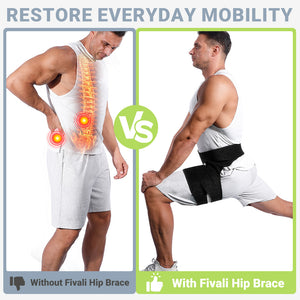
So, what happens when you strap on a hip flexor brace for a strained muscle? These braces are designed to provide direct, targeted relief to the muscle tissue itself. For people asking do hip supports work for this type of injury, the answer often lies in three key mechanisms:
- Compression: Gentle, consistent pressure helps reduce swelling and inflammation in the injured muscle. This pressure also enhances proprioception—your brain's awareness of your body's position—which can help prevent movements that might cause further injury.
- Support and Stability: A brace provides structural support, limiting the range of motion just enough to prevent the muscle from overstretching while it heals.
- Therapeutic Warmth: Many braces are made from materials that retain body heat, which increases blood flow to the area. This boost in circulation can speed up the healing process by delivering more oxygen and nutrients to the damaged tissues.
The Big Question: Can a Hip Brace Help with Sciatica?
This is where things get interesting. While a hip flexor brace cannot fix the root cause of sciatica (like a herniated disc), it can sometimes provide incidental relief. It’s not treating the nerve, but rather the biomechanical issues that may be aggravating it.
The Indirect Connection: How Support Can Help
A hip brace may help reduce sciatic-like discomfort by addressing underlying postural and movement issues.
- Improving Pelvic Alignment: An unstable pelvis or poor posture can place extra stress on the lower back, potentially worsening nerve irritation. This is especially true if you have an excessive arch in your back, which is often linked to anterior pelvic tilt. A hip brace can provide gentle compression and support to the sacroiliac (SI) joint, promoting better pelvic stability and taking some pressure off the lumbar spine.
- Reducing Compensatory Movements: When you have pain, you instinctively change how you walk and move to avoid it. This "compensatory movement" can lead to muscle imbalances and strain on your lower back, further irritating the sciatic nerve. A brace can offer a sense of security, encouraging a more natural gait and reducing this harmful compensation.
When a Hip Flexor Brace is Unlikely to Help
It's crucial to set realistic expectations. If your sciatica is caused by significant nerve compression from a structural issue in your spine, a hip brace is merely a supportive tool, not a cure. It will not decompress the nerve root. In these cases, the brace might offer a small degree of comfort by stabilizing your posture, but it won't resolve the underlying problem.

Frequently Asked Questions About Hip Supports and Pain
How long should I wear a hip flexor brace?
For an acute muscle strain, it's often worn during activity and for periods afterward to manage inflammation. For chronic issues or postural support, you might wear it for a few hours a day. It's best to follow the advice of a healthcare professional and avoid becoming overly reliant on the support.
Can I sleep with a hip brace on?
Generally, it's not recommended unless specifically advised by a doctor. Your muscles need time to rest and recover without constant compression.
Will a hip support make my muscles weaker?
This is a common concern. While prolonged, uninterrupted use without complementary exercises could potentially lead to muscle dependency, using a hip support strategically—during activities that cause pain or for short-term assistance—is unlikely to cause significant weakening. The goal is to use the support to stay active, which keeps your muscles strong.
When should I see a doctor for hip pain?
You should always consult a doctor if you experience numbness, weakness, or tingling in your leg; if the pain is severe and doesn't improve with rest; or if you have trouble controlling your bladder or bowels. These can be signs of a more serious condition that needs immediate medical attention.
Your Next Steps to a Pain-Free Summer
Now that you can better differentiate between hip flexor pain and sciatica, you can make a more informed decision.
- If your symptoms point to a hip flexor strain, a support designed for compression and muscular assistance is an excellent choice to aid your recovery and prevent re-injury.
- If your symptoms align more with sciatica, focus on your posture and lower back health. Poor posture like a sway back can put constant strain on the lumbar spine. While a brace can offer temporary postural cues, combining it with core strengthening and stretching is key. In some cases, a targeted thigh compression sleeve for sciatica pain can help ease the muscular discomfort in the leg that comes with nerve irritation.
Ultimately, finding the right hip support starts with understanding your body's signals. Don't let pain sideline you as summer begins. By identifying the true source of your discomfort, you can choose the right support, get back on your feet, and enjoy every sunny moment.