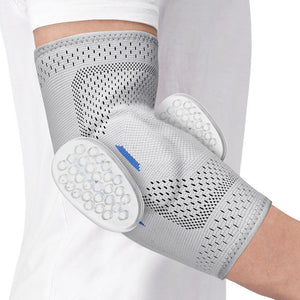
When to Wear a Compression Sleeve for Tennis Elbow

For veteran tennis players who have spent decades perfecting their strokes, lateral epicondylitis can be a frustrating roadblock. Managing this nagging arm condition requires knowing exactly when to utilize gear like a tennis elbow brace and when to give the arm a break. Experience shows that a compression sleeve is most useful during activity, in early recovery to reduce swelling, and as part of a daytime management strategy—with several crucial caveats.
Quick TL,DR
- When to wear: During play or practice, for daily activities that irritate the elbow, throughout early post-injury recovery, and occasionally during sleep (only if comfortable).
- When not to rely on it: It is not a magical cure. Severe or progressive symptoms require professional evaluation rather than just masking the pain.
- Pair with: Targeted strengthening exercises, adequate rest periods, icing routines, and optionally a counterforce strap for heavy load bearing.

What is “Tennis Elbow” and Why Supports Help
Lateral epicondylitis is essentially a tendon overload condition. It causes sharp or aching pain right where the forearm muscles attach to the bony bump on the outer elbow.
This tendon stress is triggered by common motions both on and off the court. Late backhands, tightly gripping the racquet, lifting heavy boxes, and repetitive gardening tasks can all provoke flare-ups.
Adding a tennis elbow support helps mitigate this pain significantly. A sleeve provides gentle, continuous compression that boosts localized circulation and traps natural body heat. It also helps redistribute pressure across the forearm muscles while subtly limiting the painful micro-movements that irritate the tendon.
A Senior-Player Perspective: Many seasoned players reach for a sleeve primarily for the comfort and warmth it provides. Keeping the joint warm reduces stiffness, making it much easier to step onto the court and maintain a fluid swing.
Types of Elbow Supports — Where Compression Sleeves Fit
Knowing exactly what gear is available helps in selecting the right tool for the job.
- Compression Sleeves (Full sleeve, open/closed elbow designs): These offer gentle, continuous compression and warmth. They are highly comfortable, fit easily under clothing, and enhance local circulation. The main limitation is that they provide less targeted offloading than specialized straps.
- Counterforce/Forearm Strap: A narrower band designed to apply precise pressure over the forearm muscle belly, absorbing shock before it reaches the tendon.
- Combining Sleeves and Straps: Many players find success wearing a sleeve for overall warmth and layering a strap on top for targeted tendon relief during heavy play.
- Padded Guards, Rigid Braces, and Night Splints: Guards offer impact protection, rigid braces restrict joint movement entirely for severe injuries, and night splints keep the arm straight to prevent nerve pinching during sleep.
- Design Elements: Extra-short, medium, and long lengths serve different purposes. Materials range from heat-retaining neoprene to highly breathable knits, often featuring internal silicone padding for extra massage effects.
A Senior-Player Tip: A lightweight, breathable sleeve is ideal for long, grueling matches in the sun, while a thicker neoprene sleeve offers excellent soothing warmth for at-home recovery on rest days.
Primary Question — When to Wear a Compression Sleeve for Tennis Elbow
During Play and Practice
Wearing a sleeve on the court provides immediate pain relief and helps reduce joint irritation during repetitive strokes. It can allow a player to keep rallying with reduced pain. However, caution is required—feeling less pain shouldn't be an excuse to overplay and cause further hidden damage.
During Daily Activities That Provoke Symptoms
Off the court, activities like gardening, lifting groceries, or repetitive typing can trigger symptoms. Wearing the sleeve during these specific chores prevents unwanted flare-ups.
Early Recovery and Rehab Phase
During the initial healing phase, wearing a sleeve helps control swelling. It also provides warmth and proprioceptive feedback (body awareness) while performing daily rehabilitation exercises.
Post-Activity (Short-Term) Use
Slipping the sleeve on immediately after a rigorous match for 20 to 60 minutes can successfully limit post-activity swelling and soothe the inevitable ache.
Nighttime Use
Nighttime wear is strictly case-by-case. It is only appropriate if the sleeve is completely comfortable and not overly tight. While the extra warmth helps some players avoid morning stiffness, it can disrupt sleep or cause circulation issues for others.
When NOT to Wear It
If there is severe numbness, pins-and-needles sensations, marked weakness, or swelling that continues to worsen, take the sleeve off immediately and seek a professional evaluation. Avoid wearing a highly restrictive sleeve continuously for many hours without giving the skin and blood vessels a break.
Practical Timing and Duration Guidelines
Simple Wear Schedules
- Match/Practice Routine: Put the sleeve on during the warm-up, wear it throughout the entire session, and remove it within 30 to 60 minutes after leaving the court (unless the lingering warmth is needed for comfort).
- Flare-Up Day Routine: Wear the sleeve during all aggravating daily activities. Remove it frequently for forearm stretches and icing sessions.
- Rehab Phase Routine: Wear it during targeted exercise sessions and light daily tasks, but avoid full-time, 24/7 immobilization.
Gradual Weaning Plan
As the tendon heals, avoid becoming completely dependent on the sleeve. Gradually reduce wear time—first taking it off for daily tasks, then during light practice hits, until it is no longer required for a full match.
A Senior-Player Example Week: On a heavy practice Monday, the sleeve goes on before stepping onto the court and stays on for an hour post-practice. On a rest Tuesday, the sleeve is left in the gym bag entirely to let the arm move naturally.
How to Fit and Position a Compression Sleeve Correctly
Measuring and Sizing
An effective fit starts with measuring the forearm and elbow circumference accurately. Check the manufacturer sizing chart to select the correct sleeve length and width.
Positioning
Determine if the sleeve has an open elbow joint or a full-cover design. The reinforced compression zones or silicone pads should sit securely over the lateral epicondyle (the outer bump of the elbow) and the upper forearm muscle.
Tightness Guide
The fabric should feel snug enough to offer noticeable support but never so tight that it cuts off circulation, leaves deep skin indentations, or causes numbness in the fingers.
Combining with a Forearm Strap
When utilizing a dual approach, use a tennis elbow support brace combination by sliding the compression sleeve on first for base comfort, then securing the counterforce strap directly over the sleeve for targeted tendon pressure.
Common Mistakes
Avoid placing the sleeve too high on the bicep or too low on the wrist. Buying a size too small under the assumption that "tighter equals better" is a frequent error that restricts necessary blood flow.
Choosing the Right Sleeve: Features to Prioritize
Material and Breathability
Select breathable knit fabrics for active, sweaty use to avoid skin irritation. Save the thicker, heat-retaining materials for colder climates or sedentary recovery.
Thickness and Padding
There is a distinct trade-off between cushioning and mobility. Thicker sleeves with heavy silicone pads provide robust protection but can feel bulky during a fluid tennis swing.
Compression Level and Length
Extra-short sleeves target just the upper forearm, while long sleeves provide secondary support to the bicep and lower forearm. Choose the length that addresses your specific pain radiation.
Adjustability and Anti-Slip Features
Look for sleeves with internal silicone grip bands at the top hem to prevent the fabric from sliding down the arm during overhead serves.
Durability and Washability
An elbow support for tennis elbow absorbs a lot of sweat. Ensure the material can withstand frequent hand washing without losing its elasticity.
Buying Tip
Consider purchasing a compression sleeve for overall prevention and warmth, and a separate counterforce strap for targeted offloading during high-intensity matches.
Using the Sleeve Alongside Other Treatments (Holistic Approach)
Rest and Activity Modification
Gear alone cannot out-work overtraining. Know when to back off serving volume and reduce court time to allow the tendon fibers to heal.
Icing and Heat
Apply ice to manage acute, sharp pain and post-match inflammation. Use heat—or the natural warmth of a sleeve—to alleviate morning stiffness before warming up.
Exercises and Physiotherapy
Rehabilitation is non-negotiable. Incorporate eccentric wrist extensor exercises, overall grip strengthening, and forearm mobility drills into a daily routine.
Pain Meds and Injections
When over-the-counter anti-inflammatories are insufficient, consult a specialist regarding potential cortisone or PRP injections.
When Surgery or Specialist Referral is Considered
If severe pain and functional deficits persist beyond 3 to 6 months despite conservative management, it is time to seek a surgical consultation.
A Senior-Player Perspective: The ultimate winning combination often involves wearing a breathable sleeve for daily warmth, adding a rigid strap on heavy match days, and strictly executing an eccentric exercise program every evening.
Safety, Red Flags and Contraindications
Red Flags
Stop using the sleeve and see a clinician immediately if you experience progressive grip weakness, severe and rapid swelling, complete loss of joint function, or pain that begins spreading up into the shoulder or down into the fingers.
Skin Issues
Prolonged use can cause skin irritation, contact dermatitis, or pressure sores. Rotate wear times, take frequent breaks, and always opt for highly breathable, moisture-wicking materials.
Nerve Symptoms
Any tingling, numbness, or "falling asleep" sensations in the hand indicate the sleeve is compressing a nerve or blood vessel. Adjust the fit, size up, or stop wearing it entirely and seek a professional opinion.
Care and Maintenance
How to Wash
Always hand wash the sleeve using mild soap and cold or lukewarm water. Let it air dry completely. Never put compression gear in a hot dryer, as high heat quickly destroys the elastic fibers.
When to Replace
Replace the sleeve when it starts sliding down the arm easily, the fabric looks overly stretched, or it no longer provides a firm, supportive feeling.
Storage and Travel Tips
For active tournament players, keep the sleeve in a breathable mesh pouch inside the tennis bag so it can air out between matches rather than locking in moisture.
Alternatives and When to Choose Them
Counterforce Strap
Choose this when dealing with sharp, specific pain during heavy load bearing, as it effectively offloads the tendon origin.
Rigid Support
Opt for a rigid brace if dealing with profound joint instability or a severe, acute sprain that requires total immobilization.
Night Splints
These are chosen specifically for nerve entrapment issues (like cubital tunnel syndrome) to prevent the elbow from bending excessively during sleep.
Lifestyle and Technique Fixes
No sleeve can fix poor mechanics. Lowering racquet string tension, changing to a softer multifilament string, correcting grip size, and working with a coach to fix late backhand mechanics are permanent solutions.
Summary — Clear Takeaways
- Wear it actively: Utilize the sleeve during matches, practice, and heavy daily chores.
- Wear it for recovery: Keep it on for up to an hour post-play to manage swelling.
- Don't rely on it entirely: Use it as a bridge to proper rehab, not a permanent crutch.
- Watch the fit: Ensure it is snug but never causes numbness or tingling.
- Maintain the gear: Wash it regularly and replace it once the elasticity fades.
FAQ
Can I play tennis with a compression sleeve for tennis elbow?
Absolutely. Wearing it during play helps keep the joint warm, boosts local blood flow, and provides a reassuring layer of support during repetitive strokes.
How many hours a day should I wear a compression sleeve for tennis elbow?
Generally, limit wear to the duration of aggravating activities plus an hour or two for recovery. Wearing it for 4 to 6 hours actively is fine, but continuous 24-hour wear without breaks is discouraged.
Should I wear the sleeve at night?
Only if it provides soothing warmth without being restrictive. If it cuts off circulation or disrupts sleep, take it off.
Is a compression sleeve better than a forearm strap or tennis elbow band?
They serve different purposes. A sleeve is better for overall warmth, mild compression, and comfort. A strap is superior for targeted, mechanical offloading of the tendon.
Can a sleeve cure tennis elbow?
No. It provides symptomatic relief. True healing requires rest, targeted eccentric strengthening, and biomechanical corrections.
How do I know if my sleeve fits correctly?
It should feel uniformly snug, stay in place during movement, and not cause any throbbing, bulging veins, or tingling in the hand.
Can wearing a sleeve too long weaken the muscles?
Yes, chronic over-reliance on external support can cause the stabilizing muscles to decondition. This is why a gradual weaning protocol is necessary.
How should I clean and care for my elbow sleeve?
Hand wash with mild detergent, rinse thoroughly, and lay flat to air dry away from direct heat.
When should I see a professional?
Seek an evaluation if symptoms worsen, if there is visible deformity, if conservative care fails after several weeks, or if nerve-related symptoms (numbness/tingling) develop.
Can I wear a sleeve if I have an allergy to neoprene or other materials?
If allergic to neoprene, look for knitted nylon, spandex, or cotton-blend compression sleeves. Always perform a short patch test if you have sensitive skin.
Appendix / Additional Resources
Quick Pre-Match Routine for Older Players with Mild Tennis Elbow
- Apply the compression sleeve 15 minutes before hitting to trap body heat.
- Perform 2 minutes of light cardiovascular warm-up (jogging/jumping jacks).
- Execute dynamic wrist stretches (flexion and extension) without pushing into sharp pain.
- Start hitting mini-tennis (service box only) for 5 minutes focusing on smooth mechanics before moving back to the baseline.
Short 6-Exercise Rehab Circuit for Lateral Epicondylitis
(Note: Perform only when pain levels permit and ideally after clearance from a physical therapist)
- Isometric Wrist Extension
- Eccentric Wrist Extension with Light Dumbbell
- Pronation/Supination with a Resistance Band
- Towel Wring-Outs
- Soft Rubber Ball Grip Squeezes
- Fingertip Extension with a Rubber Band
Printable Checklist: "When to Wear My Sleeve"
- [ ] Before stepping onto the tennis court.
- [ ] While doing heavy yard work or lifting boxes.
- [ ] During the 60 minutes immediately following an intense practice.
- [ ] While doing daily physical therapy exercises.
- [ ] Remove when sitting idly at home with no pain.
- [ ] Remove if experiencing any numbness or tingling in the fingers.
Proper timing and usage of compression gear can easily extend a player's longevity on the court. By blending external supports with smart scheduling, dedicated strengthening, and proper mechanics, navigating lateral epicondylitis becomes an entirely manageable part of the game. Keep the arm warm, listen to the body's warning signs, and the focus can finally return to hitting the perfect shot.