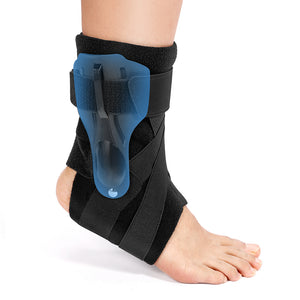
Best Brace for Ankle Instability
- Black
- Grey
- Blue
- Pink
- Purple
- Black
- Red
- Blue
- Orange
- Black
- Orange
- Green
- Pink
Do Ankle Braces Help with Ankle Instability?
If you frequently experience the unsettling sensation of your ankle giving way or rolling unexpectedly, you are likely dealing with a highly common condition known as ankle instability. Whether you are an avid runner, a weekend athlete, or someone who simply enjoys daily walks, weak joints can be frustrating and painful. The good news is that wearing an ankle brace can play a crucial role in supporting your ankle and drastically reducing instability.
So, how exactly does this targeted support work, and why is it so effective? Below, we dive into the biomechanics of joint support, how bracing helps prevent injury, and how to choose the right gear to keep you moving with confidence.
Understanding Chronic Ankle Instability
Ankle instability typically occurs when the ligaments around your ankle—the strong bands of tissue that connect your bones—become weakened, torn, or stretched from previous injuries. Repeated ankle sprains are the most common culprit. When these ligaments do not heal tightly, they leave the joint loose, leading to a persistent feeling of weakness or a "giving way" sensation.
This vulnerability becomes especially apparent during dynamic activities like running, jumping, pivoting, or even just walking on uneven surfaces and navigating stairs. Without intervention, chronic instability can lead to further sprains, joint degradation, and a significant decrease in your overall mobility.
How Exactly Does an Ankle Brace Help?
Ankle supports function as an external defense mechanism for your ligaments. When you wear a high-quality brace, it actively combats instability through several key mechanisms:
1. External Structural Support
An ankle brace provides an immediate layer of external support, effectively doing the heavy lifting that your weakened ligaments can no longer manage alone. By stabilizing the joint, the brace reduces the risk of further injury and limits the shear stress on your lower leg.
2. Preventing Excessive Motion
The primary mechanism behind a sprained ankle is excessive inversion (rolling inward) or eversion (rolling outward). A properly fitted brace physically restricts these extreme ranges of motion. It allows for normal plantarflexion and dorsiflexion (pointing your foot up and down) so you can still walk and run, while safely blocking the dangerous side-to-side movements that cause sprains.
3. Enhancing Proprioception
One of the most overlooked benefits of bracing is proprioception—your body’s subconscious sense of knowing where your joint is in space. After an injury, the nerve endings in your ligaments can become damaged, reducing your spatial awareness and making you more prone to tripping or rolling the joint. The gentle compression and physical touch of a brace against your skin send continuous sensory feedback to your brain. This heightened awareness helps your muscles react faster to unstable terrain, preventing awkward steps before they lead to a fall.
Boosting Confidence During Sports and Active Lifestyles
Imagine you’re getting ready for a long run or stepping onto the court for a fast-paced game. Without the proper support, your ankle may feel incredibly vulnerable, especially if you carry the mental burden of a previous injury.
An ankle brace provides the physical and psychological stability you need to perform at your peak. Instead of constantly looking down and worrying about whether your ankle will give out on a stray pebble or an uneven patch of grass, you can focus entirely on your pace, form, and athletic strategy. Bracing is especially helpful in sports where rapid direction changes, sudden stops, and unpredictable terrain are part of the game.
Finding the Right Support for Your Needs
When managing joint weakness, selecting the right gear is critical for both comfort and rehabilitation. If you are searching for the best brace for ankle instability, choose one that balances robust support with breathable comfort. Ideally, your chosen support should significantly reduce the risk of rolling or twisting while still allowing a natural, fluid stride.
Key Features to Consider
- Rigid and Semi-Rigid Designs: A rigid or semi-rigid brace often works exceptionally well for moderate to severe instability. These designs typically feature plastic or reinforced lateral stays on the sides of the ankle, providing high structural stability without completely restricting vertical motion.
- Customizable Fit: Look for designs that feature adjustable straps, figure-eight taping bands, or durable laces. These features let you adjust compression and tension, ensuring a snug fit that adapts to your foot shape and joint swelling.
- Slim Profiles: If you plan on wearing the support inside athletic shoes or daily footwear, prioritize a low-profile design that will not cause blistering or alter your natural gait.
A Pathway to Faster Recovery and Lifelong Mobility
Ankle braces are a highly valuable tool for managing and preventing chronic ankle instability. While they provide excellent external support, they also work seamlessly alongside physical therapy and muscle-strengthening exercises. By offering crucial reinforcement during your daily routine and athletic endeavors, they drastically reduce the risk of further injury.
Investing in the right ankle support promotes a faster, safer recovery process. It empowers you to take control of your joint health, so you can stay active, push your limits, and perform at your best with unwavering confidence.