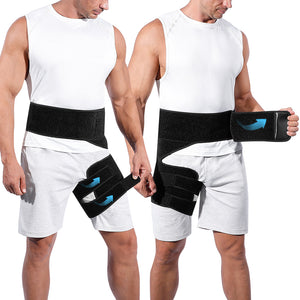
Knee Brace for Big Legs
- Black
- Green
- Orange
- Pink
- Black
- Blue
- Green
- Red
- Orange
- Blue
- Dark Blue
- Black
- White
- Red
- Blue
- Black
- Blue
- Red
- Orange
- Yellow
- Black
- Blue
- Green
- Red
- Blue
- Black
- White
- Red
- Dark Blue
- Grey
- Black
- Blue
- Pink
- Grey
- Black
- White
- Light Black
- Black
- Light Grey
- Grey
- Magenta
- Black
- Green
- Black
- Grey
- Red
- Blue
How Do I Know What Size Knee Support to Get?
Finding the perfect joint support is essential for optimal stability, pain relief, and daily mobility. A poorly fitting compression sleeve can constantly slide down your leg, while one that is excessively tight might restrict healthy blood circulation and cause immense discomfort. Whether you are managing joint aches, recovering from an injury, or looking to enhance your athletic performance, knowing exactly how to measure your leg will ensure you get a flawless, supportive fit.
Step-by-Step Guide to Measuring Your Knee
To determine the correct size, you must measure your joint accurately. Guessing your size based on your standard clothing or trouser size will often lead to a poor fit.
Start by acquiring a flexible, soft measuring tape, which can be easily found at any sewing shop, craft store, or online marketplace. If you do not have a soft tape on hand, a simple piece of string and a standard flat ruler will work just as well. Simply wrap the string around your leg, mark the meeting point, and measure that length against the ruler.
When you are ready to take your measurement, follow these crucial steps:
- Stand Up Straight: Always take your measurements while standing. Standing allows you to bear natural weight on your joint, which mimics the natural expansion of your muscles, ligaments, and tendons during everyday activities.
- Find the Center: Locate the exact center of your kneecap (the patella).
- Wrap the Tape: Wrap the measuring tape directly around this center point.
- Check the Tension: Ensure the measuring tape is pleasantly snug and resting flat against your bare skin. It should not be pulled too tight. Squeezing the tissue will artificially deflate the measurement, leading you to purchase a support that is uncomfortably small.
- Record the Data: Take care to note the circumference. It is best practice to record the measurement in both inches and centimeters, as different brands use different metric systems on their packaging.
Understanding Size Charts and Finding the Right Fit
Armed with your accurate circumference, your next step is to consult the manufacturer's specific size chart. Because sizing standards for compression wear and joint supports vary widely across companies, match your exact measurements to their corresponding size range rather than relying on standard "Small, Medium, or Large" labels.
What to Do If You Fall Between Sizes
It is incredibly common to find that your specific measurement lands right on the borderline between two different sizes. When this happens, a general rule of thumb is to choose the larger size.
Sizing up ensures superior all-day comfort and prevents the elastic edges from digging into your skin or causing friction. This sizing strategy is particularly vital if you have thicker thighs or muscular calves. If you have a larger, more robust lower body, finding the right proportions can be a challenge. In these instances, seeking out a specialized knee brace for big legs is highly recommended. These specially scaled options provide customized contouring and extended wrap capabilities to ensure a secure, non-slip fit that accommodates thicker thighs without rolling down.
Factoring in Your Intended Use and Condition
Beyond basic circumference measurements, consider the intended use and your specific physical condition when selecting your protective gear.
If you require structural support for recovery from an acute injury, ligament damage, or post-surgery rehabilitation, an option featuring adjustable straps is often necessary. Adjustable straps are brilliant for accommodating swelling, allowing you to seamlessly loosen or tighten the compression as fluid retention fluctuates throughout your healing journey.
Finally, consider the level of stabilization your lifestyle requires. Some lightweight sleeves provide soft, breathable padding tailored for mild arthritis relief and everyday comfort. Conversely, heavier-duty options offer rigid, hinged support designed to maximize mechanical stability and prevent unwanted twisting during strenuous physical activities. By combining precise measurements with an understanding of your daily needs, you can secure the ultimate support for lasting joint health.