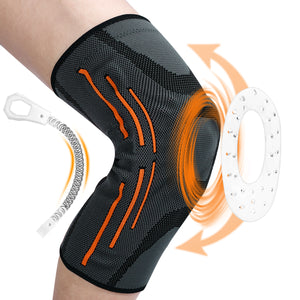
Level 3 Ankle Brace
- Black
- Grey
- Blue
- Pink
- Purple
- Black
- Red
- Blue
- Orange
- Black
- Orange
- Green
- Pink
Can You Walk on a Level 3 Ankle Sprain?
An ankle sprain is one of the most common orthopedic injuries, affecting athletes, fitness enthusiasts, and anyone navigating uneven terrain. When you accidentally roll, twist, or turn your foot in an awkward way, the ligaments that hold your ankle bones together can stretch beyond their natural limits.
Medical professionals classify the severity of an ankle sprain into three distinct grades: Level 1 (mild stretching), Level 2 (moderate partial tearing), and Level 3 (severe, complete tearing). If you have recently suffered a severe lower-body injury, understanding the implications of a Level 3 ankle sprain is crucial for your long-term recovery and joint health.
Understanding the Severity of a Level 3 Ankle Sprain
A Level 3 ankle sprain is characterized by a complete tear or rupture of one or more of the ankle ligaments. This type of severe trauma often results from a sudden, high-impact twist, a heavy fall, or a harsh collision during sports. Because the structural integrity of the joint is entirely compromised, a complete ligament tear results in profound joint instability and intense pain.
Recognizing the Symptoms
How do you know if you are dealing with a severe Grade 3 injury rather than a minor tweak? The symptoms are usually immediate and dramatic, including:
- A "Popping" Sensation: Many people hear or feel a distinct pop or snap at the exact moment the ligament tears.
- Rapid Swelling: The affected area will balloon with fluid almost immediately after injury.
- Severe Bruising: Deep discoloration, often purple or black, will spread across the foot and ankle as blood pools beneath the skin.
- Extreme Instability: The joint will feel loose, weak, and unable to support your body.
With these alarming symptoms, a common and pressing question immediately arises: Can you walk on a Level 3 ankle sprain?
Can You Safely Bear Weight on a Torn Ligament?
The short and definitive answer is no. Walking is highly inadvisable when suffering from a severe, Level 3 ankle injury.
Attempting to push through the pain and walk on a completely torn ligament puts a dangerous amount of additional strain on the already compromised joint. Bearing weight on an unstable ankle can easily exacerbate the tissue damage, increase inflammation, and dramatically prolong your recovery timeline. It also puts you at a high risk of falling and sustaining secondary injuries.
Rather than attempting to walk, it is essential to prioritize immediate immobilization. Crutches or a knee scooter may be necessary for your daily mobility, allowing you to keep all weight off the injured foot during the initial healing phase.
Immediate Treatment and Initial Care Strategy
Proper care in the first 48 to 72 hours after the injury dictates the trajectory of your entire rehabilitation process.
The RICE Protocol
For immediate relief, adherence to the RICE method is standard practice:
- Rest: Cease all physical activity and stay off your feet.
- Ice: Apply cold therapy for 15 to 20 minutes every few hours to constrict blood vessels and reduce swelling.
- Compression: Wrap the area snugly (but not too tightly) to limit fluid buildup.
- Elevation: Prop your foot up on pillows so it rests above the level of your heart, which helps drain excess fluid away from the joint.
The Role of Structural Support in Recovery
Because the ligaments can no longer hold the joint securely in place, external stabilization is a mandatory component of managing a severe sprain. This is where an ankle sprain brace becomes an essential asset in your recovery toolkit.
A high-quality, rigid or semi-rigid support system is specifically designed to provide the necessary stability to the traumatized area. Using a specialized ankle brace for sprain management completely immobilizes the vulnerable joint, helping prevent lateral or twisting movements that could lead to additional microtears during healing. By locking the joint into a safe, neutral alignment, the brace allows your body to efficiently bridge the torn tissues and initiate its natural cellular repair mechanisms.
Rehabilitation and Avoiding Chronic Instability
For those recovering from a severe ligament tear, patience is the most important virtue. Healing a Grade 3 sprain can take anywhere from several weeks to a few months, depending on your overall health and adherence to rehabilitation protocols.
Rushing back into physical activities, sports, or heavy lifting too soon can lead to chronic ankle instability—a condition where the outer side of the ankle constantly gives way. This often leads to recurrent sprains, persistent swelling, and early-onset joint degeneration.
Committing to a structured, progressive physical therapy program is vital. A professional therapist will guide you through gentle range-of-motion exercises, eventually moving on to strengthening routines that rebuild the muscles surrounding the joint. Continuing to wear an ankle brace for a sprained ankle as you slowly transition off crutches and back to weight-bearing activities will give you the confidence and physical support you need to walk safely.