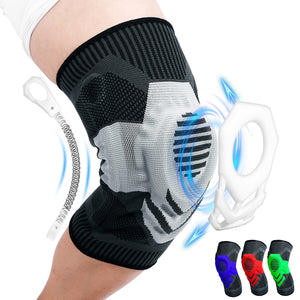
Thin Ankle Brace
- Black
- Grey
- Blue
- Pink
- Purple
- Black
- Red
- Blue
- Orange
- Black
- Orange
- Green
- Pink
What's the Best Thing for Weak Ankles?
Dealing with weak ankles can be a frustrating and limiting experience for many individuals. Whether your discomfort stems from previous sports injuries, chronic overuse, or simply a natural lack of joint strength and stability, finding a reliable solution is critical. Addressing ankle instability is not just about improving your athletic performance on the court, track, or gym; it is deeply tied to maintaining your everyday mobility, confidence, and long-term injury prevention.
If you frequently find yourself rolling your ankle on uneven pavement or feeling a lack of support during physical activities, you are likely searching for the most effective remedies. Fortunately, a combination of targeted support, physical conditioning, and lifestyle adjustments can help you regain control.
Targeted Support for Daily Stability
When looking for immediate relief and stability, one highly effective approach is the use of a thin ankle brace. Unlike bulky alternatives that force you to buy larger shoes or severely restrict your natural gait, a sleek, lightweight support system provides exactly what you need without the cumbersome drawbacks.
This type of supportive sleeve provides targeted, anatomical compression without restricting your essential range of motion. It is an ideal choice for active individuals looking to enhance their structural stability while engaging in various activities—from intense running sessions to casual neighborhood walks. By striking the perfect balance between dependable support and natural flexibility, users can perform daily exercises or competitive sports with a drastically reduced risk of further injury. Because they are crafted from breathable, lightweight materials, these supports remain comfortable and discreet to wear inside your everyday footwear from morning until night.
Essential Ankle Strengthening Exercises
While external support is excellent for immediate joint security, building your internal strength is the key to long-term recovery. It is absolutely essential to incorporate targeted strengthening and rehabilitation exercises into your weekly fitness routine to combat chronic ankle instability.
By dedicating just a few minutes a day to joint-strengthening movements, you can fortify the ligaments and tendons that support your lower extremities. Start with basic movements and gradually progress to more challenging exercises that engage the joint in different ranges of motion:
Ankle Circles and Resistance Work
Begin your routine by simply rotating your feet in clockwise and counterclockwise circles to promote joint mobility and synovial fluid circulation. As you gain strength, incorporate resistance bands to push your foot against light tension in all four directions (up, down, inward, and outward).
Calf Raises and Heel Balances
Toe raises (or calf raises) are incredibly effective for building the muscles that support the back of the joint. Stand upright, slowly push up onto your toes, hold for a second, and lower back down. Conversely, heel walks—where you lift your toes and walk entirely on your heels—help strengthen the anterior muscles of the lower leg, providing a well-rounded defense against sprains.
The Power of Proprioception and Balance Training
The human body’s ability to subconsciously sense its position in space is known as proprioception, and it is a vital component of ankle health. When you experience a sprain, the nerve endings in your ligaments are often stretched or damaged, which delays your brain's reaction time when your foot begins to roll.
Balance training exercises are the absolute best way to repair and improve this mind-muscle connection. Activities as simple as standing on one leg while brushing your teeth can yield excellent results. As your balance improves, you can increase the difficulty by closing your eyes, standing on an uneven surface like a couch cushion, or using specialized balance boards and wobble discs. Enhancing your proprioceptive awareness is particularly important for athletes and active adults, as it guarantees faster reflex coordination and total body awareness on unpredictable terrain.
Upgrade to Supportive Footwear
Even the best strengthening routines can be undone if you are walking around in the wrong shoes. Proper footwear is a foundational pillar for maintaining healthy joints.
When shopping for everyday shoes or athletic sneakers, prioritize options that offer substantial arch support, a firm heel counter to lock your foot in place, and adequate shock-absorbing cushioning. These features work synergistically to alleviate impact pressure on your lower legs and provide a stable base while walking, hiking, or running.
It is equally essential to monitor your shoes' lifecycle. Worn-out, degraded outsoles or improperly fitting sneakers can force your foot into unnatural pronation or supination, severely exacerbating weakness and increasing the likelihood of a rolled ankle. Replace your footwear regularly to ensure your foundation remains strong and supportive.
Taking the Next Steps Toward Stronger Ankles
Overcoming weak ankles requires a multifaceted approach. By utilizing smart, low-profile supportive wear, committing to a consistent strengthening and balance routine, and investing in high-quality footwear, you can conquer ankle instability. Consistent, daily practice of these healthy habits will significantly reduce the likelihood of painful sprains and strains, keeping you active, mobile, and confident on your feet for years to come.