How many hours a day should you wear a back brace for lower back pain?

As we gear up for long holiday weekends—whether you are pulling weeds in the garden for a backyard barbecue, packing heavy bags into the car for a family road trip, or simply tackling household chores—lower back pain can quickly put a damper on your plans. When that familiar ache sets in, reaching for a support belt feels like the most natural response. But almost immediately, a critical question arises: exactly how long should you wear a back brace during the day?
If you search for answers, you will likely find a maze of conflicting advice. Some say wear it all the time; others warn you should barely use it at all. The truth, as with most things related to our bodies, requires a bit more nuance.
Let's cut through the confusion and explore evidence-informed, practical guidance on how to use a lumbar support effectively, ensuring it aids your recovery without holding you back.
The Foundation: Think of It as a Tool, Not a Crutch
Before we talk about timeframes, we need to understand the purpose of wearing a back brace. A high-quality support garment is designed to provide stability, limit painful micro-movements, and increase abdominal pressure, which takes the load off your spinal discs.
More importantly, it provides proprioception—a subtle physical reminder to your brain to maintain proper posture and avoid twisting awkwardly while you lift or move. However, the golden rule of any supportive garment is that it should be viewed as a temporary aid to facilitate safe movement, not a permanent substitute for your body's natural core strength.

Myth-Busting: Will Wearing a Brace Make My Muscles Weak?
One of the most pervasive myths in the fitness and recovery world is that wearing a brace will instantly cause your back muscles to atrophy (shrink and weaken) because the brace is "doing all the work."
Current biomechanical research paints a very different picture. Intermittent, appropriate use of a support belt does not cause muscle weakness. In fact, by significantly reducing acute pain, a well-fitted brace often allows individuals to remain active, walk, and participate in physical therapy. Movement is the key to healing, and if a brace gets you off the couch and moving safely, it is actively preventing the muscle wasting that comes from lying in bed all day in pain.
The danger of muscle dependency only arises with prolonged, continuous, 24/7 wear over many weeks without engaging in complementary strengthening exercises.

The "How Long" Unpacked: Daily Wear Schedules
So, what is the sweet spot? While you should always consult with a healthcare professional regarding your specific condition, general best practices revolve around targeted, activity-based usage.
The 1 to 4 Hour Rule (Activity-Based Wear)
For most individuals dealing with mild to moderate lower back pain, a wear schedule of 1 to 4 hours at a time is generally recommended. Instead of strapping it on first thing in the morning and leaving it on until bed, use it strategically:
- During strenuous chores: Put it on before you start raking leaves, vacuuming, or lifting boxes.
- During pain flare-ups: If sitting at your desk becomes unbearable by 2:00 PM, wear the brace for a couple of hours to break the pain cycle, then remove it.
- While exercising safely: People frequently wonder, should i wear a back brace when walking? If it gives you the confidence and pain relief needed to complete a brisk 30-minute walk, absolutely. Take it off once you are resting.
When Longer Wear Might Be Advised
There are exceptions where a medical professional might recommend longer periods of wear. This is typically seen in cases of acute spinal fractures, immediate post-surgical recovery, or severe structural conditions. In these specific medical scenarios, the brace is essentially acting as an external cast, and strict adherence to a doctor's timeline is mandatory.
Fit, Comfort, and Plus-Size Considerations
You can have the most scientifically advanced support system in the world, but if it is painfully uncomfortable, you either won't wear it, or you'll wear it incorrectly.
Comfort dictates compliance. This is where understanding how to measure for a back brace becomes essential. A brace that is too tight restricts breathing and digestion, while one that is too loose offers zero structural support.
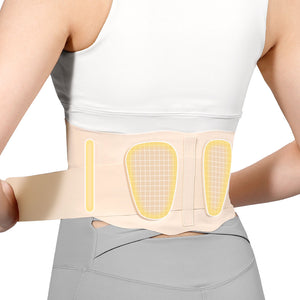
This is particularly important for plus-size individuals. Historically, standard braces have not been designed with larger bodies in mind, leading to garments that roll down, pinch the skin, or fail to cover the lumbar region adequately. When evaluating a back support brace, plus-size individuals should look for inclusive sizing, contoured designs that accommodate the natural shape of the hips and abdomen, and robust anti-slip mechanisms. A quality fivali back brace or similar inclusive design often features adjustable dual-strap systems that allow you to customize the compression level, ensuring safe wear without compromising skin health.

Red Flags: Signs You Are Wearing It Too Long
Listening to your body is the ultimate guide. If you experience any of the following, it is time to take the brace off and reassess your routine:
- Skin breakdown or severe irritation: While slight indentations from straps are normal, chafing, rashes, or bruised skin mean the brace is either on too tight, worn too long, or made of non-breathable material.
- Increased weakness after removal: If taking the back brace off makes your spine feel instantly "wobbly" or unable to support your own weight, you may be relying on it too heavily.
- Psychological dependence: If you feel intense anxiety about walking to the mailbox without your brace, you are developing a mental dependence. It's time to slowly wean off and focus on physical rehabilitation.
Frequently Asked Questions (FAQ)
Can I sleep with my back brace on?
Unless explicitly instructed by a physician following surgery or trauma, you should not sleep in a back brace. Your spine undergoes natural decompression and healing while you sleep, and a tight brace can restrict blood flow and lead to severe skin irritation overnight.
Can I wear my support belt over my clothes?
For comfort and skin protection, it is highly recommended to wear a moisture-wicking base layer (like a cotton or athletic undershirt) underneath your brace. Direct skin contact, especially during activities where you sweat, can cause painful chafing.
When should I stop using my brace entirely?
The goal is progressive weaning. As your pain decreases and your core strength improves through physical therapy or gentle exercise, you should naturally reach for the brace less often. Start by removing it during lighter activities, relying on it only for your heaviest tasks, until you no longer need it.
Your Next Steps to a Healthier Back
A well-designed support garment is a fantastic ally in your journey toward a pain-free life, acting as a bridge between acute pain and active rehabilitation. By limiting your wear time to activity-based intervals of a few hours, investing in a size and design that genuinely fits your body, and pairing your bracing strategy with core-strengthening movements, you set the stage for long-term recovery.
Remember, the ultimate goal isn't to wear a brace forever—it's to use the brace to help you build a stronger, more resilient back for all the seasons and holidays to come. If you're struggling with back pain that isn't improving, always consult with a physical therapist or physician to create a comprehensive treatment plan tailored to your body.