Brace Rash & Discomfort Solved: The Ultimate Guide to Skin-Friendly Materials

Let's be honest. The initial relief of strapping on a supportive counterforce brace can quickly fade. Soon, you notice the sweat, the itch, and the constant need to readjust. It’s an unspoken frustration that can make you want to ditch the very tool meant to help you heal.
But what if the problem isn't the brace itself, but the material it's made from? When you need support for hours a day—whether for an intense tennis match or to manage chronic pain at your desk—the fabric touching your skin becomes the most critical factor for comfort and compliance. At Fivali, we believe support should never come at the expense of skin health. Our entire approach is built on creating braces with comfortable, skin-friendly fabrics designed for real-world, extended wear.
This guide will break down the science of brace materials, compare the most common options, and show you exactly what to look for to find a brace you'll actually want to wear.

The Unseen Issue: When Your Brace Works Against Your Skin
That damp, itchy feeling under a brace isn't just an annoyance; it's a sign of a bigger problem. Non-breathable materials trap heat and moisture against your skin, creating an environment where irritation can thrive.
Clinical insights confirm that issues like redness, chafing, rashes, and even allergic contact dermatitis are common complaints. This often stems from moisture-trapping fabrics or sensitivity to materials like neoprene and the thioureas used in its production. When your skin is constantly damp, it can lead to maceration (softening and breakdown) or folliculitis (inflamed hair follicles). This discomfort does more than irritate—it can seriously impact your recovery by making you less likely to wear your brace as needed.
A Practical Guide to Brace Materials: A Clear Comparison
Not all fabrics are created equal. Understanding the fundamental differences is the first step toward choosing a brace that offers true, all-day comfort. The science behind selecting the right fabric isn't limited to elbows; the same principles for finding the right ankle brace comfort material apply to any joint support you need.
The Neoprene Dilemma
Neoprene is popular for its excellent insulation and compression. However, it's essentially a wetsuit for your joint.
- Pros: High level of support, retains therapeutic warmth.
- Cons: Extremely poor breathability. It traps heat and sweat, leading directly to skin irritation for many users. It’s also a common source of skin allergies.
The Problem with Basic Knits
A step up from neoprene in terms of airflow, but traditional elastic knits often come with their own set of trade-offs.
- Pros: More flexible and breathable than neoprene.
- Cons: Can provide inconsistent compression, stretch out over time losing their supportive qualities, and may be made from rougher yarns that cause friction and chafing.
The Fivali Advantage: Advanced 3D Knit Blends
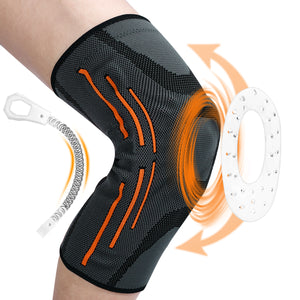
This is where material science meets user comfort. We utilize advanced 3D knit fabrics that are intelligently designed for both support and skin health. Think of our Fivali Knitted Compression Elbow Support as an example—it uses a precise blend of materials like nylon and spandex to achieve a perfect balance of flexibility, durable compression, and superior breathability. This technology allows us to create a brace that feels like a second skin, not a bulky appliance.
Fivali's Blueprint for All-Day Comfort and Skin Health
We've built our product philosophy around four key pillars to ensure every Fivali brace is ready for extended wear.
1. Engineered for Airflow
Our 3D knit construction isn't a uniform weave. We use specific open-knit patterns and comfort zones, particularly in high-movement areas like the crook of the elbow, to facilitate constant airflow. This dissipates heat and allows perspiration to evaporate, keeping your skin cool and dry.
2. Active Moisture-Wicking
Breathability is only half the battle. Our fabrics are treated to be hydrophilic, meaning they actively pull moisture away from your skin and disperse it across the fabric's surface to dry quickly. It's a proactive approach to sweat management that prevents the damp, clammy feeling that causes so many skin problems.
3. Hypoallergenic and Soft to the Touch
The material that touches your skin for hours should be gentle. We prioritize soft, smooth yarns and avoid common irritants like latex and harsh dyes. This focus on a soft touch reduces friction and ensures comfort, even for those with highly sensitive skin. Just as with choosing the right wrist brace materials, a hypoallergenic design is a non-negotiable feature for long-term wear.
4. Anatomical Fit Prevents Chafing
A brace that bunches, slips, or pinches is a primary cause of chafing. Our 3D knitting process allows us to create a contoured, anatomical shape that moves with your body. This precision fit, combined with features like non-slip silicone grips, ensures the brace stays exactly where it’s supposed to, eliminating the friction points that lead to irritation.
Frequently Asked Questions
Q1: Why does my brace make my skin so sweaty and itchy?
That damp, itchy feeling is common with braces made from non-breathable materials like neoprene. These fabrics trap heat and moisture against your skin, creating a perfect environment for irritation, redness, chafing, and even rashes. This discomfort is a sign that your skin isn't getting the airflow it needs.
Q2: What is the most comfortable material for a support brace?
For extended wear, advanced 3D knit fabrics are the most comfortable option. Unlike neoprene or basic knits, they are engineered for superior breathability and moisture-wicking. Materials like nylon and spandex blends, used in Fivali braces, offer a second-skin feel, providing firm support while keeping your skin cool and dry.
Q3: Can a breathable knit brace actually provide enough support?
Yes. Modern 3D knit technology allows for a highly anatomical fit with targeted compression zones. This means the brace provides firm, reliable support precisely where it's needed most, while allowing for greater flexibility and comfort in other areas. You get the stability you need without the bulky, restrictive feel of older materials.
Q4: Is neoprene a bad material for a brace?
Neoprene offers excellent compression and retains therapeutic warmth, which can be beneficial for some conditions. However, its major drawback is a lack of breathability. It traps sweat, which often leads to skin irritation and discomfort during long-term use. For anyone with sensitive skin or who needs to wear a brace for hours, a more breathable alternative is usually a better choice.
Q5: How can I prevent rashes and chafing from wearing a brace?
Preventing irritation starts with choosing the right material. Opt for a brace made from a breathable, moisture-wicking, and hypoallergenic fabric like a 3D knit. Additionally, ensure the brace has an anatomical fit that contours to your body to prevent bunching and friction. Keeping your brace clean according to care instructions is also crucial for maintaining skin health.
Make a Choice for Comfort and Compliance
Don't let a sweaty, irritating brace derail your recovery or performance. The material it's made from is not a minor detail—it's the foundation of its effectiveness. By choosing a brace built with advanced, skin-friendly fabrics, you're investing in support you can consistently and comfortably wear.
Ready to experience the difference a material-first approach makes? Explore our complete line of elbow brace for tendonitis and discover the perfect balance of uncompromising support and all-day comfort.