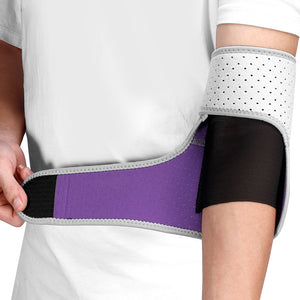
Ankle Brace to Straighten Foot
- Black
- Grey
- Blue
- Pink
- Purple
- Black
- Orange
- Green
- Pink
- Black
- Red
- Blue
- Orange
What Device Keeps Your Ankle Straight?
Whether you are recovering from a painful sprain, managing a chronic joint condition, or trying to prevent injuries on the soccer field, maintaining proper joint alignment is essential. If you have ever wondered what device keeps your ankle straight, you are not alone. Countless Americans search for effective solutions to stabilize their lower extremities, prevent ankle rolling, and accelerate healing.
By immobilizing the joint or limiting its range of motion, specialized orthopedic supports help keep your ankle in a neutral, straightened position. Below, we will explore the different support options available, ranging from lightweight compression sleeves to heavy-duty immobilization tools, to help you determine which solution best fits your specific needs.
Understanding Ankle Stability and Alignment
The ankle is a complex hinge joint supported by a network of ligaments and tendons. When these tissues are stretched beyond their limits—commonly known as a rolled or twisted ankle—the joint becomes unstable. To facilitate proper healing and prevent further damage, it is crucial to keep the joint properly aligned. Depending on the severity of the instability, different levels of structural support are required to keep the ankle straight and restrict unwanted side-to-side (inversion and eversion) movements.
Types of Supports That Keep Your Ankle Straight
- Lightweight Compression and Flexibility
For those dealing with minor tweaks, mild swelling, or general joint fatigue, lightweight supports offer a great starting point. These are typically crafted from flexible, elastic materials such as neoprene and are designed to provide soothing compression while retaining body heat.
They wrap securely around the joint, offering mild resistance against unnatural twisting without completely locking the foot in place. If you are engaging in low-impact physical activities—such as walking the dog, light jogging, or practicing yoga—an ankle soft brace can help keep the joint in a much more stable, straightened position. While it will not entirely restrict your range of motion, it provides the vital sensory feedback (proprioception) your body needs to maintain proper form and alignment during daily tasks.
- Semi-Rigid Supports for Active Protection
When athletes or highly active individuals need a balance between mobility and serious protection, semi-rigid designs are the go-to choice. These hybrid options combine comfortable, breathable fabrics with sturdy structural components.
Typically, they feature plastic inserts or metal stays along both sides of the joint. These rigid side guards act as a physical barrier, limiting how far the ankle can bend inward or outward. For instance, athletes who have previously suffered minor sprains or play high-impact sports such as basketball, volleyball, or soccer frequently rely on a metal ankle brace to prevent reinjury. By physically preventing excessive lateral movement, these devices keep the ankle straight and secure even during vigorous exertion.
- Maximum Immobilization for Severe Injuries
In cases of severe trauma, such as a high ankle sprain, a fractured bone, or following surgical ligament repair, limiting all movement is absolutely critical. In these scenarios, lightweight or semi-rigid options simply do not offer enough restriction.
This is where heavy-duty immobilization comes into play. A rigid ankle brace is highly supportive and specifically engineered to severely limit or completely restrict ankle joint movement. Usually constructed from hard plastics, durable fiberglass, or strong polymer shells, these devices lock the foot into a fixed, 90-degree angle. By completely immobilizing the area, they ensure the joint remains perfectly straight during the most vulnerable phases of recovery and healing.
- Ankle-Foot Orthotics (AFOs) for Structural Correction
Beyond acute sports injuries, some individuals need to keep their ankles straight due to neurological conditions or muscular deficiencies. Ankle-Foot Orthotics, commonly referred to as AFOs, are specialized devices designed to correct deformities and assist with a normal walking gait.
AFOs can be custom-molded to a patient's exact anatomy or purchased as prefabricated models. They are usually fabricated from durable plastics and seamlessly cover both the foot and the lower calf area. Many AFOs feature a stiff posterior section that extends along the back of the leg, providing a mechanical framework that forces the ankle to remain in a neutral, straightened position.
These orthotics are incredibly common for individuals dealing with "drop foot"—a condition that makes it difficult or impossible to lift the front part of the foot. They are also vital for patients managing the effects of cerebral palsy, stroke recovery, or specific nerve injuries that compromise lower leg control and require constant alignment.
How to Choose the Right Solution for Your Needs
Finding the exact tool to keep your foot and leg aligned depends entirely on your current health status and lifestyle goals:
- For daily comfort and mild support: Opt for flexible, elastic materials that provide gentle compression and warmth without restricting your stride.
- For sports and moderate instability, look for laced or strapped designs with supportive side stays that prevent rolling.
- For post-surgical healing or major trauma, rely on hard-shelled, restrictive boots or supports that prevent any bending or twisting.
- For gait correction and nerve issues, consult an orthotist about custom or prefabricated AFOs to address specific anatomical or neurological conditions.
Maintaining proper joint alignment is the foundation of lower body health. By using the right supportive device, you can keep your ankle straight, reduce your pain, and confidently step back into your daily routine.