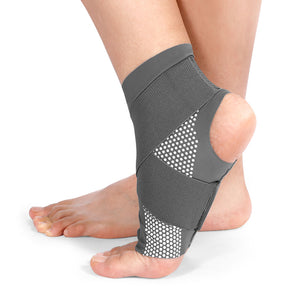
Best Compression Ankle Brace
- Black
- Grey
- Blue
- Pink
- Purple
- Black
- Red
- Blue
- Orange
- Black
- Orange
- Green
- Pink
How Long Can You Wear a Compression Ankle Brace?
A twisted ankle or joint instability can significantly disrupt your daily routine. Finding the right balance between supporting the injured area and allowing it to heal naturally is essential for a smooth recovery. A common question among people recovering from foot and joint injuries is about duration: how many hours a day is optimal to keep the joint wrapped?
There is no universal timeframe. Instead, it depends on several critical factors, including the severity of your sprain, the specific design of the support you use, and the guidance of a healthcare provider. Understanding these three aspects plays a critical role in determining the optimal duration for your rehabilitation journey.
Key Factors Dictating Ankle Brace Duration
Severity of the Injury
The severity of the ankle injury strongly influences how long you should wear a compression brace. For minor tweaks, mild sprains, or light strains, wearing a brace for 1 to 2 hours during physical activity, walking, or exercise may be sufficient.
For moderate injuries, such as a moderate sprain with more pronounced swelling and tenderness, you may wear the brace more consistently throughout the day. However, it is vital to include rest periods to let the skin breathe and allow normal blood flow. In more severe cases, such as high ankle sprains, severe ligament tears, or post-fracture recovery, a healthcare provider may recommend wearing the brace all day to keep the ankle stable and protect it from further trauma.
Type of Brace Used
Compression braces come in various designs, and the material of your support gear dictates how long it should remain on your body. Standard, lightweight compression sleeves offer gentle, flexible support designed to stimulate blood circulation and reduce persistent swelling without hindering your natural range of motion. Because they are unobtrusive, light compression sleeves can often be worn safely throughout all your daily activities.
Conversely, more complex braces featuring rigid supports, hard plastic panels, or metal stays are built to restrict motion completely for added stability. While excellent for acute trauma, keeping a highly restrictive device on for too long without periodic breaks can backfire, resulting in severe muscle weakness and joint stiffness. Finding the best compression ankle brace for your recovery phase will give you the right balance of support and mobility, helping your ligaments regain strength safely over time. A well-fitting brace provides adequate support while preventing overreliance on external stabilization.
Advice of a Healthcare Provider
No online guide can replace a certified professional's personalized assessment. The most important factor in determining how long to wear a compression ankle brace is guidance from a healthcare provider, such as a physical therapist or primary care doctor. A medical professional will evaluate your specific mobility limitations, pain levels, and ligament damage to provide personalized recommendations based on your unique recovery process. Following their tailored advice ensures you heal efficiently without compromising long-term joint integrity.
Additional Considerations for Optimal Healing
Can You Sleep with a Compression Ankle Brace?
A highly searched topic revolves around overnight wear and whether sleeping with joint support is beneficial. Generally, remove tight, restrictive compression gear before bed. Resting without the brace supports healthy overnight blood flow and helps prevent skin irritation or chafing. However, if you have sustained a severe sprain, your physical therapist might instruct you to wear a specific, looser night splint to keep the foot in a neutral position while you sleep. Always follow professional advice on overnight stabilization.
Warning Signs You Should Take It Off
Listen to your body throughout the healing process. If you experience numbness, tingling in your toes, or your foot starts changing color, the fit is likely too tight. These are immediate red flags that your circulation is being compromised. Take the support off instantly, elevate your leg to reduce throbbing, and readjust the tightness only once the sensation fully normalizes.
Transitioning Away from Joint Support
The ultimate goal of using any rehabilitative wrap is to eventually not need it at all. Wearing a supportive wrap around the clock for months on end can cause the surrounding stabilizing muscles to atrophy. As your healing progresses and swelling subsides, you should gradually reduce the number of hours you wear the support. Start by taking it off while relaxing at home, then during light walks, and eventually save the compression gear for rigorous exercise, heavy lifting, or sports until you have full confidence and dynamic ankle stability.