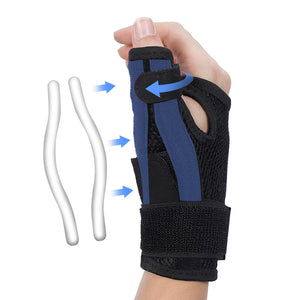
Knee and Ankle Brace
- Black
- Grey
- Blue
- Pink
- Purple
- Black
- Orange
- Green
- Pink
- Black
- Red
- Blue
- Orange
Can an Ankle Brace Help with Knee Pain?
When experiencing knee pain, most individuals immediately focus solely on the knee itself, seeking ways to alleviate discomfort directly at the site of the ache. However, it often comes as a surprise that stabilizing a completely different joint can provide profound relief. Specifically, an ankle brace can be highly effective in reducing knee pain and improving overall lower-body function.
This unexpected solution comes down to human biomechanics. Both of these vital joints are intrinsically linked through what is known as the lower extremity kinetic chain. Because of this structural connection, issues originating near the foot can easily radiate upward. When used correctly, an ankle brace does more than just protect your lower leg; it improves joint alignment, enhances walking mechanics, and provides substantial relief from persistent knee discomfort.
Understanding the Lower Extremity Kinetic Chain
To grasp why an ankle support device can resolve knee issues, one must first understand the lower limb kinetic chain. The human body is a marvel of interconnected engineering. The lower extremities work together in a synchronized chain, where the movements, balance, and alignment of one joint directly affect the others.
The foot, ankle, knee, and hip form the foundation of this chain. Any physical dysfunction, weakness, or instability in one area will inevitably lead to increased stress and overcompensation in the surrounding joints. For example, if you suffer from poor ankle stability—often caused by previous sprains, weak ligaments, or arches that fall flat—it alters the way you walk and distribute your weight. This altered gait forces the knee to absorb unnatural shock and rotational forces. By stabilizing the base of your kinetic chain, you effectively prevent this misalignment from traveling upward.
How Poor Ankle Stability Triggers Knee Discomfort
When you take a step, your foot and ankle are the first points of contact with the ground. If your ankle is unstable and rolls inward (overpronation) or outward (supination) excessively, the tibia (shinbone) rotates along with it. This abnormal twisting motion travels directly up the leg and places immense shear force on the knee joint.
Over time, this repeated torque can lead to runner’s knee, tendon inflammation, and general joint fatigue. A high-quality ankle brace intervenes by locking the joint into a neutral, safe position. This prevents abnormal twisting of the tibia, effectively stopping poor mechanics before they can reach and irritate the knee.
The Crucial knee and ankle Relationship
When analyzing daily movement, the dynamic between the knee and ankle is incredibly significant for long-term joint health. They must operate in perfect harmony. An ankle brace provides structural support and stability, preventing the excessive rolling motions that throw the entire leg out of alignment.
By restricting this unwanted lateral motion, the brace helps the entire leg move more efficiently. Proper alignment is maintained from the ground up, reducing the strain placed on the knee joint. This is especially vital during high-impact or repetitive activities such as jogging, hiking, jumping, or even just standing for extended periods on hard surfaces. For individuals battling knee pain due to chronic instability, overuse, or poor posture, wearing an ankle support can prevent aggravating movements and significantly ease daily discomfort.
Dual Protection: Combining Knee and Ankle Supports
For individuals dealing with severe or persistent joint pain, relying on a single solution might not be enough. Combining a knee sleeve or brace with an ankle brace can offer comprehensive, full-leg support.
Distributing Kinetic Force
While a knee brace works directly to stabilize the patella and surrounding ligaments, an ankle brace ensures that the physical forces generated during movement are distributed properly across the entire lower limb. This combined dual-support strategy helps reduce the risk of further injury by ensuring that both joints function optimally without overcompensating for one another.
Preventing Transferred Instability
The ankle brace handles the foundational work—preventing base-level instability from transferring upward. Simultaneously, the knee brace ensures the knee remains insulated from localized stress during physical activities. Together, they create an optimal environment for joint recovery and pain-free movement.
When to Consider an Ankle Brace for Knee Pain
It is important to note that not everyone experiencing knee aches will automatically benefit from ankle stabilization. If your knee pain is the result of a direct, localized impact or a specific, isolated tear, ankle support might not be the primary answer.
However, for individuals whose knee pain is fundamentally linked to lower leg instability, this approach is highly effective. You should consider this strategy if your knee pain is accompanied by:
- A history of frequent ankle sprains or rolled ankles.
- Achilles tendonitis or plantar fasciitis.
- Noticeable poor gait mechanics, such as excessive inward rolling of the feet.
- Uneven wear patterns on the soles of your everyday shoes.
In these scenarios, treating the foundation of your stance is critical. An ankle brace can provide substantial relief, proving particularly helpful for individuals recovering from complex lower-body injuries, where proper leg alignment is key to a pain-free life. By addressing the root cause of biomechanical stress, you provide your knees with the environment they need to heal, rest, and function smoothly.