Why Does My Knee Feel like It Needs to Pop?
That sudden, nagging sensation in the joint can be incredibly distracting. It feels like a built-up pressure inside the joint, creating a constant urge to stretch, twist, or bend the leg just to get that satisfying click. Many people experience this exact sensation daily, wondering what causes it and how to safely find relief. This article explores the mechanical reasons behind this sensation, the common factors that contribute to joint pressure, and safe ways to manage the discomfort.
The Anatomy Behind the Pop
To understand why a joint feels full or pressurized, it helps to look at how it is built. The knee is a complex hinge joint where the thigh bone meet the shin bone, protected by the kneecap. Surrounding these bones are cartilage, ligaments, tendons, and a specialized fluid that keeps everything moving smoothly.
Gas Bubble Formation and Cavitation
The most common reason for a sudden sensation of pressure is a process called cavitation. Joints are enclosed in a capsule filled with synovial fluid, which acts as a lubricant. This fluid contains dissolved gases, including oxygen, nitrogen, and carbon dioxide.
When the joint moves, the space between the bones changes, altering the pressure inside the capsule. This pressure drop can cause the dissolved gases to rapidly form tiny bubbles. When those bubbles burst or collapse, it creates a physical release. Many people actively look up how to pop your knee just to trigger this harmless release of gas and clear the tight sensation.
Tendon and Ligament Snapping
Another frequent cause involves the moving parts around the joint. Tendons and ligaments are like tight rubber bands that slide over bony prominences during movement. If a muscle is tight or a tendon is slightly out of its optimal path, it can catch on a bone and then snap back into place. This snapping can create a physical clicking sensation and a feeling that something needs to reset.
Patellar Tracking Issues
The kneecap sits in a shallow groove at the front of the thigh bone. It is supposed to slide smoothly up and down within this groove whenever the leg bends or straightens. If the muscles on one side of the thigh are tighter or weaker than the other side, they can pull the kneecap slightly off-course. This misalignment creates friction and a distinct feeling of resistance, making the joint feel like it needs to snap back into alignment.
Common Triggers for Knee Pressure
While the physical mechanics involve gas bubbles and moving tendons, everyday habits and physical conditions often trigger these sensations. Identifying these factors can help in managing the daily discomfort.
| Trigger Factor | Mechanical Impact on the Joint | Common Daily Example |
| Prolonged Sitting | Decreases circulation of synovial fluid and tightens surrounding muscles. | Working at a desk for several hours without stretching. |
| Muscle Imbalances | Pulls the kneecap out of its natural tracking groove. | Having strong quadriceps but weak hamstrings or glutes. |
| Repetitive Strain | Causes minor swelling and irritation in the surrounding tendons. | Frequent squatting, lifting, or running on hard surfaces. |
| Previous Minor Injuries | Leaves behind microscopic scar tissue that can catch during movement. | An old sports injury that healed without proper physical rehabilitation. |
Sedentary Lifestyles and Stiff Muscles
Sitting for extended periods causes the hamstrings, hip flexors, and calf muscles to shorten and tighten. When these muscles tighten, they compress the joint, increasing the internal pressure. This compression limits the natural flow of synovial fluid, leading to that stiff, locked sensation that makes people want to stretch until a Popping Knee release occurs.
Overuse and Physical Fatigue
On the other end of the spectrum, excessive exercise or sudden increases in physical activity can strain the tendons. When tendons become fatigued, they lose some of their elasticity and precision, making them more likely to snag on bony structures. This friction creates an internal awareness of the joint, often interpreted as a need to click or crack the leg.
Safe Methods for Managing Joint Pressure
When the urge to release the joint becomes overwhelming, it is vital to approach the situation with caution. Rough movements or forced twisting can stress the ligaments and lead to irritation.
Controlled Extension Stretches
A gentle way to encourage a natural release without forcing the joint is through controlled, linear stretching.
- Sit comfortably in a chair with the feet flat on the floor.
- Slowly straighten the leg forward until it is parallel to the ground.
- Hold the position for five seconds, squeezing the thigh muscles.
- Flex the toes back toward the body to stretch the calf muscle.
- Slowly lower the foot back to the starting position.
This straight-line movement allows the patella to track naturally and can safely trigger a release if gas bubbles have accumulated.
Gentle Quad and Calf Flexibility Routine
Targeting the muscles that dictate kneecap movement can alleviate the chronic tightness that causes the pressure sensation in the first place. Long, relaxed stretches for the quadriceps, hamstrings, and calves help restore balance to the joint. Holding a gentle quad stretch for thirty seconds without bouncing can reduce the downward pull on the kneecap, allowing it to slide smoothly without catching.
The Role of Joint Support and Compression
Managing muscle tightness and joint alignment often requires external support, especially during periods of increased physical activity or prolonged standing. Using compression sleeves or braces can provide the stability necessary to reduce friction inside the joint.
Structural Benefits of Compression Sleeves
Compression sleeves work by applying even pressure around the joint capsule. This pressure increases localized blood flow, keeping the muscles warm and flexible. Warm muscles are less likely to pull unevenly on the kneecap, which directly addresses one of the primary causes of the tight, unpopped feeling. Furthermore, compression enhances proprioception, which is the body's awareness of joint positioning, leading to smoother movement patterns.
Implementing Targeted External Support
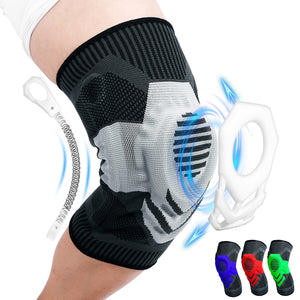
For individuals who experience consistent tracking issues or tendon snapping, a dedicated stabilizer can offer significant relief. Utilizing a high-quality sleeve like the fivali knee brace helps keep the patella centered in its groove during movement.
By providing structural reinforcement to the sides of the joint, this type of support limits lateral shifting. The balanced stabilization provided by Fivali alignment products ensures that everyday movements like walking, climbing stairs, or squatting do not cause the tendons to catch on the bone, effectively minimizing the frequency of that uncomfortable, pressurized sensation.
✧ Plus Size Knee Brace for Sports with Rubber Pad FKH04
- Triple Metal Springs Stabilizers for Reinforcement
- Plus Size Fit for Obese People, Large Legs
- 3D Breathable Circular Wrapping
- Flexible Velcro Design for Strong Adhesion
- Zero Slip During Lifts, Bends, Walks

Long Term Strategies for Joint Health
Relying solely on temporary releases or external support will not solve the underlying muscular imbalances that cause the pressure sensation. Long-term relief requires a proactive approach to strength and movement habits.
Strengthening Core Stabilizer Muscles
To permanently improve patellar tracking, focus must be placed on strengthening the specific muscles that control the leg. The vastus medialis oblique, which is the teardrop-shaped muscle on the inner side of the thigh, plays a massive role in keeping the kneecap centered. Simple exercises like straight leg raises, wall sits, and glute bridges build the baseline strength needed to keep the joint moving along its intended path.
Improving Joint Mobility and Lubrication
Synovial fluid requires movement to circulate effectively throughout the joint capsule. Incorporating low-impact activities into a daily routine ensures that the joint remains well-lubricated, preventing the stagnation that leads to gas bubble accumulation. Swimming, cycling on a stationary bike with low resistance, and using an elliptical trainer are excellent ways to move the leg through its full range of motion without introducing heavy impact forces.
Summary of Achieving Lasting Joint Relief
That persistent feeling of needing to click or pop the leg is a signal from the body that the joint is experiencing uneven pressure, tightness, or minor tracking issues. By practicing gentle, controlled stretching, addressing muscle imbalances through targeted strength training, and utilizing external compression for stabilization, it is possible to maintain smooth, comfortable, and silent joint function over time.
-
Veröffentlicht in
knee, performance, Recovery