Ankle Bunions
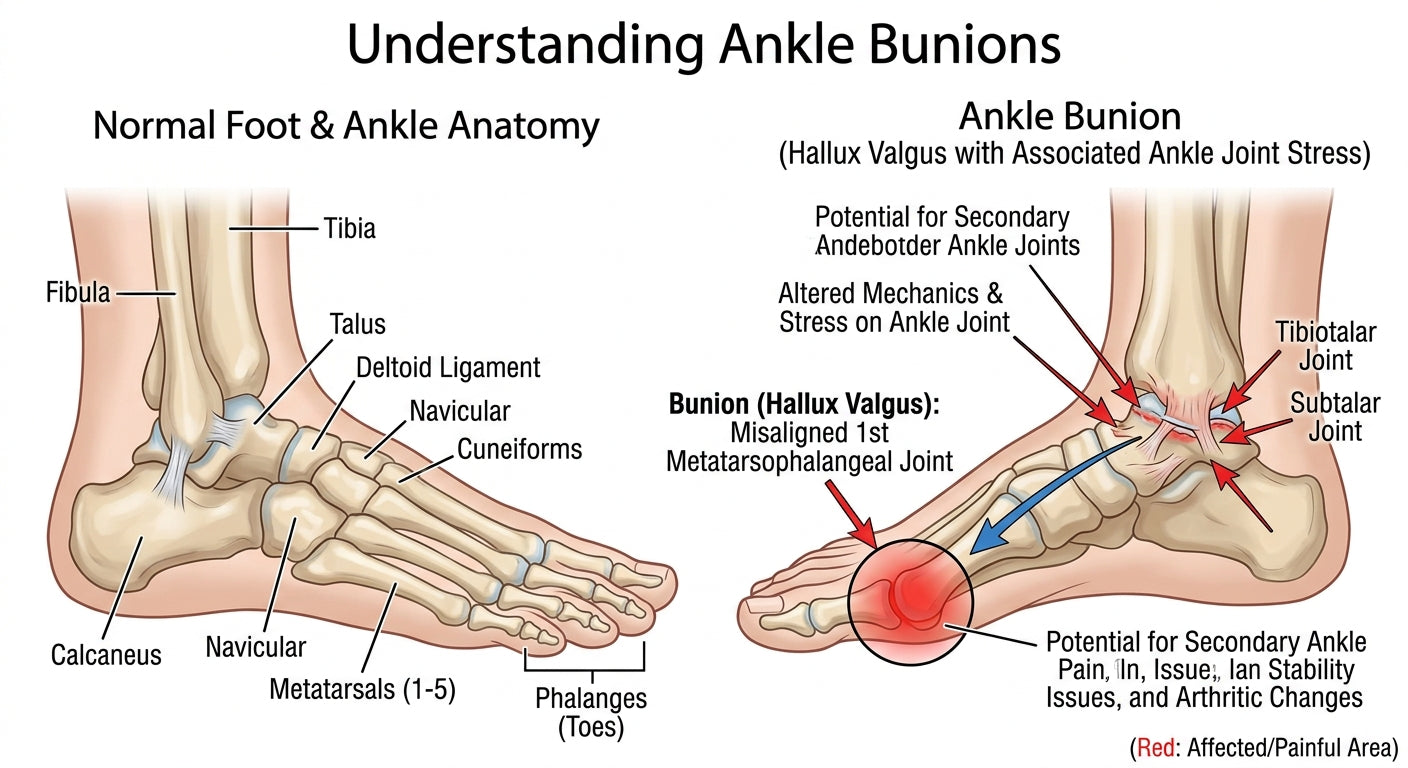
When you hear the word "bunion," you likely picture a bony bump at the base of the big toe. However, a similar and equally painful bump can form on the back of your heel, a condition often referred to as an "ankle bunion." This common term typically refers to Haglund's Deformity, a bony enlargement at the back of the heel bone that can cause significant discomfort and inflammation.
Unlike a traditional bunion (hallux valgus), an ankle bunion affects the area where the Achilles tendon attaches to the heel. The protrusion can rub against the rigid backs of shoes, irritating the soft tissue and the fluid-filled sac (bursa) that lies between the tendon and the bone. This friction can cause a painful condition known as retrocalcaneal bursitis, making every step a challenge.
What Causes an Ankle Bunion?
Several factors can contribute to the development of Haglund's Deformity. Understanding the root cause is the first step toward finding effective relief.
- Genetics: Your inherited foot structure plays a significant role. Individuals with high arches are more susceptible because the heel bone tilts backward, increasing pressure from the Achilles tendon.
- Tight Achilles Tendon: A naturally tight Achilles tendon can pull on the heel bone, contributing to irritation and the development of the bony growth over time.
- Gait and Foot Mechanics: A tendency to walk on the outside of your heels can alter foot mechanics and place excessive stress on that area.
- Improper Footwear: This is one of the most common culprits. Consistently wearing shoes with a rigid or hard heel, such as pumps, men's dress shoes, or ice skates, creates constant pressure and friction on the back of the heel. This is why the condition is sometimes called the "pump bump."
Common Symptoms to Watch For
The symptoms of an ankle bunion can range from mild annoyance to severe pain that limits your mobility. Key indicators include:
- A visible and often hard bump on the back of the heel.
- Pain and tenderness at the point where the Achilles tendon inserts into the heel.
- Swelling, redness, or inflammation around the bony prominence.
- Discomfort that intensifies with activity, especially running or climbing stairs.
- Pain when wearing shoes that press against the back of your heel.

Finding Relief: Treatment Options for Ankle Bunions
Treating an ankle bunion focuses on reducing pressure, managing inflammation, and alleviating pain. It's always best to consult with a podiatrist or healthcare provider for an accurate diagnosis and a tailored treatment plan. Most cases can be managed effectively with conservative, non-surgical methods.
Conservative (Non-Surgical) Approach
- RICE Protocol: For acute flare-ups, follow the RICE method: Rest, Ice, Compression, and Elevation to reduce swelling and pain.
- Footwear Changes: This is crucial. Switch to open-backed shoes, footwear with soft heel counters, or slightly larger shoes to eliminate friction.
- Stretching Exercises: Gently stretching your Achilles tendon can relieve tension on the heel. A physical therapist can recommend specific, safe exercises.
- Padding and Orthotics: Placing soft pads in your shoes can cushion the bump. Custom or over-the-counter orthotics can help correct foot mechanics and reduce pressure.
- Supportive Bracing: For those seeking stability and pain management, an ankle brace for pain can help reduce stress on the joint. A well-designed orthopedic ankle brace can also provide essential structural support. For more targeted support, options range from an ankle brace for bunion correction to flexible ankle wraps for bunion correction that provide compression without excessive rigidity. A specific ankle brace for bunion pain relief can be particularly effective. While these devices support the heel, it's natural to wonder, do bunion correctors work for the more common toe bunions? It’s important to match the device to the diagnosis.
When is Surgery Considered?
If conservative treatments fail to provide relief after several months and the pain continues to interfere with your daily life, your doctor may discuss surgical options. Surgery for Haglund's Deformity typically involves removing the bony prominence from the heel bone to eliminate the source of irritation.
Can Ankle Bunions Be Prevented?
While you can't change your genetic predisposition, you can take steps to minimize your risk. Understanding how to prevent bunions and similar foot issues starts with proactive care.
- Wear Proper Shoes: Choose footwear that fits well, provides arch support, and features a soft, flexible heel counter. Avoid shoes that are too tight or rigid.
- Stretch Regularly: Keep your Achilles tendon flexible with daily calf stretches.
- Listen to Your Body: At the first sign of heel pain, take a break from high-impact activities and switch to more comfortable shoes.
Proactive care is especially important for preventing juvenile bunions, as addressing foot mechanics early can prevent more significant problems later in life. While many people ask if a bunion corrector works for their specific ailment, prevention through proper footwear and stretching remains the best first-line defense.
Frequently Asked Questions About Ankle Bunions (Haglund's Deformity)
Q1: What exactly is an ankle bunion, and how is it different from a regular bunion?
A1: An "ankle bunion" is the common term for Haglund's Deformity, a bony enlargement on the back of your heel bone. Unlike a traditional bunion (which typically affects the big toe), Haglund's Deformity occurs at the site where the Achilles tendon attaches to the heel, causing pain and irritation, often exacerbated by footwear.
Q2: What causes Haglund's Deformity to develop?
A2: Several factors contribute, including genetics (e.g., high arches), a naturally tight Achilles tendon, certain gait patterns that put stress on the heel, and, most commonly, wearing rigid-backed shoes that constantly rub against the heel.
Q3: What are the common symptoms of an ankle bunion?
A3: Key symptoms include a visible bump on the back of the heel, pain and tenderness where the Achilles tendon meets the heel, swelling, redness, and discomfort that worsens with activity or when wearing restrictive shoes.
Q4: What non-surgical treatments are available for Haglund's Deformity?
A4: Conservative treatments focus on reducing pressure and inflammation. These include the RICE protocol (Rest, Ice, Compression, Elevation), switching to soft-heeled or open-backed shoes, Achilles tendon stretching, using heel pads or orthotics, and supportive bracing for stability and pain management.
Q5: When is surgery considered for an ankle bunion?
A5: Surgery is typically considered only if conservative treatments have failed to provide significant relief after several months, and the pain continues to severely impact your daily activities. The procedure usually involves removing the bony prominence.
Q6: Can ankle bunions be prevented?
A6: While genetics play a role, you can reduce your risk by wearing properly fitting shoes with soft heel counters and good arch support, regularly stretching your Achilles tendon, and paying attention to early signs of heel discomfort by switching footwear and resting.
Ankle bunions can be a persistent source of pain, but with the right diagnosis and care plan, you can find lasting relief and get back on your feet comfortably.
-
Veröffentlicht in
Ankle Injuries