Dual Compression vs Single Strap Back Braces

With summer just around the corner and Memorial Day weekend kicking off a season of outdoor sports, yard work, and physical activities, making sure your back is protected has never been more relevant. If you are evaluating options for posture support and pain relief, you have likely noticed a massive divide in the market. On one side, you see simple, single-strap belts. On the other hand, advanced dual compression designs are increasingly dominating recommendations for active lifestyles.
But does the design really matter that much?
The short answer is yes. If you are comparing back brace designs for optimal effectiveness, understanding the functional difference between single-strap and dual compression systems is the single most important factor in your decision. Let's break down the biomechanics of these designs, explore how targeted support changes your recovery trajectory, and provide a clear framework so you can choose the exact right support for your active life.

The Science of Compression: How it Aids Back Support and Recovery
Before we pit designs against each other, we need to look at what compression actually does to your body. Many people mistakenly believe that wearing a back brace works by rigidly locking the spine in place like a cast. In reality, modern braces work through a combination of soft stabilization and proprioception—your body’s internal awareness of its position in space.
When high-quality compression is applied to the torso, it gently increases intra-abdominal pressure. This takes a significant load off your spinal discs and surrounding musculature. Clinical studies tracking chronic lower back pain demonstrate incredible results when compression bracing is combined with physical movement. Data shows that targeted lumbar bracing can improve functional disability scores (ODI) from a baseline of 46.56 down to 33.13 in just three months. Furthermore, individuals using a highly effective pain relieving back brace alongside physical therapy experience 4.7 times higher odds of seeing a 50% or greater improvement compared to physical therapy alone.
Compression also provides continuous sensory feedback to your skin and muscles. When you begin to slouch at your desk or use improper form while lifting, the gentle resistance of the fabric cues your brain to naturally engage your core and correct your alignment.
Anatomy of a Back Brace: Key Components and Their Functions
To evaluate a lumbar and back support brace properly, you must understand its architecture. Most functional braces consist of three main components:
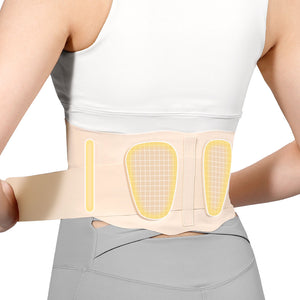
- The Primary Chassis (The Base Layer): This is the main body of the brace that wraps around your lower back and abdomen. It provides the foundational layer of warmth and general compression.
- Structural Stays: These are flexible or rigid inserts placed along the lumbar spine. They resist spinal flexion (rounding of the back) and provide structural integrity to the brace.
- The Tensioning System (The Straps): This is where the magic happens—and where single and dual systems diverge. The tensioning system dictates how aggressively and precisely the structural stays are pulled against your anatomy.
Single Strap vs. Dual Compression: The Biomechanical Showdown
When you look at basic single-strap designs, you are essentially looking at a uniform band. When you pull the single strap tight, the pressure is distributed evenly across a broad, generalized area.
The Limitation of Single Straps: While easy to use and helpful as a basic reminder not to slouch, a single strap cannot account for the natural curvature of your spine. Human anatomy isn't a perfect cylinder. If you tighten a single strap enough to support your lower lumbar region, it might dig uncomfortably into your ribs. If you loosen it for comfort, you lose the foundational support where you need it most.
The Superiority of Dual Compression: A dual compression system uses independent upper and lower tightening mechanisms. This represents a massive biomechanical advantage because it allows you to secure the brace around two distinct anatomical zones: the pelvis and the lower thoracic/lumbar spine.
By pulling the bottom straps securely around the hips, you anchor the brace and stabilize the pelvis. Then, by adjusting the top straps independently, you can dial in the exact amount of pressure needed against the curvature of your lower back. This independent adjustment is crucial for people researching how to fix an arched lower back (anterior pelvic tilt), as it allows for nuanced correction rather than a blunt-force squeeze.

The Fivali Advantage: Why Dual Compression Delivers
If you want to see this technology in action, look closely at the design of the fivali back brace. The brand has effectively mastered the dual compression strap architecture to cater to active individuals who refuse to let discomfort sideline their routines.
Here is why a multi-point compression system, like the one featured on the Fivali Unisex Back Brace, outperforms older styles:
- Targeted Spinal Alignment: Proper posture requires stabilizing the foundation. Fivali’s dual compression straps act as an independent pelvic anchor and a thoracic aligner simultaneously. The research on advanced bracing underscores this: consistent, targeted bracing for conditions as severe as adolescent scoliosis shows a 72% success rate in halting curve progression compared to just 48% with observation alone. The precision matters.
- Customized Fit Without Chafing: A common complaint with standard braces is that they migrate during physical activity. Because you can fine-tune the upper and lower tension on a dual compression design, the brace hugs your unique body contours. It stays in place whether you are swinging a golf club, lifting boxes, or typing at a desk.
- Enhanced Proprioceptive Feedback: Multiple points of contact provide your nervous system with richer sensory data. The dual straps give you distinct physical cues on both your lower and mid-back, vastly improving muscle engagement.
Reading through fivali back brace reviews, you'll consistently notice users highlighting this exact feature—the ability to customize the fit so perfectly that they forget they are wearing it.
How to Properly Adjust a Compression Back Brace for Maximum Comfort and Support
Even the most advanced full back brace for posture will fail if you don't adjust it correctly. Here is the step-by-step method to unlock the full potential of a dual compression system:
- Center the Stays: Start by wrapping the unfastened brace around your back, ensuring the structural stays (the supportive strips) are perfectly centered on either side of your spine.
- Secure the Primary Base: Fasten the main, wider band snugly over your abdomen. It should be tight enough to stay up on its own but comfortable enough that you can breathe normally.
- Anchor the Pelvis (Lower Straps): Take the lower secondary compression straps and pull them forward, fastening them tightly over the main band. This anchors the brace against your hips.
- Dial in the Lumbar (Upper Straps): Finally, take the upper secondary straps and adjust them to your desired level of support. Pulling these tighter will press the structural stays firmly against your lower back, enforcing proper posture and minimizing slouching.

Match Your Needs: The Decision Checklist
Still wondering which route to take? Use this quick evaluation framework:
Choose a Single Strap if:
- You only need very mild postural reminders.
- You are on an extremely restrictive budget and only need temporary wear for an hour a day.
Choose Dual Compression if:
- You sit for long hours and are actively seeking the best back brace for lower back pain for work.
- You engage in dynamic physical activities (sports, gardening, lifting) and need the brace to stay put.
- You experience discomfort with standard braces digging into your ribs or hips.
- You need targeted pressure for specific recovery goals or chronic ache management.
- You are looking for a back neck brace for posture ecosystem where targeted, multi-point adjustments are essential.
Frequently Asked Questions (FAQs)
Do dual compression braces cause muscle weakness?
This is a common myth. Advanced compression braces work via proprioception to encourage your muscles to engage, not replace them. However, they should be used as an aid—not a 24/7 crutch. Combining bracing with core strengthening exercises yields the best long-term results.
How long should I wear my dual compression back brace?
For posture correction, start with intervals of 1 to 2 hours during activities where you are most prone to slouching (like sitting at a desk or heavy lifting). Gradually increase as needed, but avoid sleeping in the brace unless explicitly instructed by a physician.
Can I wear a dual compression brace under my clothes?
Yes. High-quality products from fivali utilize breathable, low-profile, high-tech fabrics designed specifically to fit discreetly under standard clothing without excessive bulk.
Investing in Your Posture, the Smart Way
When you understand the biomechanics behind the design, the choice becomes remarkably clear. A single strap might offer basic compression, but it lacks the anatomical nuance required for lasting comfort and genuine posture correction.
Dual compression technology respects the complex curvature of your spine. By providing independent anchoring for your pelvis and precise, customizable pressure for your lumbar region, it bridges the gap between rigid immobilization and flexible support. If you are serious about maintaining an active, pain-free lifestyle, bypassing outdated single-strap designs in favor of advanced dual compression is one of the smartest investments you can make in your daily well-being.