Back Pain While Flying: Tips for Staying Pain-Free?

Long-haul flights and short domestic hops alike can take a significant toll on the human body, particularly the spine. The combination of prolonged immobilization, cramped seating quarters, and the continuous low-frequency vibrations of an aircraft cabin creates a perfect storm for spinal discomfort. For individuals prone to lumbar stiffness or chronic aches, a few hours in the air can lead to days of recovery post-landing. Navigating air travel without exacerbating pre-existing conditions requires a proactive approach to spinal alignment, circulation, and ergonomic support.
The Impact of Air Travel on Spinal Alignment
The design of standard airplane seats rarely aligns with the natural curvature of the human spine. Most economy cabins feature seats that encourage a hunched posture, forcing the lumbar spine into flexion. This sustained rounding of the lower back increases intradiscal pressure, strains the surrounding ligaments, and forces the core muscles into a state of chronic fatigue.
Furthermore, the atmospheric pressure changes inside a pressurized cabin can affect blood circulation, potentially leading to mild tissue swelling and joint stiffness. When the body remains stationary for hours, fluid dynamics within the spinal discs change, reducing their shock-absorbing capacity. Understanding how these environmental factors interact with body mechanics is the first step toward preventing discomfort during a journey.
Essential Pre-Flight Preparation Strategies
Minimizing discomfort begins long before boarding the aircraft. Strategic planning regarding seat selection, luggage management, and attire can dramatically alter the physical outcome of a flight.
Strategic Seat Selection
When booking a flight, aisle seats are generally preferable for individuals concerned with spinal health. An aisle seat allows for frequent, unobstructed movement, making it easier to stand up, stretch, and walk down the cabin without disturbing neighboring passengers. Additionally, seats with extra legroom, such as those in exit rows or premium economy, provide the necessary space to extend the legs and alter pelvic angles throughout the duration of the trip.
Smart Packing and Luggage Handling
Lifting heavy bags into overhead bins is a frequent trigger for acute muscle spasms.
-
Use rolling luggage with multidirectional spinner wheels to reduce twisting forces on the spine.
-
Pack lighter, utilizing multiple smaller bags rather than one excessively heavy suitcase.
-
When lifting bags into the overhead compartment, bend at the knees, engage the core, and keep the luggage as close to the body as possible to avoid leverage strains.

Ergonomic Adjustments for the Airplane Seat
Standard airline seats lack adequate lumbar support, leaving a gap between the lower back and the seatback. Filling this void is crucial for maintaining the natural lordotic curve of the lumbar spine.
Utilizing External Lumbar Support
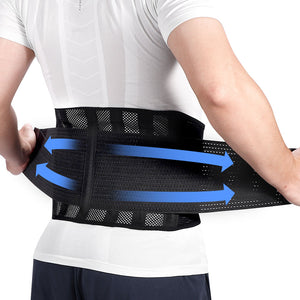
Creating a supportive environment can be achieved with dedicated travel gear or items readily available on the plane. A rolled-up airplane blanket, a light jacket, or an inflatable travel pillow placed directly behind the lower back can prevent the spine from slouching. For comprehensive, continuous structural support that moves with the body, wearing a specialized orthotic device like a Fivali back brace provides targeted compression, stabilizes the lower torso, and keeps the pelvis in a neutral position throughout the flight.
· Fivali Top Picks
✧ Unisex Back Brace for Posture and Pain Relief Shoulder Straightener
- 2 in 1 Back Brace Design for Reinforced Support
- User-friendly & Easily Wear by Yourself
- Adjustable & Lightweight Full Back Support
- Upper & Lower Back Pain Relief
- Scoliosis, Hunchback, Hump, Thoracic, Spine Correction

Optimizing Foot and Leg Placement
Proper foot placement directly influences pelvic alignment. Ideally, feet should rest flat on the floor with knees bent at a 90-degree angle.
-
If the feet do not comfortably reach the floor, use a carry-on bag or a collapsible footrest as a platform.
-
Avoid crossing the legs at the knees or ankles, as this tilts the pelvis, creates an uneven distribution of weight on the sit bones, and places unequal tension on the lower back muscles.
Active Movement and In-Flight Mobility
Immobility is one of the primary catalysts for stiffness and pain. The human body is designed for movement, which stimulates blood flow and lubricates joints. Incorporating a routine of subtle movements can mitigate the effects of prolonged sitting.
Seated Spinal Warm-Ups
Passengers can perform discreet exercises without leaving their seats to keep muscles engaged and blood flowing:
-
Pelvic Tilts: Gently rock the pelvis forward, arching the lower back slightly, then rock it backward, flattening the back against the seat. Repeat this motion 10 to 15 times every hour.
-
Seated Twists: Place the right hand on the left knee and gently rotate the torso to the left, holding for a few seconds before switching sides.
-
Ankle Pumps: Move the feet up and down at the ankle joint to stimulate the calf muscle pump, which enhances lower extremity circulation and reduces overall fluid retention.
Walking the Cabin
Aim to stand up and walk for at least five minutes every sixty to ninety minutes during a flight. Walking down the aisle helps decompress the spine, activates the gluteal muscles, and relieves the pressure placed on the sciatic nerve during prolonged sitting. Use the standing time near the galley to perform gentle calf stretches or hamstring extensions.
Hydration and Inflammation Management
The air inside an airplane cabin is notoriously dry, often maintaining humidity levels below twenty percent. Dehydration directly impacts cellular health and joint function.
The Role of Water Intake
Spinal discs are composed largely of water. Throughout the day, these discs naturally lose moisture, a process accelerated by the dry cabin environment. Dehydrated discs are less resilient and more prone to compression. Drinking consistent amounts of water before and during the flight ensures that these spinal cushions remain as hydrated as possible, preserving their shock-absorbing capabilities. Avoid excessive caffeine and alcohol, as both act as diuretics and exacerbate dehydration.
Managing Systemic Inflammation
Prolonged sitting combined with dehydration can increase muscle soreness and localized inflammation. Applying topical cooling gels or heat patches can alter pain perception and relax tight muscular bands. Keeping the body warm with layers is also beneficial; cold cabin air can cause muscles to contract and tighten defensively, increasing the likelihood of spasms.
Post-Flight Recovery Procedures
The care of the spine does not end when the aircraft lands. The transition from a seated environment to an active one requires careful management to prevent injury during luggage retrieval and transit.
Safe Deplaning Mechanics
When the plane arrives at the gate, avoid rushing to stand up in a cramped posture under the low overhead bins. Wait until there is ample room to stand fully upright. When retrieving heavy bags from the baggage carousel, allow the suitcase to come close before lifting, and use the legs rather than the back to lift the load.
Target Restorative Stretches
Upon reaching a hotel or home, dedicating fifteen minutes to restorative movement can reverse the strains of travel. Essential movements include:
| Stretch Name | Target Area | Execution |
| Child's Pose | Lumbar spine and glutes | Kneel on the floor, sit back on the heels, and extend the arms forward on the ground. |
| Cat-Cow Stretch | Entire vertebral column | On hands and knees, alternately arch the back toward the ceiling and drop the belly toward the floor. |
| Hamstring Stretch | Posterior chain | Lie on the back and extend one leg upward, pulling gently toward the torso to relieve lower back tension. |
Utilizing Supportive Wearable Technology
For frequent flyers, investing in proper supportive gear is a foundational element of a comprehensive back pain guide. While behavior modifications are vital, mechanical support provides an extra layer of defense against unpredictable seating conditions and turbulence.
Using a high-quality compression support device, such as those designed by Fivali, assists the core musculature when fatigue sets in. A Fivali back brace works by reinforcing the intra-abdominal pressure, reducing the workload on the erector spinae muscles, and gently prompting the wearer to maintain an upright posture. This type of external support is particularly useful during takeoff, landing, and times of turbulence when sudden movements could potentially jar an unprotected spine.
Summary of Pain-Free Travel Tactics
Achieving a comfortable flight requires a combination of preparation, ergonomic awareness, and active movement. By treating spinal care as a continuous process—ranging from the selection of an aisle seat to utilizing a Fivali back brace for structural reinforcement—travelers can significantly reduce physical stress. Staying properly hydrated, performing regular seated exercises, and adhering to structured post-flight stretching routines ensure that arriving at a destination is met with energy and mobility rather than stiffness and discomfort. Implementing these strategies transforms air travel from a physical endurance test into a manageable, pain-free experience.
-
Veröffentlicht in
Back pain causes, Back pain solutions, Brace, Pain