Can You Get Sciatica in Just Your Thigh?

Sciatica is one of the most common causes of lower body pain, traditionally recognized by a sharp, burning sensation that travels all the way from the lower back down to the toes. However, many individuals experience localized discomfort, feeling intense symptoms strictly confined to the upper leg. If you are experiencing sharp radiating sensations, burning, or numbness only between your hip and your knee, you might wonder if localized sciatica is actually possible.
The short answer is yes. While classic sciatica affects the full length of the nerve, structural variations, specific root compressions, and physical strain can cause isolated discomfort. Understanding how the sciatic nerve functions, why discomfort manifests strictly in the upper leg, and how targeted relief strategies like a thigh brace for sciatica can help is essential for restoring daily mobility.
Sciatic Nerve Anatomy and Isolated Upper Leg Pain
To understand why pain can remain localized, it helps to look at the pathway of the sciatic nerve. As the largest and longest individual nerve in the human body, it originates in the lumbar spine, branches through the gluteal region, and extends down each leg.
The Multi-Branch Structure
The sciatic nerve is not a single, solid wire. It is a dense bundle of individual nerve fibers that originate from multiple nerve roots in the lower spine, specifically lumbar roots L4 and L5, as well as sacral roots S1, S2, and S3. These roots join together in the pelvis to form the main nerve trunk, which then travels down the back of the leg before splitting below the knee into the tibial and common fibular nerves.
Because the nerve consists of multiple distinct fibers, an irritation at a specific spinal level may only affect the specific fibers that feed sensation to the front, side, or back of the upper leg.
Referral Patterns and Incomplete Radiating Discomfort
When a nerve root is pinched or inflamed, the resulting discomfort follows specific pathways called dermatomes. Depending on which specific root is impacted, pain signals may travel only a fraction of the full nerve pathway:
-
L4 Nerve Root Compression: Discomfort typically radiates through the hip, across the front of the upper leg, and toward the inner knee.
-
L5 Nerve Root Compression: Discomfort often travels through the outer hip and down the lateral side of the upper leg.
-
S1 Nerve Root Compression: Pain usually concentrates in the gluteal region and the back of the upper leg.
When nerve compression is mild or localized, the pain signal may simply fade out before reaching the lower leg or foot, leaving you with isolated upper leg discomfort.
Primary Causes of Isolated Sciatic Symptoms in the Thigh
When discomfort remains strictly in the upper leg, several specific spinal and extra-spinal conditions are usually responsible.
Upper Lumbar Radiculopathy
Herniated discs, bone spurs, or spinal stenosis occurring at the L3 or L4 lumbar levels primarily affect the nerve supply to the anterior and lateral upper leg. Discomfort originating from these higher lumbar levels rarely travels below the knee, creating an isolated sensation in the upper limb.
Piriformis Syndrome and Deep Gluteal Trapping
The sciatic nerve passes directly beneath or sometimes straight through the piriformis muscle deep within the buttock. When this muscle becomes tight, inflamed, or spasms from overuse, it compresses the nerve trunk. This deep gluteal entrapment frequently sends sharp, aching, or burning sensations directly down the back of the upper leg while sparing the lower calf and foot entirely.
Meralgia Paresthetica Misdiagnosis
Isolated upper leg discomfort is sometimes mistaken for true sciatica pain, even when the main sciatic nerve is not involved. Meralgia paresthetica occurs when the lateral femoral cutaneous nerve becomes compressed as it passes under the inguinal ligament in the groin. This condition causes burning, tingling, or numbness strictly along the outer upper leg, closely mimicking isolated sciatic symptoms.
Symptoms of Sciatic Discomfort Confined to the Thigh
Localized sciatic nerve irritation presents with specific sensory sensations that differ from standard muscular strains or joint stiffness.
Sharp or Burning Pain
Unlike the dull, achy throbbing associated with a pulled hamstring or quadriceps muscle, nerve-related discomfort feels electric, sharp, or hot. It often shoots down the leg during specific movements, such as standing up after sitting for long periods.
Localized Numbness and Tingling
Nerve compression frequently impairs sensory feedback. You may experience a pins and needles sensation or a patch of diminished skin sensation along the front, side, or back of the upper leg.
Muscle Weakness and Instability
Compressed nerves struggle to carry motor signals efficiently. This can lead to sudden buckling or weakness in the upper leg when walking, climbing stairs, or bearing weight.

Conservative Management and Support Strategies
Managing upper leg sciatic discomfort effectively requires a combination of targeted rest, gentle mobility work, and external structural support to minimize nerve tension.
External Compression and Stabilization
Using targeted compression equipment can significantly reduce movement-induced irritation around the hip and upper leg. A specialized compression sleeve for sciatica pain helps maintain local tissue warmth, improves circulation, and stabilizes surrounding muscular structures to keep the nerve from being pinched during movement.
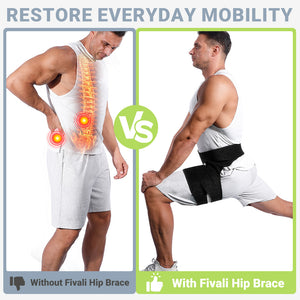
For individuals suffering from deep gluteal entrapment or upper hip alignment issues, using the best hip brace for sciatica provides the pelvic stabilization required to relieve tension on the piriformis muscle and upper nerve roots. Proper external alignment allows inflamed nerve tissues to calm down while maintaining basic daily mobility. Premium orthotics from trusted support brands such as Fivali provide targeted anatomical stabilization designed to offload weight from irritated pelvic structures.
Postural Adjustments and Dynamic Ergonomics
Sitting for prolonged periods compresses the lumbar spine and tightens the hip flexors, worsening upper leg nerve irritation. Incorporating ergonomic changes makes a noticeable difference:
-
Maintain a neutral spine with lumbar support while sitting.
-
Avoid crossing legs or sitting on a wallet in your back pocket.
-
Use a standing desk or take short walking breaks every thirty minutes.
targeted Stretching and Neural Gliding
Gentle mobility exercises can help restore nerve mobility within surrounding soft tissues. Neural gliding techniques allow the nerve to slide smoothly through muscle tissue and fascia, reducing localized friction and pain.
Distinguishing Muscle Strains from Nerve Pain
It is common to confuse a hamstring strain or quadriceps pull with isolated nerve discomfort. Recognizing the physical differences helps guide proper recovery choices.
| Feature | Muscular Strain | Sciatic Nerve Irritation |
| Discomfort Type | Dull, throbbing, or aching | Sharp, burning, electric, or shooting |
| Sensations | Soreness upon direct palpation | Numbness, tingling, or pins and needles |
| Movement Impact | Hurts primarily when stretching the muscle | Worsens with spinal flexion or prolonged sitting |
| Radiation | Stays strictly within the damaged muscle belly | Radiates along a defined nerve pathway |
Long-Term Prevention and Joint Maintenance
Preventing recurrent upper leg sciatic discomfort requires consistent lifestyle habits focused on core stability, hip flexibility, and proper movement patterns.
Core and Pelvic Floor Strengthening
Strong abdominal and lower back muscles stabilize the lumbar spine, reducing the risk of disc herniations and nerve root pinching. Exercises targeting the transverse abdominis and gluteal muscles help maintain optimal pelvic alignment.
Maintaining Hip Mobility
Tight hip rotators directly compress the sciatic nerve pathway. Regular stretching of the hip flexors, piriformis, and IT band prevents muscular tightness from squeezing nerve fibers during movement.
Smart Equipment Selection
When participating in physical activities or standing for long hours, wearing a support device like a thigh brace for sciatica or a best hip brace for sciatica delivers continuous structural support. This preventative measure minimizes excess vibration and strain on vulnerable upper leg tissues.

Relief for Isolated Upper Leg Sciatica
Experiencing sciatica pain strictly in your upper leg is a recognized physiological manifestation of nerve compression. Whether caused by upper lumbar nerve root irritation or piriformis muscle tightness, isolated symptoms require an integrated care approach. By incorporating proper ergonomics, regular mobility work, and external support tools like a compression sleeve for sciatica pain, you can effectively reduce nerve irritation, restore movement confidence, and maintain an active lifestyle.
-
Veröffentlicht in
Hip Injury, Pain