How to Strengthen Hip Stabilizers?

The hip joint is the cornerstone of human movement, acting as the primary link between the upper and lower body. For hikers, trail runners, and outdoor enthusiasts, robust hip stability is the difference between conquering a rugged mountain pass and turning back due to debilitating discomfort. When the muscles supporting this pivot point are weak, the entire kinetic chain suffers.
This comprehensive guide explores the anatomy of hip stability, effective strengthening exercises, and practical tools to support your recovery and training.
The Anatomy of Hip Stability
Understanding the mechanics of the pelvic region helps optimize training routines and prevent common outdoor injuries.
Primary Stabilizing Muscles
The hip joint relies on a complex network of muscles to maintain alignment during dynamic movements.
- Gluteus Medius: This muscle sits on the outer side of the pelvis and is responsible for keeping the pelvis level during single-leg activities, such as walking or hiking on uneven terrain.
- Gluteus Minimus: Located beneath the gluteus medius, this deep muscle assists with abduction and internal rotation, providing essential joint containment.
- Tensor Fasciae Latae (TFL): Working alongside the glutes, the TFL helps stabilize the knee and hip during forward locomotion.
- Deep Rotators: A group of six small muscles, including the piriformis, that stabilize the femoral head within the hip socket.
Consequences of Weakness
When these stabilizers fail to function correctly, secondary muscles overcompensate. This imbalance often leads to runner's knee, IT band syndrome, and lower back strain. For individuals navigating active lifestyles, tracking symptoms through a comprehensive Hip Pain Guide can help pinpoint specific biomechanical failures before they cause chronic issues.
Core Exercises for Targeted Strength
Building resilient hips requires a mix of isolation movements and functional, multi-planar exercises. Integrate these movements into your weekly routine to build a solid foundation.
Isolation Movements
Isolation exercises target specific muscles without the distraction of larger muscle groups.
- Side-Lying Clamshells: Lie on your side with knees bent at a 90-degree angle. Keep your feet glued together and raise your top knee slowly. This directly activates the gluteus medius.
- Lateral Band Walks: Place a resistance band around your ankles and adopt a slight squat position. Step sideways, maintaining tension on the band to challenge the outer hip complex.
Functional Progressions
Functional exercises mimic the actual movements performed during outdoor activities like climbing or descending steep trails.
- Single-Leg Glute Bridges: Lie on your back, lift one leg off the ground, and drive your hips upward using the heel of the planted foot. This builds single-leg stability and glute power.
- Bulgarian Split Squats: Elevate your rear foot on a bench and lower your hips until your front thigh is parallel to the ground. This movement challenges balance and strengthens the entire lower extremity.

Integrating Support Strategies
While exercise builds long-term strength, immediate joint support can facilitate safer training sessions and faster recovery times.
External Bracing Solutions
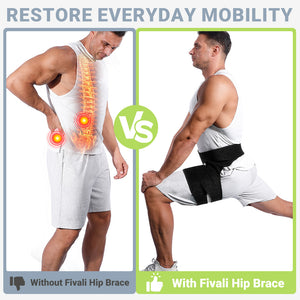
Utilizing a dedicated compression sleeve or stabilization garment can offer immense benefits during high-impact training or recovery phases. A high-quality hip stabilizer brace provides targeted compression, improves proprioception, and reduces micro-movements within the joint socket. This external support helps maintain proper alignment when fatigue sets in during long treks.
Choosing the Right Equipment
When selecting supportive gear for active use, look for breathable materials and adjustable strap systems that allow for a customized fit. Brands like Fivali specialize in supportive gear designed to handle dynamic movements while offering the necessary reinforcement to vulnerable joints.
Sample Weekly Training Program
To achieve optimal results, consistency is key. Below is a structured template designed to balance strength training with adequate recovery.
| Training Day | Focus Area | Key Movements | Total Duration |
| Monday | Core and Hip Isolation | Clamshells, Planks, Bird-Dogs | 20 Minutes |
| Tuesday | Active Recovery | Mobility Work, Light Walking | 30 Minutes |
| Wednesday | Lower Body Functional Strength | Split Squats, Single-Leg Bridges | 45 Minutes |
| Thursday | Rest | Gentle Stretching | 15 Minutes |
| Friday | Dynamic Stability | Lateral Band Walks, Step-Ups | 30 Minutes |
| Saturday | Outdoor Integration | Trail Hiking, Running | Variable |
| Sunday | Full Recovery | Rest | 0 Minutes |
Biomechanical Mechanics and Joint Preservation
Long-term joint health depends on how well the body manages impact forces during movement.
Proprioception and Balance
Proprioception is the body's ability to perceive its position in space. Strengthening the hip stabilizers enhances this neural pathway, allowing for faster reflex adjustments when slipping on loose gravel or stepping across wet rocks. Better balance directly correlates with a lower risk of acute joint sprains.
Impact Distribution
Strong hip muscles absorb the shock of each footstrike, shielding the knees and lower lumbar spine from excessive force. When the hips are stable, the force is distributed evenly across the larger muscle groups of the lower body, preserving cartilage and reducing wear and tear on the joints over time. Referencing a structured Hip Pain Guide can assist in understanding how improper impact distribution manifests as localized discomfort.
Ergonomic Adjustments for Daily Life
Training does not stop when leaving the gym or the trail. Daily habits heavily influence pelvic alignment and muscle activation.
Sitting Posture
Prolonged sitting shortens the hip flexors and deactivates the gluteal muscles, a phenomenon often referred to as glute amnesia. To counteract this, utilize an ergonomic chair, avoid crossing the legs at the knees, and take standing breaks every hour to perform quick glute squeezes.
Sleep Alignment
Sleeping on the side without proper support can cause the top leg to drop forward, rotating the pelvis and straining the outer hip muscles overnight. Placing a firm pillow between the knees keeps the hips, pelvis, and spine in a neutral alignment, promoting optimal blood flow and muscle recovery.
Fivali Recommendation
✧ Unisex Hip and Thigh Compression Brace Adjustable Design for Sciatica Thigh Injury Pain Relief
- Stabilizes Hip & Pelvic Joints
- Supports Muscle & Tendon Fast Recovery
- Targeted Compression for Bursitis & Tendonitis Relief
- Universal Fit for Left and Right Side
- Unisex & One-Size-Fits-Most Design
- Skin-Friendly Fabric for All-Day Comfort

Final Insights on Pelvic Longevity
Developing strong hip stabilizers is an ongoing investment in physical longevity and performance. By combining targeted isolation movements, functional strength training, and external support tools like a hip stabilizer brace, any athlete can protect their joints from injury. Prioritizing pelvic stability ensures the body remains resilient, balanced, and ready to tackle the challenges of the great outdoors for years to come.
-
Veröffentlicht in
Healthy Lifestyle, sports