Can Foot Supination Be Corrected?

Foot mechanics dictate the efficiency of every step taken throughout the day. When the structural alignment of the foot leans outward, a condition known as supination, or underpronation, occurs. This biomechanical pattern places excessive weight on the outer edges of the foot, sending ripple effects up the entire kinetic chain. Individuals who spend long hours standing or moving frequently encounter structural fatigue due to this uneven weight distribution.
Addressing this alignment issue requires a deep dive into root causes, targeted physical interventions, footwear adjustments, and supportive devices that work together to restore natural gait symmetry.
Mechanics of Underpronation
An efficient gait cycle relies on a balance between pronation and supination to absorb shock and propel the body forward.
Structural Causes
True supination often stems from inherited structural traits that influence how bones and joints articulate.
- Rigid Arches: High, inflexible arches naturally resist flattening during foot strike, forcing the outer border of the foot to bear the brunt of the impact.
- Tibia Alignment: Slight outward curvature of the lower leg bones can tilt the ankle outward, predisposing the foot to an underpronated position.
- Congenital Bone Structure: The shape of the tarsal and metatarsal bones sometimes limits internal rotation, preventing the foot from rolling inward normally.
Soft Tissue Contribution
Muscular imbalances and structural tightness can reinforce an underpronated walking pattern over time.
- Tight Achilles Tendon: A shortened calf complex restricts ankle dorsiflexion, causing the heel to lift early and shift weight toward the outer toes.
- Weak Peroneal Muscles: The peroneal muscles run along the outside of the shin and ankle, responsible for eversion. When these muscles lack strength, the foot cannot effectively pull itself into a neutral position.
- Overactive Tibialis Anterior: This muscle lifts the front of the foot and can pull the foot upward and inward if it becomes overly dominant compared to its opposing muscle groups.

Daily Impacts and Secondary Complications
Neglecting underpronation can lead to micro-trauma across the lower extremities due to insufficient shock absorption.
Localized Foot Strain
The outer edge of the foot is not anatomically designed to carry the majority of body weight during dynamic movement.
- Plantar Fasciitis: High arches place continuous tension on the plantar fascia ligament, leading to localized micro-tears and heel pain.
- Stress Fractures: The fifth metatarsal, located on the outer side of the foot, bears disproportionate stress during weight-bearing activities, increasing the risk of structural cracks.
- Calluses and Corns: Friction accumulates rapidly along the outer heel and the base of the small toe, leading to thick, uncomfortable skin buildups.
Kinetic Chain Complications
Misalignment at the base of the body alters the movement patterns of every joint located above it.
- Ankle Instability: Outward rolling compromises lateral ankle ligaments, making individuals highly susceptible to inversion sprains.
- Knee and Hip Strain: The lack of foot pronation prevents the lower leg from rotating inward correctly, which forces the knee and hip joints to absorb unmitigated ground reaction forces.
- Lower Back Fatigue: Without the foot acting as a natural shock absorber, spinal structures experience greater impact velocity during daily walking. To better map these symptoms, cross-referencing an Ankle Pain Guide helps track how lateral foot alignment relates to broader joint discomfort.
Corrective Physical Training Protocols
Targeted exercise routines aim to lengthen tight lateral structures while strengthening the medial stabilizers responsible for pulling the foot toward a neutral axis.
Targeted Stretching Routines
Elongating tight connective tissues restores necessary mobility to the ankle complex.
- Wall-Assisted Calf Stretch: Stand facing a wall with one leg extended straight back and the heel pressed into the floor. Hold for thirty seconds to target the gastrocnemius.
- Seated Plantar Fascia Release: Roll the sole of the foot over a firm ball for two to three minutes daily to break up tension within the plantar fascia.
- Ankle Inversion Stretch: Cross one leg over the knee and gently pull the foot upward and outward with the hands to stretch the tight outer ligaments.
Activation and Strengthening Exercises
Building strength in underactive muscle groups encourages proper foot tracking during movement.
- Resisted Eversion: Loop a resistance band around the forefoot and anchor it to a secure point. Push the foot outward against the resistance to stimulate the peroneal muscles.
- Towel Scrunches: Place a towel flat on the floor and use the toes to curl and pull the fabric inward, strengthening the intrinsic muscles of the foot arch.
- Single-Leg Balance: Stand on one foot on an uneven surface, focusing on keeping the big toe firmly planted against the floor to counteract the outward roll.
Orthotic Interventions and Gear Selection
Modifying the environment beneath the foot offers immediate relief and guides the skeletal system toward optimal alignment.
Shoe Selection Metrics
Footwear must offer specific structural attributes to counteract a rigid, high-arched foot profile.
| Footwear Feature | Corrective Function | Benefit for Supination |
| Deep Cushioning | Absorbs ground impact forces | Protects joints from shock |
| Flexible Midsole | Encourages natural foot flexion | Compensates for rigid arches |
| Neutral Last | Avoids forcing the foot outward | Maintains straight alignment |
| Wide Toe Box | Allows metatarsal splay | Distributes weight evenly |
Custom and Prefabricated Orthotics
Orthotic inserts provide localized contouring to redistribute pressure away from the outer edge of the foot. Lateral heel wedges feature a slight incline on the outer side, which mechanically coaxes the heel to roll slightly inward toward a neutral position. Deep heel cups stabilize the fatty pad under the calcaneus bone, preventing the ankle from shifting laterally during heel strike.
Active Stabilization Methods
For individuals managing prolonged standing shifts or dynamic activities, external bracing offers structural reinforcement against outward ankle rolling.
External Alignment Supports
When fatigue sets in, the muscles responsible for maintaining a straight gait lose efficacy. Utilizing the best ankle brace for supination provides structural compression that prevents the ankle from rolling outward into an inversion sprain. This compression also enhances proprioceptive feedback, giving the nervous system a clearer sense of foot positioning on flat and uneven surfaces.
Integrating Supportive Gear into Daily Routines
Wearable supports must integrate seamlessly into daily footwear without causing restriction. Solutions provided by Fivali focus on streamlined profiles and durable fabrics that withstand structural tension while fitting comfortably within everyday footwear. Consistent use during high-fatigue hours helps maintain correct alignment before poor habits solidify.
✧ Fivali Top Pick
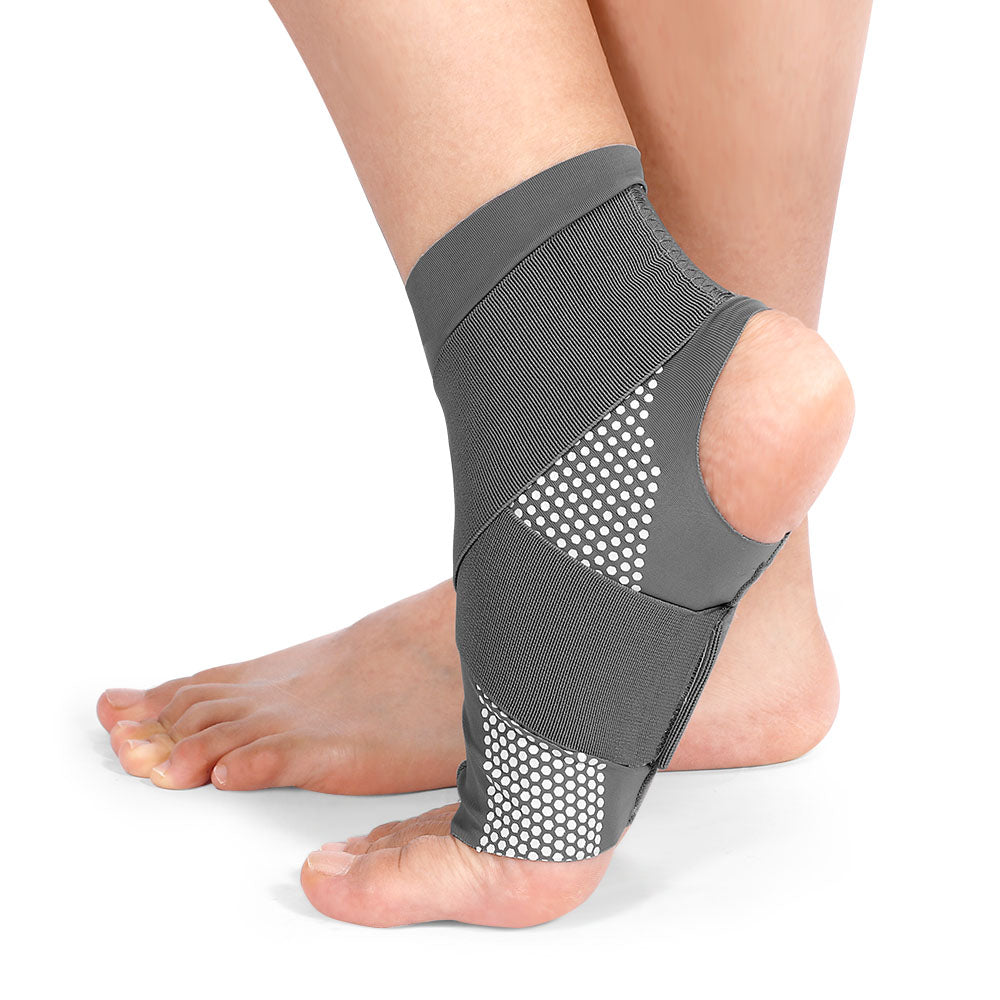
- Premium Breathable & Elastic Materials
- Adjustable Straps for Secure Fit
- Great Ankle Compression
- Speed up Ankle Recovery & Pain Relief
Long Term Maintenance and Prevention
Correcting gait patterns requires consistent, long-term modifications to daily movement habits.
Biomechanical Awareness
Developing an internal awareness of weight distribution prevents unconscious regression into an underpronated stance. Focus on consciously pressing the ball of the foot and the big toe into the ground when standing or walking. Periodically checking the wear patterns on shoe outsoles provides clear visual feedback; even wear across the center indicates progress, while excessive wear on the outer rim signals a need for adjustment. Utilizing a detailed Ankle Pain Guide assists in identifying whether external support adjustments are successfully mitigating lateral strain over time.
Environmental Variance
Walking on varied terrain challenges the feet to adapt and self-correct. Incorporate walking on natural surfaces like sand, grass, or gravel when possible. These surfaces force the foot to utilize all stabilizing muscle groups, promoting natural flexibility and preventing the structural rigidity associated with constant movement on hard, flat concrete.
Path Forward for Structural Alignment
Foot supination can be managed, managed well, and fundamentally improved through a multi-layered approach to alignment. While genetic bone structures set a baseline, the soft tissues and movement habits surrounding those bones remain highly adaptable. Combining targeted peroneal strengthening with adequate cushioning, orthotic support, and specialized tools like the best ankle brace for supination creates a stable framework for the lower body. Commitment to daily biomechanical adjustments ensures that every step contributes to lasting joint health and efficient movement.