Herniated Disc
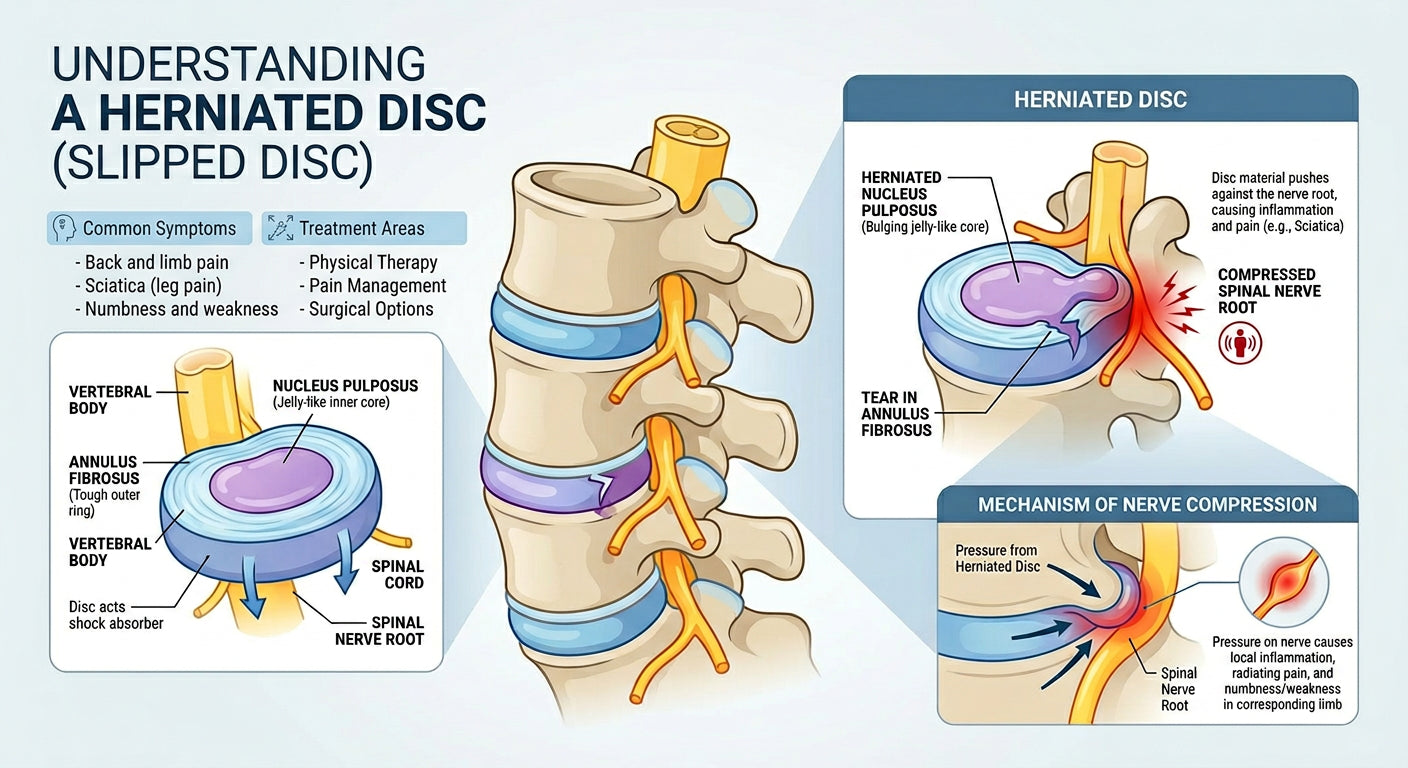
A herniated disc, often referred to as a "slipped" or "ruptured" disc, is a common spinal condition that can lead to significant discomfort and impaired mobility. It occurs when the soft, jelly-like center of a spinal disc pushes through a tear in its tougher outer casing. This can irritate nearby nerves, resulting in pain, numbness, or weakness in the affected area.
What is a Herniated Disc?
Our spine is made up of a series of bones called vertebrae, cushioned by intervertebral discs. These discs act as shock absorbers, allowing the spine to flex and twist. Each disc has two parts: a tough, fibrous outer ring (annulus fibrosus) and a soft, gel-like core (nucleus pulposus). A herniated disc happens when the nucleus pulposus pushes out through a tear in the annulus fibrosus, often due to wear and tear, injury, or age-related degeneration. This extrusion can press on nearby spinal nerves, leading to a range of symptoms. While a herniated disc can occur anywhere along the spine, it is most common in the lower back (lumbar spine) and neck (cervical spine).
Recognizing the Symptoms
The symptoms of a herniated disc vary widely depending on its location and the severity of nerve compression. Common signs include:
- Pain: Often sharp or burning, localized to the back or neck, and frequently radiating down an arm or leg. This radiating pain is often called sciatica if it travels down the leg. The severity can range from a dull ache to an incapacitating sensation. Many people wonder exactly what a herniated disc feels like, and it can vary greatly between individuals and disc locations.
- Numbness or Tingling: A sensation of pins and needles or complete numbness in the body part served by the affected nerve.
- Weakness: Muscles innervated by the compressed nerve may become weakened, making it difficult to lift objects, stand, or walk.
- Worsening Pain: Symptoms may intensify with certain movements, such as coughing, sneezing, bending, or prolonged sitting.
Diagnosing a Herniated Disc
Diagnosing a herniated disc typically involves a thorough physical examination and a review of your medical history. Your healthcare provider will assess your reflexes, muscle strength, and sensation. Imaging tests are often used to confirm the diagnosis and pinpoint the exact location of the herniation:
- X-rays: While X-rays cannot show a herniated disc, they can rule out other conditions like fractures or tumors.
- MRI (Magnetic Resonance Imaging): This is the most common and effective imaging test for diagnosing a herniated disc, providing detailed images of soft tissues, including discs and nerves.
- CT (Computed Tomography) Scan: A CT scan can provide cross-sectional images of the spine and may be used if an MRI is not possible.
- Myelogram: In some cases, a dye may be injected into the spinal fluid before a CT scan to highlight the spinal cord and nerves.
- Nerve Conduction Studies/Electromyography (NCS/EMG): These tests measure electrical activity in nerves and muscles to identify nerve damage and determine its severity.

Treatment Approaches for a Herniated Disc
Most herniated discs respond well to conservative treatments, with many individuals experiencing significant relief within a few weeks to a few months.
Conservative Treatments
- Rest and Activity Modification: Limiting activities that aggravate the pain is essential. However, complete bed rest is generally not recommended as it can lead to muscle weakness and stiffness.
- Physical Rehabilitation: A structured program can help strengthen core muscles, improve flexibility, and teach proper posture and body mechanics. This is often a cornerstone of recovery.
- Pain Management: Over-the-counter pain relievers such as NSAIDs (nonsteroidal anti-inflammatory drugs) can help reduce pain and inflammation. For more severe pain, your doctor might prescribe stronger medications or muscle relaxants.
- Injections: Epidural steroid injections can deliver anti-inflammatory medication directly to the affected nerve roots, providing temporary pain relief.
Supportive Solutions
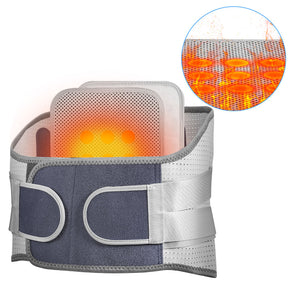
For some, external support can be beneficial. Many people ask whether a back brace for a herniated disc is right for them. These supports can provide stability and help reduce spinal strain during recovery or daily activities.
Prevention is Key
While not all herniated discs can be prevented, especially those due to age-related degeneration, several lifestyle modifications can reduce your risk:
- Maintain Good Posture: Be mindful of your posture, especially when sitting for long periods. Use ergonomic chairs and ensure your computer screen is at eye level.
- Lift Safely: When lifting heavy objects, bend at your knees, not your waist, and use your leg muscles to lift, keeping the object close to your body.
- Regular Exercise: Strengthen your core muscles (abdominal and back) to better support your spine. Low-impact activities like walking, swimming, and cycling are beneficial.
- Maintain a Healthy Weight: Excess weight puts added stress on your lower back.
- Stay Hydrated: Proper hydration is important for disc health. You might be surprised by how dehydration can contribute to back discomfort.
Related Conditions
A herniated disc can often lead to or be confused with other spinal conditions.
- Sciatica: This common symptom, not a condition itself, refers to pain that radiates along the path of the sciatic nerve, which branches from your lower back through your hips and buttocks and down each leg. It's frequently caused by a herniated disc compressing the nerve. Understanding what causes sciatica pain is crucial for proper treatment. For those seeking lasting relief, exploring how to permanently fix sciatica involves addressing the root cause.
- Spinal Stenosis: This condition involves the narrowing of the spinal canal, which can put pressure on the spinal cord and nerves. It can present with symptoms similar to those of a herniated disc. A common question is whether spinal stenosis is curable, which depends on its severity and cause, but it's often manageable with various treatments.
Living with a Herniated Disc
For many, managing a herniated disc becomes a part of daily life. This involves adhering to physical therapy exercises, practicing good body mechanics, and making lifestyle adjustments. Supportive measures, such as comfortable footwear and ergonomic aids, can also make a significant difference. The long-term benefits of back braces for chronic pain can be considerable for some individuals, providing stability and relief.
When to Seek Medical Attention
While many herniated disc symptoms resolve with conservative care, it's important to know when to consult a healthcare professional. Seek immediate medical attention if you experience:
- Sudden or severe weakness, numbness, or tingling in an arm or leg.
- Loss of bladder or bowel control (cauda equina syndrome).
- Progressive worsening of symptoms despite conservative treatment.
If you're experiencing ongoing back discomfort, it's always advisable to consult a medical professional for a personalized assessment and treatment plan. You can also explore back support options to help with your pain and aid your recovery.
-
Veröffentlicht in
Back pain causes