What kind of brace is best for a sprained wrist?

Imagine this: It is late May, the weather is finally warming up, and you are outside enjoying a Memorial Day weekend barbecue. A friendly backyard volleyball game gets a little too competitive, you trip, put your hand out to break your fall, and immediately feel that unmistakable, sickening tweak in your joint.
In a fraction of a second, your long weekend plans have shifted from serving volleyballs to icing an injury.
If you have ever suffered a wrist sprain, you know that the immediate aftermath is filled with questions. As you browse the internet or stare at shelves of recovery gear, the sheer volume of options is overwhelming. From soft elastic sleeves to rigid metal-enforced gauntlets, figuring out exactly brace for a sprained wrist you need can feel like learning a foreign language.
The truth is, there is no single "perfect" brace. The best solution depends entirely on the severity of your sprain and where you are in your recovery journey. In this comprehensive guide, we are going to translate the complicated terminology, map out exactly which support system matches your specific injury, and give you the knowledge you need to get back to the activities you love safely.
Understanding Your Wrist Sprain: The 3 Grades
Before you can understand how to choose a wrist brace, you first need to understand your injury. A sprain occurs when the ligaments—the tough bands of fibrous tissue connecting your bones—are stretched beyond their normal limits or torn.
Medical professionals categorize these injuries into three distinct grades:
- Grade I (Mild): The ligaments are stretched or have microscopic tears. You will experience mild pain and slight swelling, but the joint remains stable, and you can still bear some weight on it.
- Grade II (Moderate): This involves a partial tear of the ligament. Swelling is noticeable, bruising may appear, and moving the joint causes significant pain. There is a mild loss of function and some instability.
- Grade III (Severe): The ligament is completely torn or ruptured. You will experience severe pain, substantial swelling, and prominent bruising. The joint will feel extremely loose or unstable, and you will not be able to use it functionally.
Matching Sprain Severity to the Right Brace Type
The biggest mistake people make during recovery is wearing the wrong level of support for their specific grade of injury. Here is exactly how to map your sprain to the correct recovery tool.
Compression Sleeves for Mild Support (Grade I & Late Recovery)
If you have a mild Grade I sprain, or if you are in the final stages of recovering from a more severe injury, a simple compression sleeve is your best friend. These pull-on garments offer mild, 360-degree compression.
Why they work: The primary goal here is swelling control and proprioception (helping your brain remain aware of your joint's position). They do not restrict your movement, making them ideal for everyday tasks or when you are ready to return to light sports, but they keep the joint warm and comfortably compressed.
Wrap-Style and Neoprene Braces (Grade I & II Transition)
For a sprain that requires more than just compression but doesn't need total immobilization, wrap-style braces are the golden middle ground. These usually feature adjustable straps and are crafted from heat-retaining materials like neoprene.
Why they work: A wrap-style brace allows you to dial in the exact level of tightness you need on any given day. They provide flexible support that restricts extreme ranges of motion (like bending your hand too far backward) while still allowing you to type, hold a coffee cup, or perform daily activities. They are the ideal step-down brace as a Grade II sprain begins to heal.
Rigid Splints and Volar-Cushioned Braces (Grade II & III)
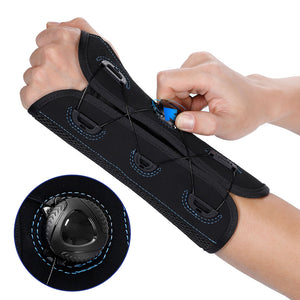
If you are dealing with a moderate to severe injury, you need maximum immobilization. A rigid sprained wrist splint typically features a metal or hard plastic support (called a "stay" or "spoon") running along the palm side (volar) of your forearm and hand.
Why they work: For a partially or completely torn ligament to heal, it must be kept entirely still. Rigid splints take the weight and pressure off your damaged ligaments. By preventing all flexion and extension, they act as a scaffold, holding your joint in a neutral, anatomically correct position while your body repairs the tissue.
Key Features to Look For (The Deep Dive)
When you are narrowing down your choices to find the best brace for wrist sprain recovery, the devil is in the details. Pay close attention to these features:
Removable Stays
A premium rigid brace will have removable metal or plastic splints. This is a crucial feature because it transforms a single product into a multi-stage recovery tool. During the first two weeks, you can keep the rigid stays inserted for maximum immobilization. As your ligament heals and you need to transition to mobility, you can remove the metal stay, converting it into a flexible, wrap-style support.
Thumb Support (Spica)
When you fall on an outstretched hand, the trauma doesn't always isolate itself. It is incredibly common to sprain the ligaments at the base of your thumb simultaneously. If you are experiencing pain shooting up into your thumb joint, look for a brace with a "thumb spica" extension. This immobilizes the lower thumb joints while leaving your fingers free. (If you are relying on athletic tape in a pinch, understanding how to wrap a sprained thumb properly is a valuable temporary skill, but a structured spica brace provides superior long-term stability).
Strap Placement and Padding
Look for multi-strap systems rather than one large Velcro closure. Three or more independent straps allow you to adjust the tension specifically around the swelling, ensuring you don't cut off your circulation. Additionally, ensure the palm area has adequate cushioning, as resting your hand on a rigid metal stay all day can cause nerve irritation if unpadded.
The Recovery Journey: From Immobilization to Mobility
Healing a ligament is a marathon, not a sprint. A common pitfall is wearing a rigid, immobilizing brace for too long. If you freeze a joint for weeks on end without movement, the ligaments heal tight and stiff, and the surrounding muscles atrophy.
Here is a general framework for transitioning:
- The Acute Phase (Days 1-7): Rest, ice, compression, and elevation. For anything above a mild Grade I, utilize maximum immobilization. Wear your rigid brace consistently, removing it only for hygiene.
- The Sub-Acute Phase (Weeks 2-4): As swelling subsides and resting pain decreases, you want to introduce gentle mobility. You might wear your rigid brace during sleep or high-risk activities, but switch to a flexible wrap during the day to encourage blood flow and gentle movement.
- The Strengthening Phase (Weeks 4-6+): Transition entirely to a light compression sleeve or remove the brace altogether during safe activities. Focus on physical therapy exercises to rebuild strength.
Red Flags: When to See a Doctor
While high-quality bracing is incredibly effective, not all injuries should be managed at home. If you experience any of the following "red flags," seek professional medical attention immediately:
- Visible Deformity: If your joint looks visibly crooked, bent at an unnatural angle, or has hard bumps that weren't there before, you may have a fracture.
- Numbness or Tingling: If your fingers feel cold, turn blue/white, or experience "pins and needles," you may have nerve compression or compromised blood flow.
- Inability to Move Fingers: A sprain affects the wrist; you should still be able to wiggle your digits.
- Zero Improvement: If a week passes of consistent rest and bracing and your pain has not decreased at all, it's time for an X-ray.
Frequently Asked Questions
How tight should my brace be?
Your wrist support for sprained wrist should feel comfortably snug, like a firm handshake. It should provide a sense of stability without causing your fingers to throb, swell, or change color. If you take it off and see deep, red indentations in your skin, it is too tight.
Should I sleep in my brace?
For Grade II and III sprains, yes. While sleeping, we have no control over our body positioning. It is incredibly common to unconsciously curl your hands tightly under your chin or roll over onto a bent hand, re-injuring the healing ligament. A rigid night splint prevents this accidental trauma.
I'm not sure if it is a sprain or repetitive strain. Can I still use a brace?
Yes, but the mechanism matters. If you spend eight hours a day typing and have developed a repetitive strain injury, you might wonder, should i wear a wrist brace for tendonitis? In cases of tendonitis or carpal tunnel, bracing at night is highly recommended to keep the nerve channel open, while daytime use of a mild compression sleeve can reduce inflammation without hindering your work.
Your Next Steps to a Pain-Free Wrist
A sprain doesn't have to keep you sidelined for the entire season. By accurately assessing your injury grade, matching it to the correct level of support—from rigid splints for acute protection to flexible sleeves for returning to action—and knowing when to safely transition between them, you take control of your recovery.
Listen to your body, look out for the medical red flags, and invest in a brace that adapts to your healing journey. With patience and the right support, you will be back to your active lifestyle stronger than ever.