Eliminate Disc Strain: Simple Ergonomic Adjustments for Your Chair, Sleep & Workspace for Lasting Back Relief
Ever wake up feeling stiff, even after a full night's sleep? Or perhaps that persistent ache in your lower back kicks in an hour into your workday, despite having what you think is a good chair? You're not alone. Many of us experience these nagging discomforts, often attributing them to "just getting older" or "a bad night." But what if the real culprit is something far more common, yet often overlooked, in our daily lives?
It's called sustained disc pressure, and it’s the quiet architect behind much of our everyday back discomfort. Your spinal discs are the spongy cushions between your vertebrae, acting like shock absorbers and allowing flexibility. When they're subjected to constant, uneven pressure, they can begin to bulge, strain, or even contribute to more significant issues over time. The good news? Small, intentional changes to your daily routine, known as everyday ergonomics, can significantly reduce this strain.
This guide isn't about buying fancy equipment; it's about understanding the subtle forces at play in your body and making smart adjustments to support your spine. Think of it as learning to speak your spine's language, understanding what makes it happy, and avoiding what puts it under stress.
Understanding Your Spine's Superpower: The Discs
Before we dive into adjustments, let's briefly understand the unsung heroes of your back: your spinal discs. Imagine them as jelly-filled donuts nestled between each bone (vertebra) in your spine. They have two main jobs:
- Shock Absorption: They absorb impact from walking, running, and jumping.
- Flexibility: They allow your spine to bend and twist smoothly.
Inside each disc is a gel-like center (nucleus pulposus) surrounded by a tougher fibrous outer ring (annulus fibrosus). When you sit, stand, or sleep in certain postures, you can place uneven or prolonged pressure on these discs. Over time, this sustained pressure can cause the outer ring to weaken, and the gel-like center to push outwards. This is what we refer to as disc strain or, in more severe cases, a bulging or herniated disc. Understanding what a herniated disc feels like can help you recognize the signs.
The key to preventing disc strain is maintaining a "neutral spine." This isn't a rigid, military-straight posture; it's your spine's natural S-curve. It's the position where your discs are evenly loaded, and your muscles are relaxed. Achieving this neutral alignment across your daily activities is the heart of everyday ergonomics.
Your Chair Masterclass: Sitting Smarter to Lower Disc Strain
For many of us, sitting is a primary activity, whether at a desk, in the car, or relaxing at home. While often unavoidable, prolonged sitting is known to increase pressure on your lumbar discs by about 30% compared to standing (Spine-health.com). But it's not just that you sit, it's how you sit.
The Ergonomic Chair Checklist: Every Adjustment Matters
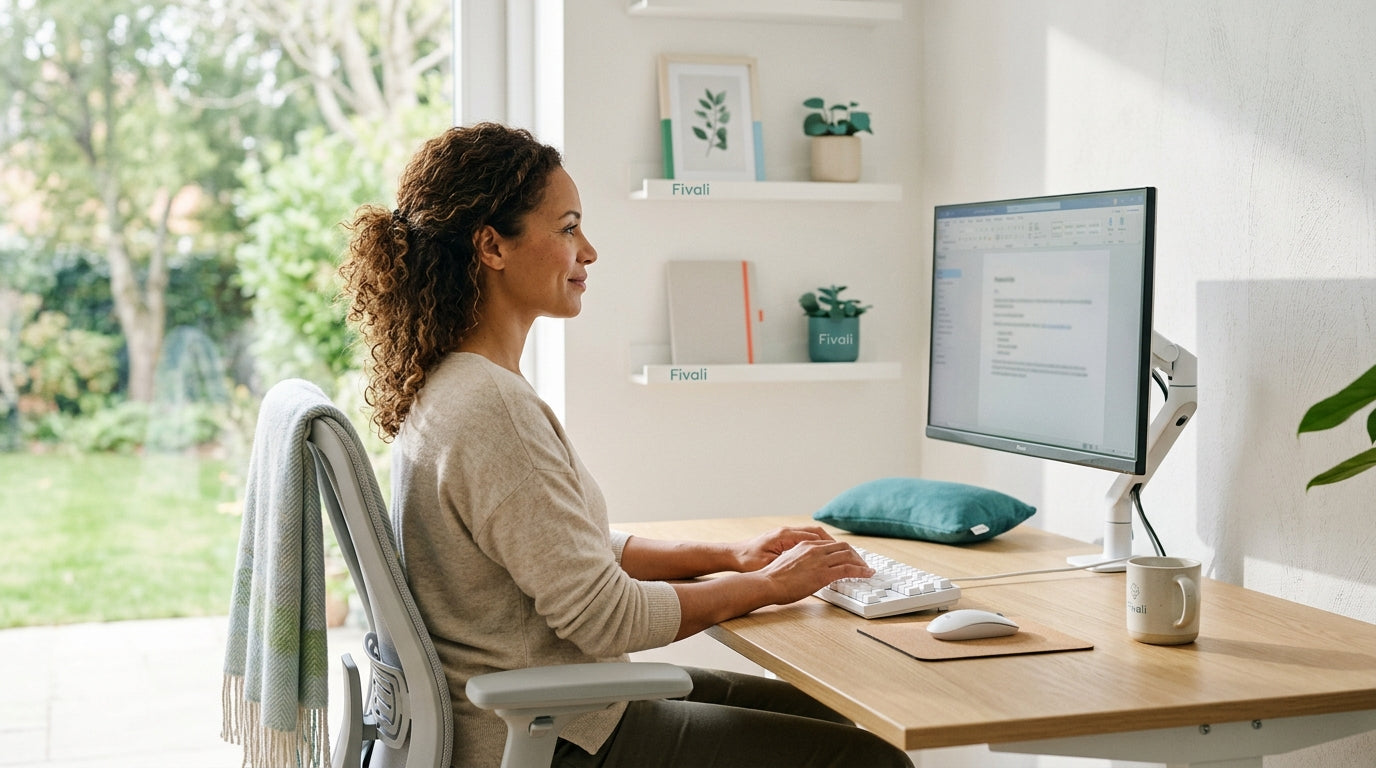
Your office chair isn't just a place to rest; it's a tool designed to support your spine. Learning to adjust it properly is like tailoring a suit to your body.
-
Seat Height:
- Goal: Feet flat on the floor, knees at roughly a 90-degree angle, or slightly lower than your hips.
- Why: This allows your feet to bear some weight, reducing pressure on your thighs and preventing slouching or perching. If your chair is too high, you might slide forward, losing lumbar support. If too low, your knees might be too high, tilting your pelvis backward and flattening your lower back curve.
-
Seat Depth:
- Goal: Leave 2-4 fingers' width between the edge of the seat and the back of your knees.
- Why: Ensures the back of your knees aren't pressing against the seat (which can restrict circulation) while still allowing your lower back to be fully supported by the chair's backrest.
-
Backrest & Lumbar Support:
- Goal: Your lower back should feel gently supported, maintaining its natural inward curve.
- Why: This support is critical. Without it, your lower back flattens (often called posterior pelvic tilt), significantly increasing disc pressure (UCLA Health). Adjust the height and depth of the lumbar support to fit your unique curve. If your chair lacks good lumbar support, consider adding a small pillow or rolled towel.
-
Armrests:
- Goal: Set them so your shoulders are relaxed, not hunched, and your forearms are lightly supported.
- Why: This reduces strain on your neck and shoulders, which can indirectly affect upper back posture. Just be careful not to lean too heavily, which can cause other issues.
-
Recline:
- Goal: A slight recline (100-110 degrees) can be more beneficial than sitting perfectly upright at 90 degrees.
- Why: Research suggests a slight recline can actually reduce disc pressure compared to a perfectly straight, unsupported 90-degree angle. Experiment to find what feels most comfortable while keeping your lower back supported.

Aha Moment: Most people think "good posture" means sitting bolt upright. However, often a slight recline with proper lumbar support is less taxing on your discs than rigid upright sitting, which can still flatten your natural lumbar curve without support (Spine-health.com).
Optimizing Your Workspace: Beyond the Chair
Your chair is just one piece of the puzzle. How your entire workstation is set up impacts how you interact with it, and thus, your spine.
-
Monitor Placement:
- Goal: The top of your screen should be at or slightly below eye level. It should be about an arm's length away.
- Why: This prevents you from craning your neck up or down, reducing strain on your cervical (neck) discs. If you wear bifocals, you might need to lower your monitor slightly.
-
Keyboard and Mouse:
- Goal: Keep them close to your body. Your wrists should be straight, not bent up or down. Your elbows should be at your sides, forming roughly a 90-100 degree angle.
- Why: This reduces strain on your wrists, forearms, and shoulders, preventing a chain reaction of tension that can travel up to your neck and upper back.
-
The Dynamic Workstation & Standing Desks:
- Goal: Avoid prolonged static postures.
- Why: Even the "perfect" ergonomic setup won't save you if you don't move. Frequent changes in posture are key. Standing desks can be beneficial, but they're not a panacea. Prolonged standing can lead to its own set of issues like foot pain or increased pressure on the lower back if not done correctly (Perplexity Results). Alternate between sitting and standing every 30-60 minutes. When standing, use an anti-fatigue mat and keep one foot on a small footrest occasionally to shift weight.
Common Myth Debunked: Standing desks don't burn significantly more calories or cure all back pain. Their primary benefit is breaking up sedentary time and promoting movement, which is excellent for disc health and circulation (Perplexity Results).
Sleep for Spine Health: Restoring Your Discs Overnight
You spend roughly a third of your life sleeping, so your sleep posture is incredibly important for disc recovery and strain prevention. During the day, gravity compresses your discs. At night, they rehydrate and recover—if given the chance.
Best Sleeping Positions to Lower Disc Strain:
-
On Your Back:
- Goal: Keep your spine neutral.
- How: Use a pillow that supports the natural curve of your neck (not too thick, not too thin). Place a small pillow under your knees.
- Why: This allows your spine to maintain its natural curve, evenly distributing pressure across your discs (Mayo Clinic). The pillow under your knees helps relax your hip flexors, which in turn reduces stress on your lower back.
-
On Your Side:
- Goal: Maintain a straight line from your head to your hips.
- How: Use a firm pillow that fills the space between your ear and shoulder, keeping your head aligned with your spine. Place a pillow between your knees.
- Why: The pillow between your knees prevents your upper leg from rotating inwards, which can twist your pelvis and pull your lower spine out of alignment. Keeping your head level prevents neck strain (Mayo Clinic).
Positions to Avoid:
-
On Your Stomach:
- Why: This is generally considered the worst position for your back. It forces your neck into an awkward, rotated position for hours and flattens the natural curve of your lower back, increasing disc pressure (Perplexity Results). If you absolutely must sleep on your stomach, try placing a thin pillow under your hips to reduce some lumbar strain.

Aha Moment: It's not just about the firmness of your mattress, but how you use pillows to support your spine's natural curves in any sleeping position. A medium-firm mattress is often recommended, but personal preference and proper pillow placement are equally, if not more, crucial.
Beyond the Desk and Bed: Everyday Ergonomics in Motion
Disc strain isn't just a desk-job problem. It's an "everyday life" problem.
- Lifting: Always lift with your legs, keeping your back straight. Bend at your knees, not your waist. Keep the object close to your body.
- Driving: Adjust your seat for good lumbar support, similar to your office chair. Keep your hands at "9 and 3" on the wheel to avoid shoulder hunching. Take breaks on long drives.
- Texting/Phone Use: Avoid "tech neck" by holding your phone up closer to eye level, rather than craning your head down for extended periods.
These micro-movements and mindful adjustments throughout your day collectively reduce the cumulative load on your discs.
When Ergonomics Isn't Enough: Understanding Your Limits
While everyday ergonomics can dramatically improve disc health and reduce strain, there are times when these adjustments alone might not be sufficient. It's crucial to recognize the signs that your body needs more support or professional intervention.
Signs That Ergonomic Fixes Might Be Insufficient:
- Persistent or Worsening Pain: If your back pain doesn't improve or gets worse despite consistent ergonomic adjustments and regular movement.
- Radiating Pain: Pain that travels down your leg (sciatica) or arm, accompanied by numbness, tingling, or weakness. This can indicate nerve involvement due to significant disc compression.
- Loss of Function: Difficulty walking, standing, or performing daily tasks due to pain or weakness.
- Sudden Onset of Severe Pain: Especially after an injury or without clear cause.
- Pain Disrupting Sleep: If your pain makes it impossible to find a comfortable sleeping position.
In these situations, it's essential to consult a healthcare professional. They can accurately diagnose the issue and recommend appropriate treatments, which might include physical therapy, medication, or in some cases, imaging studies.
Supportive Braces as an Adjunct: A Helping Hand
For many experiencing disc strain or mild to moderate back pain, supportive braces can serve as a valuable adjunct to ergonomic adjustments and professional advice. They aren't a cure-all, but they can provide crucial support when your natural stabilizing muscles are fatigued, weak, or when you need extra assistance to maintain a healthy posture.
How Supportive Braces Can Help Lower Disc Strain:
- Promoting Proper Posture: A well-designed back brace can gently encourage your spine to maintain its natural, neutral curve. This offloads pressure from your discs, similar to the benefits of proper lumbar support in a chair. For example, a back brace for posture can be particularly useful during periods of prolonged sitting or standing.
- Limiting Extreme Movements: Braces, especially those with more rigid back brace elements, can restrict excessive bending, twisting, or hyperextension that might aggravate an already strained disc. This allows injured tissues to heal and reduces the risk of further strain during activities.
- Providing Proprioceptive Feedback: This is your body's sense of where it is in space. A brace provides a gentle reminder to your muscles and brain about maintaining proper alignment. This "biofeedback" can help retrain your postural muscles over time.
- Muscle Offloading: By providing external support, a brace can temporarily reduce the workload on your core muscles, offering relief and allowing fatigued muscles to recover. This is particularly helpful during activities that might otherwise exacerbate disc strain.
When to Consider a Supportive Brace:
- During periods of acute, mild-to-moderate back pain to help manage discomfort and provide stability.
- For specific activities that tend to worsen your back pain, like lifting, prolonged driving, or certain chores.
- As a temporary aid during recovery from a minor disc strain, under the guidance of a healthcare professional.
- To provide postural assistance when you struggle to maintain good posture on your own, especially during long periods of static activity like sitting at a desk.
Remember, a brace is a tool to support your efforts, not replace them. Consistent ergonomic practices, regular movement, strengthening exercises, and professional guidance remain paramount for long-term disc health.
Want to explore options for supporting your back? Check out Fivali's comprehensive range of back brace products designed for comfort and support.
Frequently Asked Questions About Disc Strain & Ergonomics
- Q: What is sustained disc pressure and how does it lead to disc strain?
- A: Sustained disc pressure refers to constant, uneven pressure on your spinal discs, the spongy cushions between your vertebrae. Over time, this pressure can cause the disc's outer ring to weaken and the gel-like center to push outwards, leading to disc strain, bulging, or even herniation.
- Q: How can I adjust my office chair to reduce disc strain?
- A: Adjust your seat height so your feet are flat and knees are at 90 degrees or slightly below hips. Ensure seat depth leaves 2-4 fingers between the seat edge and your knees. Use lumbar support to maintain your lower back's natural curve. Set armrests to relax shoulders, and consider a slight recline (100-110 degrees) which can be less taxing than sitting perfectly upright.
- Q: What are the best sleeping positions for spine health?
- A: On your back, use a supportive pillow for your neck's natural curve and place a small pillow under your knees. On your side, use a firm pillow to align your head with your spine and place a pillow between your knees to prevent pelvic twisting. Avoid sleeping on your stomach, as it strains your neck and flattens your lower back curve.
- Q: Do standing desks really help with back pain or disc strain?
- A: Standing desks are beneficial primarily because they encourage movement and break up prolonged sedentary time, which is excellent for disc health and circulation. They are not a cure-all, and prolonged standing can also lead to issues if not done correctly. It's best to alternate between sitting and standing every 30-60 minutes.
- Q: When should I seek professional help for persistent back discomfort?
- A: You should consult a healthcare professional if you experience persistent or worsening pain, radiating pain (down legs or arms), numbness, tingling, weakness, loss of function, sudden onset of severe pain, or if your pain disrupts sleep. These could indicate more significant disc compression or nerve involvement.
- Q: Can supportive braces provide relief for disc strain?
- A: Yes, supportive braces can be a valuable adjunct. They can promote proper posture, limit extreme movements that aggravate discs, provide proprioceptive feedback to help retrain postural muscles, and temporarily reduce the workload on core muscles, offering relief. They are best used as a temporary aid in conjunction with ergonomic practices and professional guidance.
Your Path to a Healthier Back
Taking control of your disc health is an ongoing journey. It’s about becoming more aware of your body, understanding how your daily habits impact your spine, and making conscious choices to support it.
Practical Next Steps:
- Self-Audit Your Environment: Spend 15 minutes today actively adjusting your chair, workspace, and even observing your sleeping position. Make small changes and feel the difference.
- Move More: Set a timer to stand up, stretch, or walk for 1-2 minutes every hour. Even small movements add up.
- Listen to Your Body: Pay attention to early signs of discomfort. Don't push through pain.
- Educate Yourself: Continue learning about the 5 types of posture and how to maintain spinal health.
- Consult a Professional: If you experience persistent pain, numbness, or weakness, don't hesitate to seek medical advice.
By integrating everyday ergonomics into your life, you're not just preventing pain—you're investing in a more active, comfortable, and injury-free future.