How Long to Wear Ankle Brace After Fracture?
Ankle fractures are among the most common orthopedic injuries, requiring careful management to ensure complete bone healing and restore full mobility. Transitioning from a hard cast or walking boot to an ankle brace marks a major milestone in the recovery journey. However, determining the exact duration to wear a brace depends on several factors, including the type of fracture, individual healing speed, and daily activity levels.
Factors Influencing Recovery Timeline
The period required to use a brace varies significantly from person to person. Understanding the key elements that dictate this timeframe helps set realistic expectations for the healing process.
Type and Severity of the Fracture
The nature of the bone break plays the primary role in establishing a recovery schedule. Simple, non-displaced hair-line breaks require much less stabilization time compared to complex or compound fractures that require surgical intervention with plates and screws. Additionally, an ankle stress fracture caused by repetitive overuse often requires a different bracing approach compared to an acute traumatic break.
Individual Rate of Bone Healing
Bone tissue regenerates at different rates based on overall health. Key metabolic factors include:
-
Age: Children and younger adults typically regenerate bone tissue faster than older adults.
-
Nutrition: Adequate intake of calcium, vitamin D, and protein accelerates bone remodeling.
-
Underlying Health Conditions: Conditions like osteoporosis, diabetes, or vascular disease can slow down tissue repair.
-
Lifestyle Choices: Smoking and poor circulation significantly delay bone formation.
Progression of Physical Rehabilitation
Restoring full joint functionality is a phased process. As muscle strength, balance, and joint range of motion return, reliance on external support gradually decreases. Individuals who consistently engage in guided physical therapy exercises often regain structural stability sooner, reducing the total duration needed for rigid joint support.
General Timelines for Wearing a Brace
While individual cases vary, clinical recovery frameworks offer general guidelines for how long external support is necessary following a bone fracture.
| Recovery Phase | Timeline Post-Injury / Post-Cast | Primary Goal | Recommended Support Type |
| Initial Immobilization | Weeks 0 – 6 | Bone Consolidation | Hard Cast or Rigid Walking Boot |
| Subacute Transition | Weeks 6 – 12 | Soft Tissue Rehabilitation | Rigid or Semi-Rigid Ankle Brace |
| Functional Return | Months 3 – 6 | Activity Protection | Flexible Ankle Support / Lace-Up Sleeve |
| Long-Term Protection | Months 6 – 12+ | Prevention in High-Risk Sports | Prophylactic Compression Guard |
Weeks 6 to 12: The Transitional Phase
Once the primary bone union is confirmed and a rigid cast or walking boot is removed, transitioning to a semi-rigid ankle brace is standard practice. During this 6-to-12-week window, the newly healed bone remains vulnerable to lateral forces. Wearing the device during all waking hours helps prevent accidental twisting while allowing necessary sagittal movement for walking.
Months 3 to 6: Returning to Daily Activities
Between the third and sixth months, physical demands increase as individuals resume normal daily routines, light exercise, and work responsibilities. At this stage, continuous full-day wear is often scaled back. Support is typically worn during prolonged standing, walking on uneven terrain, or engaging in moderate physical exertion. A high-quality brace for ankle stabilization provides necessary lateral control without restricting healthy gait mechanics.
Beyond 6 Months: High-Impact and Athletic Protection
For high-impact athletics, heavy manual labor, or sports involving sudden changes of direction (such as basketball, soccer, or trail running), wearing protective gear can extend well past the six-month mark. Many individuals elect to use a flexible ankle support during sports for up to a year post-injury to prevent re-injury and maintain confidence in joint performance.
Types of Braces Used After an Ankle Break
Choosing the correct style of support matches the specific stage of rehabilitation and the level of stability required.
Rigid and Hinged Supports
Rigid models feature hard outer shells lined with foam or air bladders, often paired with bilateral hinges.
-
Primary Function: Restrict side-to-side inversion and eversion movements while permitting upward and downward flex.
-
Best Suited For: The immediate phase following cast removal or post-operative weight-bearing transition.
-
Benefits: Maximum structural protection against re-injury during early weight-bearing steps.
Lace-Up and Figure-Eight Designs
Lace-up models utilize canvas or nylon materials combined with strapping systems that mimic professional athletic taping.
-
Primary Function: Provide customizable, tight compression and moderate structural resistance.
-
Best Suited For: Mid-stage recovery when transitioning back to light exercise or regular footwear.
-
Benefits: Fits comfortably inside standard athletic shoes while offering adjustable tightness.
Compression Sleeves and Elastic Guards
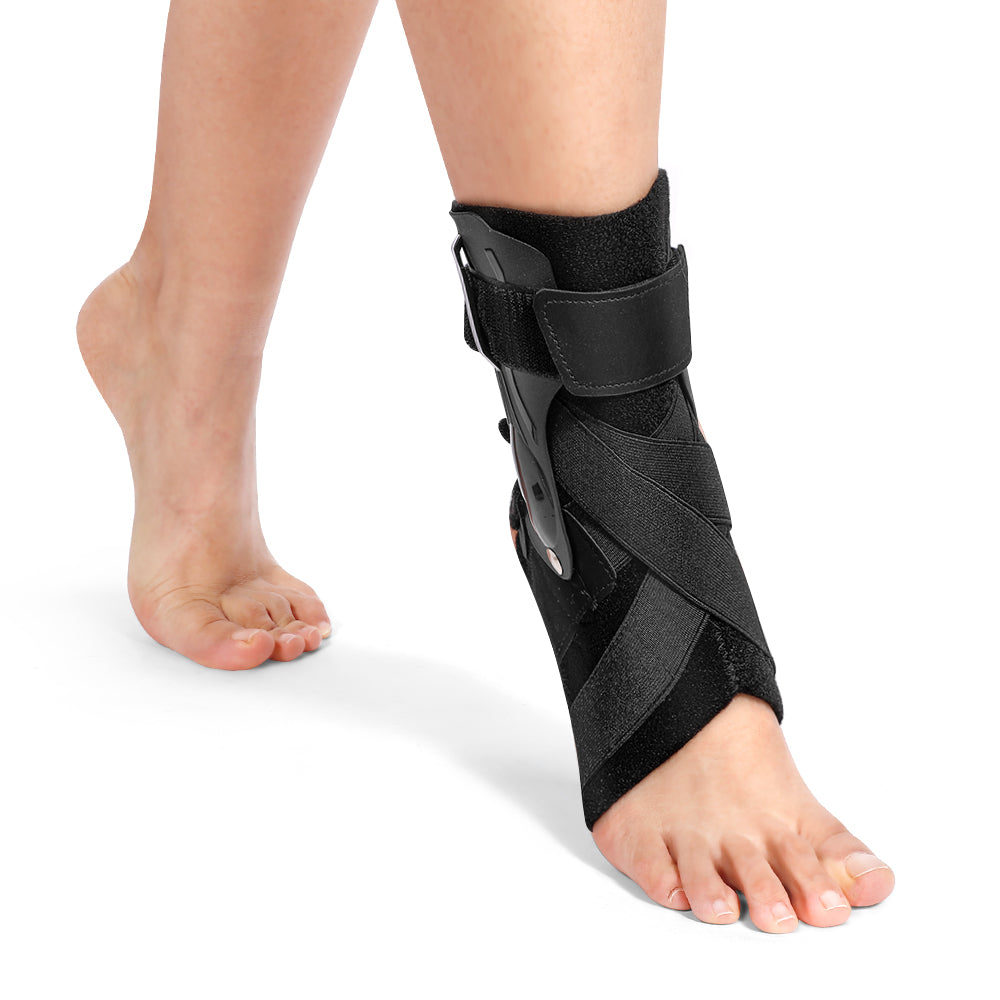
Made from breathable knit fabrics or neoprene, these soft supports offer lightweight stabilization. Brands like Fivali design ergonomic sleeves that deliver dynamic compression to manage residual post-fracture swelling.
-
Primary Function: Enhance proprioception (joint spatial awareness) and manage localized swelling.
-
Best Suited For: Late-stage recovery, daily fatigue management, and mild ongoing stiffness.
-
Benefits: High flexibility, low profile, and improved blood circulation during movement.
✧ Fivali Adjustable Compression Ankle Stabilizer Brace 1 Pack FAH02
- Great Ankle Compression
- 2 Side Panels for Upgraded Support
- Ultra-Breathable and Stretchy Material
- Slim Design to Fit Your Any Shoes
- Comfort & Freedom on Active Movement
Managing the Transition Away From Support
Weaning off external support is a gradual process that must be approached systematically to prevent muscle weakness and joint stiffness.
Gradually Reducing Daily Wear Time
Abruptly stopping the use of a stabilizing device can shock the surrounding ligaments and tendons. A structured reduction schedule ensures a smooth adjustment:
-
Step 1: Begin by removing the device while resting at home in a safe, flat environment.
-
Step 2: Walk short distances indoors without support on level surfaces.
-
Step 3: Continue using external support during long outdoor walks, periods of fatigue, or uneven ground.
-
Step 4: Transition from a rigid frame to a lighter compression sleeve before going entirely unassisted.
Signs of Overexertion or Premature Removal
Removing joint support too quickly can lead to setbacks. Key indicators that the joint still requires additional structural aid include:
-
Sharp or localized pain around the original fracture site.
-
Increased swelling or warmth around the lateral or medial malleolus after light activity.
-
A feeling of joint instability, giving way, or hesitation during weight transfers.
-
Development of a visible limp when walking unassisted.
Restoring Strength and Proprioception
Long-term dependence on rigid immobilization can cause surrounding muscles—such as the peroneals and calf complex—to atrophy. To safely phase out external gear, focus on:
-
Strengthening: Resistance band exercises targeting ankle eversion, inversion, dorsiflexion, and plantarflexion.
-
Balance Training: Single-leg standing exercises to re-train neural pathways and joint stability.
-
Mobility Drills: Controlled ankle circles and calf stretches to regain full flex angles.
Long-Term Maintenance and Re-Injury Prevention
Healing a broken bone involves more than short-term structural care; long-term joint health requires proactive habit management.
Selecting Proper Footwear
A supportive shoe works in tandem with external braces. Opt for footwear with firm heel counters, adequate arch support, and wide outsoles to provide a solid base. Avoid worn-out athletic shoes or flat, unsupportive footwear during the initial six months post-fracture.
Environmental Awareness and Safety
Uneven terrain, wet surfaces, and cluttered walkways pose significant risks during late-stage healing. Continuing to wear a supportive brace for ankle protection during outdoor hikes, lawn maintenance, or travel minimizes accidental trips and rolling motions.
Conclusion
Determining how long to wear an ankle brace after a fracture involves balancing necessary structural protection with progressive joint mobilization. While the transitional phase generally spans from Week 6 to Month 3 post-injury, high-demand activities may warrant using flexible support for up to a year or longer. By recognizing the recovery stages, selecting appropriate supportive gear, and gradually weaning off rigid devices, individuals can safely rebuild joint strength, minimize re-injury risk, and restore full physical functionality.
-
Veröffentlicht in
Ankle Injuries, Brace, Recovery