What Is a Red Flag for Hip Pain?

Hip discomfort is a common hurdle for runners, weightlifters, and multi-sport athletes. While post-workout soreness often settles after a day or two of rest, certain symptoms point to deeper structural issues rather than simple physical fatigue. Learning to recognize key red flags allows active individuals to modify training early, avoid protracted setbacks, and preserve long-term mobility. Differentiating between routine muscle tightness and joint structural distress is crucial for preventing long-term damage in active lifestyles.
Sudden and Severe Onset of Pain
A dull ache that develops gradually usually reflects minor muscular strain or overuse. Conversely, sharp and abrupt pain that strikes mid-stride or during a heavy lift demands immediate attention. When localized discomfort prevents normal weight-bearing activity, it indicates a critical load capacity issue within the joint complex.
Athletes experiencing these symptoms often exhibit immediate gait alterations and sleep disruptions:
-
Joint Instability: Feeling the hip "give way" or collapse when attempting to plant the foot during running or lateral movement.
-
Compensatory Limp: Shifting body weight heavily toward the unaffected side to avoid loading the painful joint.
-
Inability to Walk: Sharp, severe sensations when placing even minimal weight through the leg.
-
Night Discomfort: Deep, unyielding throbbing that disrupts sleep points toward joint capsule swelling or bone stress rather than temporary tissue fatigue.
Mechanical Joint Symptoms
When the hip joint exhibits physical catching or locking, the primary issue is rarely standard muscular tightness. Mechanical symptoms typically stem from cartilage involvement, labral structural changes, or excessive joint mobility.
Clicking, Catching, or Locking
Mechanical blockages feel distinctly different from muscle tightness. A sudden sensation of the joint snagging during a normal stride, or an audible pop accompanied by sharp discomfort during hip flexion, indicates physical friction within the acetabular cup. In some cases, the joint may temporarily lock, leaving the athlete unable to extend the leg completely.
Joint Instability and Hypermobility
Hypermobile joints allow excessive movement beyond normal structural limits. This hyper-flexibility forces surrounding ligaments and tendons to work continuously to keep the femoral head centered, leading to chronic strain and a persistent sensation of joint looseness. For individuals managing hypermobile joints, utilizing a specialized hip brace for hypermobility helps limit unsafe micro-movements, providing gentle external stabilization during dynamic training sessions and daily movement.
Radiating Discomfort and Neurological Signals
Managing ongoing hip pain requires paying close attention to sensations that travel past the joint socket. When nerves or deeper tissue structures are involved, discomfort often radiates down the thigh, accompanied by tingling, numbness, or localized weakness.
Visible physical changes over the hip complex also signal significant inflammation:
-
Unexplained swelling or puffiness localized over the lateral hip or groin.
-
Skin that feels distinctly warm to the touch compared to adjacent regions.
-
Noticeable pelvic tilt or postural shifts as the body compensates for deep discomfort.
-
Muscular weakness such as difficulty raising the knee or maintaining balance during single-leg exercises.
Effective Management Strategies for Active Individuals
Addressing joint stress effectively requires combining training volume adjustments with appropriate physical support tools. Switching high-impact running or heavy squatting for low-impact alternatives like swimming or stationary cycling reduces joint impact while preserving cardiovascular fitness.
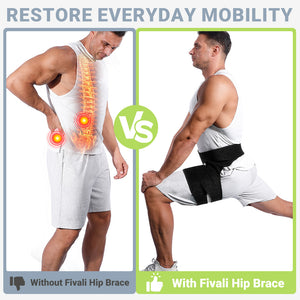
When localized swelling or fatigue arises, applying targeted compression for hip pain helps promote circulation and movement awareness. Modern braces for hips further assist by stabilizing pelvic motion during everyday training.
✧ Unisex Hip and Thigh Compression Brace Adjustable Design for Sciatica Thigh Injury Pain Relief FHM04
- Stabilizes Hip & Pelvic Joints
- Supports Muscle & Tendon Fast Recovery
- Targeted Compression for Bursitis & Tendonitis Relief
- Universal Fit for Left and Right Side
- Unisex & One-Size-Fits-Most Design
- Skin-Friendly Fabric for All-Day Comfort

To maintain alignment during dynamic movements, choosing a structured hip stabilizer brace offers necessary external control. Specialized support gear, such as designs from Fivali, provides reliable stabilization without sacrificing essential joint mobility:
| Support Solution | Primary Mechanism | Recommended Use Case |
| Dynamic Compression Wrap | Promotes localized blood circulation & warmth | Light daily activity, mild muscle soreness |
| Adjustable Hip Stabilizer Brace | Controls pelvic rotation & stabilizes joint socket | Active workouts, post-strain active recovery |
| Hinged Functional Brace | Restricts extreme flex/extension ranges | Controlled weight training, mobility control |
Long-Term Prevention and Joint Maintenance
Sustaining long-term joint health involves proactive conditioning, proper movement mechanics, and balanced muscular development around the hip complex.
Strengthening the gluteus medius and deep core muscles builds a strong foundation for the pelvis. Exercises like lateral band walks, single-leg deadlifts, and controlled split squats improve single-leg stability, preventing pelvic drop during running and walking. In addition to strength, dynamic mobility work ensures the hip moves smoothly through its intended range of motion. Regularly stretching the hip flexors, working on controlled internal and external rotation, and refining athletic stride mechanics significantly decrease localized impact forces on the joint.
Conclusion
Recognizing early red flags—such as severe weight-bearing pain, mechanical locking, or nerve-related tingling—allows athletes and active individuals to protect their joints before minor issues turn into long-term injuries. Combining smart load management, mobility training, and supportive gear like a hip stabilizer brace creates a reliable blueprint for managing joint fatigue and maintaining active fitness goals safely.
-
Veröffentlicht in
Hip Injury, Pain