What kind of ankle support is best for ballet dancers?
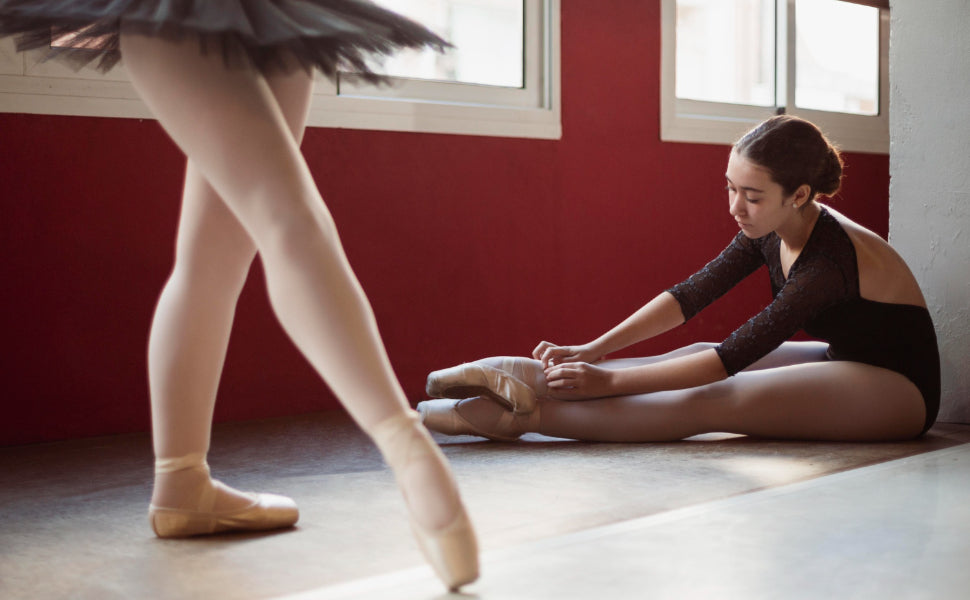
Imagine landing a grand jeté, and for a split second, your ankle wobbles just a millimeter more than usual. Every dancer knows that fleeting moment of panic. Ballet demands physical feats that test the very limits of human anatomy, and your ankles bear the brunt of that artistic pursuit. Therefore, protecting the ankles, which are the foundation of dance, is of paramount importance.
With six-to-eight hour days of non-stop training on the horizon, how do you know what kind of protection you actually need? Navigating the world of external support can be confusing. You need something that protects your joints without ruining your lines or crowding your pointe shoes.
Let’s explore the unique demands ballet places on your ankles and how to map your specific technique and training load to the ideal level of support.

The Biomechanics of Ballet: Why Your Ankles Need Extra Attention
Ballet isn't just a physical activity; it's a complex biomechanical puzzle. The fundamental movements of classical dance subject the ankle joint to forces rarely seen in other disciplines.
- The Reality of Turnout: True turnout originates from the hips, but dancers often unconsciously force it from the knees and ankles. This "rolling in" (pronation) places immense stress on the medial (inner) ligaments of the ankle and the arch of the foot, requiring dynamic stability to prevent chronic strain.
- En Pointe and Demi-Pointe Mechanics: Rising onto the toes pushes the ankle into extreme plantarflexion. In this fully pointed position, the ankle joint is inherently less stable because the narrowest part of the talus bone sits within the ankle mortise. It requires immense strength to hold this position safely, making it a prime time for vulnerability.
- Repetitive Plantarflexion: Think about how many tendus, dégagés, and relevés you execute in a single barre. This repetitive, rapid flexing and pointing can overwork the tendons running behind the ankle, leading to inflammation if not properly managed.

Decoding the Spectrum of Ankle Support
To truly understand the purpose of ankle support in a dance context, we have to distinguish between "bracing for the stage" and "bracing for rehab."
Low-Profile Flexible Options (Sleeves & Light Compression):
These are the unsung heroes of daily class. Made from breathable, thin materials, compression sleeves offer proprioceptive feedback—a gentle physical reminder to your brain about where your joint is in space. They encourage blood flow, keep the joint warm, and fit seamlessly inside flat technique shoes. They are excellent for dancers experiencing mild fatigue or those transitioning back to full strength after a minor tweak.
Rigid and Semi-Rigid Stabilization (Braces with Straps/Stays):
When dealing with acute injury recovery or chronic instability, you need mechanical limitation. These supports often feature figure-8 strapping systems that mimic athletic taping, locking the heel in place and preventing the ankle from rolling outward (inversion). While incredibly effective, they are bulkier and typically restrict the extreme range of motion required for beautiful pointe work, making them better suited for cross-training, teaching, or early-stage rehabilitation outside the studio.
Common Ballet Ankle Injuries (and How Support Helps)
When a dancer’s workload exceeds their body's capacity to adapt, injuries happen. Identifying the issue is the first step in determining what kind of external support can help you safely navigate your training.
- Lateral Ankle Sprains (Instability): The classic "rolled ankle" occurs when the foot rolls inward, stretching or tearing the ligaments on the outside of the ankle. Dancers with a history of sprains often deal with chronic lateral instability. For these individuals, finding the best ankle brace for stability with targeted lateral support can prevent re-injury during challenging center work.
- Tendonitis (Achilles and FHL): The Flexor Hallucis Longus (FHL) tendon, often called the "dancer's tendon," runs behind the inside of the ankle and controls the big toe. Inflammation here, or in the Achilles, causes deep, pinching pain. Compression-based supports can help manage swelling, while supports with heel lifts can temporarily relieve tension on the Achilles during daily activities.
- Posterior Impingement (Dancer's Heel): This is a pinching sensation at the back of the ankle during demi-plié or when en pointe. While a brace cannot cure bone-on-bone impingement, supportive sleeves can reduce the surrounding soft-tissue inflammation that exacerbates the pain.

Mapping Your Technique and Training Load
Your ideal support strategy depends entirely on where you are in your dance journey and what your current schedule demands.
The Beginner to Intermediate Dancer:
If you are taking class two to three times a week and focusing on building fundamental technique, your primary focus should be intrinsic strengthening. If you feel achy after class, a light compression sleeve worn during recovery hours can work wonders. Remember that the entire leg works together; building strong hip stabilizer muscles is just as important for ankle health as the ankle itself, as they control the alignment of your entire leg during turnout.
The Pre-Professional and Professional (High Training Load):
During intensive seasons or rigorous rehearsal periods, your body is under immense strain. This is where an ankle brace for dancers becomes a strategic tool rather than just a band-aid. You might utilize a slightly thicker, semi-rigid support during a grueling contemporary rehearsal to protect a vulnerable joint, and switch to a barefoot compression sleeve for classical variations.
FAQ: Navigating Ankle Support in the Studio
Can I wear an ankle brace inside my pointe shoes?
It depends heavily on the brace. Rigid braces with plastic stays or thick velcro straps will not fit inside a properly fitted pointe shoe and will severely hinder your ability to articulate through the demi-pointe. However, ultra-thin, low-profile compression sleeves can often be worn seamlessly under tights and inside your shoes to provide warmth and mild proprioceptive support.
Will wearing a brace make my ankles weak?
This is a common misconception in the dance world. Relying exclusively on a rigid brace long-term without doing your physical therapy exercises can lead to weakness. However, using the appropriate level of support temporarily to protect a healing injury, or using light compression to enhance joint awareness, actually enables you to dance with proper biomechanics rather than compensating and creating new injuries.
When should I transition from a rigid brace to a flexible sleeve?
Transitioning should always follow a reduction in pain and an increase in foundational strength. Once you can comfortably perform basic balances and demi-pliés without sharp pain or a feeling of "giving way," you can usually graduate from mechanical restriction (rigid) to proprioceptive feedback (flexible sleeves), testing the waters in a controlled barre setting first.
Your Next Steps Toward Stronger Dancing
Understanding the biomechanics of your ankles is the most empowering thing you can do for your ballet technique. Whether you are prepping for a summer intensive, nursing a nagging tendinopathy, or simply trying to get through a heavy rehearsal week without fatigue, the right support can make all the difference.
Start by evaluating your current pain points and training volume. Are you dealing with sharp pain that needs stabilization, or dull aches that need compression and warmth? By mapping your symptoms and studio demands to the right type of design, you can keep dancing safely, beautifully, and confidently.