How Core Weakness and Hip Mobility Cause Lower Back Pain
You bend over to pick up a dropped pair of sunglasses, and suddenly, there it is—that familiar, breathtaking twinge in your lower back. It’s a frustrating cycle that many of us know all too well. The last thing you want is for a recurring lumbar strain to keep you sidelined from hiking trails, beach days, or neighborhood barbecues.
When back pain strikes, our first instinct is usually to blame the back itself. We stretch our spine, massage our lower back muscles, and rest. But what if your back isn't the actual problem? What if your lower back is just the victim of a mechanical failure happening somewhere else?
For millions of people, the true culprits hiding behind chronic lumbar strain are a weak core and restricted hip mobility. Understanding this connection is your first step toward long-term relief and a more active, pain-free lifestyle.

Foundation: The Biomechanical Triangle Simplified
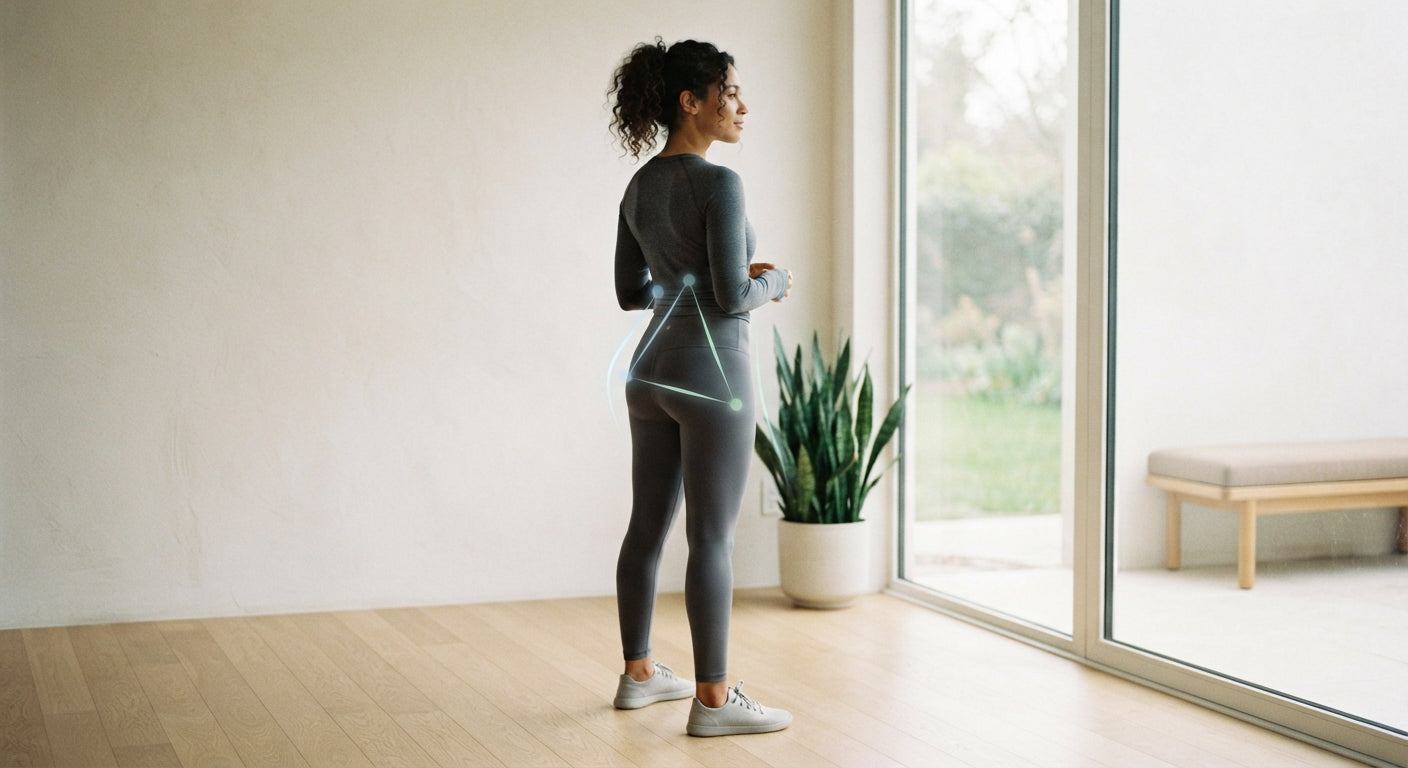
To understand why your back hurts, it helps to look at how the body is engineered to move. Think of your hips, core, and lower back as an interconnected biomechanical triangle.
What is a Strong Core, Really?
When most people think of a "strong core," they picture six-pack abs. But your core is actually a deep, complex cylinder of muscles wrapping around your entire torso. These muscles act as your body's natural shock absorbers. When your core is weak, it’s like driving a car with a wobbly foundation—every bump in the road (or every step you take) sends unmitigated shockwaves directly into your lower spine.
Hip Mobility: The Rusty Hinges
Your hips are designed to be the primary engines of lower body movement, capable of wide ranges of motion. However, modern lifestyles—especially prolonged sitting at desks or in cars—cause the hip flexors to shorten and tighten. When your hips act like rusty hinges and refuse to bend properly, your body is forced to find that missing movement somewhere else.
The Vicious Cycle of Compensation
Here is where the pain begins. If your core can't stabilize your spine, and your hips are too tight to absorb movement, your lower back is forced to overwork. It has to compensate by bending and twisting in ways it was never designed to do. Over time, this daily mechanical strain leads to the chronic, nagging pain that ruins your weekend plans.
Are You At Risk? The 5-Minute Self-Assessment
Before you can fix the problem, you need to identify it. You can perform these simple, at-home self-checks to determine if core weakness or tight hips are driving your discomfort.
Test 1: The Plank Tolerance Test (Core Strength)
- Get into a standard forearm plank position on a comfortable surface.
- Ensure your elbows are directly beneath your shoulders and your body forms a straight line from your head to your heels.
- The Result: If you cannot hold this position for 30 seconds without your lower back sagging, or if you feel a sharp pinch in your lower spine, your deep core stabilizers are likely too weak to support your back during daily activities.
Test 2: The Hip Flexor Flexibility Test (Hip Mobility)
- Lie flat on your back on a bed or a sturdy table, with your legs hanging off the edge.
- Pull your right knee tightly into your chest, holding it with both hands.
- Let your left leg completely relax and hang down.
- The Result: If your relaxed left thigh lifts off the table, or if your left knee straightens out involuntarily, you have severe hip flexor tightness. This tightness constantly pulls your pelvis forward, creating an exaggerated, painful curve in your lower back.
If you struggled with these tests, don't worry. This is a common "aha moment" for many people. Realizing that you lack foundational stability is the first step toward knowing when to rely on structured exercises, and when incorporating back support solutions might be necessary to protect your spine while you rebuild that strength.

Your Progressive Exercise Roadmap
Instead of jumping into random workouts that might exacerbate your pain, follow this progressive approach to safely mobilize your hips and stabilize your core.
Level 1: Restore and Activate (Beginner)
- The Dead Bug: Lie on your back with arms extended up and knees bent at 90 degrees. Slowly lower opposite arm and leg toward the floor without letting your lower back arch off the ground. This safely teaches your core to stabilize your spine while your limbs move.
- Pelvic Tilts: Lie on your back with knees bent. Gently flatten your lower back against the floor by tightening your abdominal muscles and slightly tilting your pelvis upward. This simple movement relieves pressure on the lumbar spine.
- The 90/90 Stretch: Sit on the floor with one leg gently bent at a 90-degree angle in front of you, and the other leg bent at 90 degrees behind you. Gently lean forward to open the hips without stressing the lower back.
Level 2: Strengthen and Integrate (Intermediate)
- The Bird Dog: Start on your hands and knees. Extend one arm forward and the opposite leg backward, keeping your hips completely level.
- Glute Bridges: Lie on your back, knees bent, feet flat. Squeeze your glutes and push your hips toward the ceiling. This simultaneously stretches the hip flexors while strengthening the posterior core.

Beyond Exercises: Lifestyle Integration & Advanced Applications
Rebuilding your body’s foundation takes time. While you are working through your progressive exercise roadmap, integrating spine-friendly lifestyle habits is crucial for preventing setbacks.
Optimizing Your Daily Habits
- Posture Correction: Whether you are sitting at a desk or driving on a summer road trip, ensure your knees are at or slightly below hip level to prevent your hip flexors from locking up.
- Sleep Ergonomics: If you sleep on your side, place a pillow between your knees to keep your hips aligned. If you sleep on your back, place a pillow under your knees to reduce lumbar strain.
- Bridging the Gap: If your core weakness is severe, you may need external structural support during demanding physical activities while you build up your natural strength. Wearing high-quality, breathable support gear can prevent acute injuries while you retrain your muscles.
FAQ: Answering Your Top Questions
Navigating the world of joint pain and biomechanics can feel overwhelming. Here are answers to some of the most common questions beginners have when starting this journey.
How do I know if my pain is serious?
It's always wise to listen to your body. Many people wonder, what is a red flag for hip pain? Generally, if your pain is accompanied by numbness, tingling down the leg, loss of bladder control, or pain that wakes you up at night, it's time to consult a healthcare professional immediately.
Are there quick fixes for core instability?
While building true core strength takes consistency, some look for immediate physical support. You might ask, can a waist trainer help with back pain? The truth is, while cosmetic waist trainers provide a sensation of tightness, they are not designed with the biomechanical rigidity required to support your lumbar spine safely. You need gear specifically engineered for sports and active recovery.
How do I use structural support safely?
If you decide to use an external brace to help you get through your summer activities, what should i consider before wearing a back brace all day? The goal of any protective gear is to assist your movement, not replace your muscles entirely. Use support during heavy lifting or highly active days, but take it off during rest and while performing your core rehabilitation exercises.
Does affordable support gear actually work?
Absolutely, provided you choose quality over gimmicks. If you explore fivali back brace reviews, you'll consistently find stories from everyday active individuals who reclaimed their mobility without breaking the bank. Furthermore, checking other fivali back brace reviews often reveals that comfort and proper sizing are just as important as the support itself. When users search our site:www.fivalifitness.com for wellness tips, they quickly discover that protecting your back shouldn't be a luxury.
Your Next Steps Toward a Pain-Free Life
Chronic lower back pain rarely happens overnight—it is the result of long-term compensation driven by tight hips and a weak core. By acknowledging this biomechanical link, testing your own mobility, and committing to a progressive strengthening roadmap, you are taking control of your physical health.
As we head into the warmer months, don't let mechanical strain dictate what you can and cannot do. Start with your self-assessments today, practice the foundational movements gently, and consider incorporating targeted protective gear to give your spine the support it deserves while you build your ultimate core strength.