Knee Dislocations
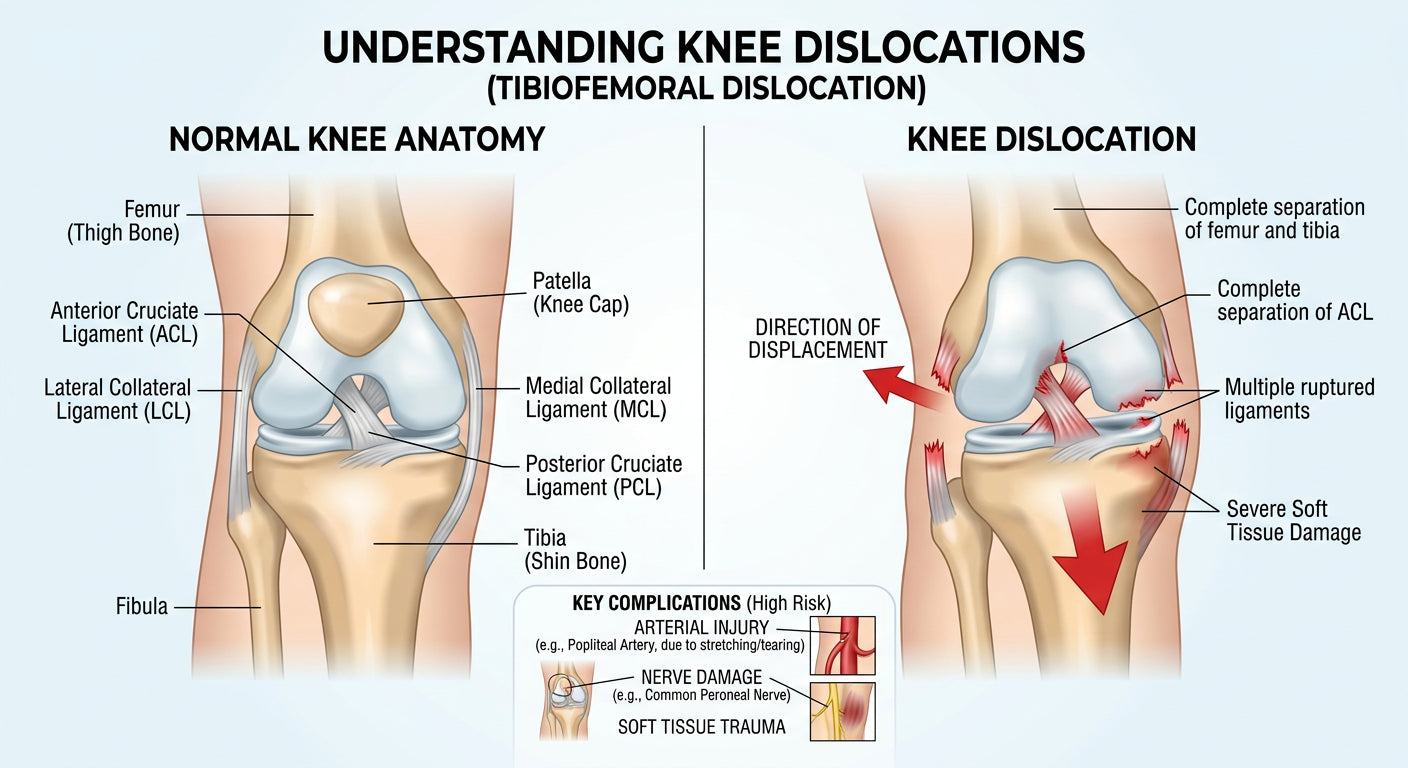
A knee dislocation is a severe and potentially limb-threatening injury that occurs when the bones of the knee joint are completely separated. Unlike a simple kneecap dislocation (patellar dislocation), a true knee dislocation involves the displacement of the tibia (shin bone) from the femur (thigh bone). This powerful trauma can severely damage the ligaments, blood vessels, and nerves surrounding the joint, necessitating immediate medical attention.
Understanding the Anatomy
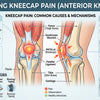
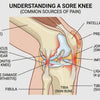
The knee is a complex hinge joint formed by the articulation of three bones: the femur, the tibia, and the patella (kneecap). Several strong ligaments, including the anterior cruciate ligament (ACL), posterior cruciate ligament (PCL), medial collateral ligament (MCL), and lateral collateral ligament (LCL), work together to stabilize the knee and prevent excessive movement. The patella itself is a sesamoid bone embedded within the quadriceps tendon, protecting the front of the joint. The stability of the patella is crucial, and understanding what holds the patella in place involves recognizing the interplay of tendons and ligaments that keep it centered in its groove.
Types of Knee Dislocations
While the term "knee dislocation" often conjures images of the tibia separating from the femur (tibiofemoral dislocation), it's important to distinguish this from a patellar dislocation, where only the kneecap moves out of its groove. True tibiofemoral dislocations are much rarer but far more serious, often resulting from high-energy trauma. These can be categorized based on the direction of tibial displacement relative to the femur (e.g., anterior, posterior, medial, lateral, or rotatory). Each type can have varying implications for the integrity of surrounding structures.
Causes of Knee Dislocations
Knee dislocations are typically caused by significant trauma. Common scenarios include:
- High-Velocity Accidents: Motor vehicle collisions, where the knee strikes the dashboard with considerable force.
- Sports Injuries: Contact sports or activities involving falls from height, direct blows to the knee, or extreme hyperextension or twisting forces.
- Falls from Height: Landing awkwardly after a significant fall.
- Industrial Accidents: Situations where heavy objects impact the knee. The severity of the force required means these injuries are often accompanied by other associated traumas.

Symptoms and Diagnosis
- Severe Pain: Intense and immediate pain in the knee.
- Obvious Deformity: The knee may appear visibly misshapen, bent at an unnatural angle, or have a prominent bulge.
- Swelling: Rapid and significant swelling around the joint.
- Inability to Bear Weight: Complete inability to put weight on the injured leg.
- Numbness or Tingling: Sensations of pins and needles, or complete numbness below the knee, indicating potential nerve damage.
- Coolness or Pallor in the Foot: A sign of potential vascular injury, requiring immediate attention.
Diagnosis begins with a thorough physical examination by a medical professional, who will assess the limb's alignment, pulses, sensation, and motor function. Imaging studies are critical:
- X-rays: To confirm the dislocation, identify fractures, and assess the degree of displacement.
- MRI (Magnetic Resonance Imaging): Essential for evaluating soft tissue damage, particularly to ligaments, tendons, and cartilage, and to identify potential vascular or nerve injuries.
- Arteriogram (Angiography): May be necessary if a vascular injury is suspected, to assess blood flow.
Treatment for Knee Dislocations
1. Emergency Care and Reduction
A knee dislocation is a medical emergency. The primary goal is to safely reduce (realign) the joint as quickly as possible, ideally by trained medical personnel. This procedure, known as reduction, is typically performed under sedation or anesthesia to minimize pain and muscle spasm. Once the joint is realigned, the limb will be immobilized, often with a temporary splint or external fixator, to maintain stability and protect injured structures.
2. Assessment of Associated Injuries
- Vascular Assessment: Checking for popliteal artery injury, which is a life-threatening complication if not promptly treated.
- Neurological Assessment: Checking for peroneal nerve damage, which can lead to foot drop.
- Ligamentous Assessment: Identifying which of the major knee ligaments (ACL, PCL, MCL, LCL) have been torn.
- Meniscal and Cartilage Damage: Assessing for damage to the shock-absorbing cartilages and joint surfaces.
3. Post-Reduction Management
- Immobilization: The knee is typically kept in a rigid support or hinged knee brace for several weeks to allow initial healing. The duration depends on the severity of the injury and any surgical interventions.
- Pain Management: Medications are prescribed to control pain and inflammation.
- Physical Therapy: Rehabilitation begins early to regain range of motion, strength, and stability. This is a crucial, long-term commitment.
4. Surgical Intervention
Many knee dislocations, especially those with multiple ligament tears or vascular injury, require surgical repair or reconstruction.
- Ligament Reconstruction: Torn ligaments, particularly the ACL and PCL, are often surgically reconstructed using grafts.
- Vascular Repair: If a blood vessel is damaged, immediate surgical repair is necessary to restore blood flow and prevent limb loss.
- Nerve Repair: While nerve repair is more complex, some cases may warrant surgical intervention.
Recovery and Rehabilitation
Recovery from a knee dislocation is a long and challenging process, often taking many months to over a year. It requires dedication to a structured physical therapy program.
- Early Phase: Focuses on reducing swelling, performing gentle range-of-motion exercises, and protecting the repaired structures.
- Intermediate Phase: Progresses to strengthening exercises for the quadriceps, hamstrings, and calf muscles. Using a knee stabilizer or other support can be beneficial during this stage, helping to gradually increase activity.
- Advanced Phase: Involves proprioceptive training (balance and coordination), agility drills, and sport-specific exercises, if applicable. Patients may consider trying the best knee brace for pain to manage discomfort as they progress.
The effectiveness of recovery can be enhanced by proper equipment, and knowing the size chart for knee brace is essential for a good fit and optimal support. For some, concerns about knee compression-brace issues or sensations that hurt only when running might arise, highlighting the need for tailored rehabilitation.
Prevention and Long-Term Outlook
Preventing knee dislocations primarily involves avoiding high-impact situations where possible and using appropriate safety measures in sports or risky activities. For athletes, strengthening surrounding muscles and proper training techniques can help.
The long-term outlook for a knee dislocation varies widely depending on the severity of the initial injury, the extent of structural damage, the presence of nerve or vascular injury, and the success of surgical repair and rehabilitation. While many individuals can regain good function, some may experience chronic pain, instability, or develop early-onset arthritis. Regular follow-ups with medical professionals and a commitment to maintaining knee health are vital. When considering supportive devices, patients should consult with their healthcare provider to determine the best adjustable knee brace for their needs. For individuals experiencing discomfort, especially after prolonged activity, it is helpful to know what holds the patella in place and how best to support it.
-
Veröffentlicht in
Knee Injuries