Kneecap Pain
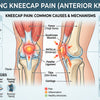
Kneecap pain, medically known as patellofemoral pain, is a common ailment that can significantly impact daily activities and athletic performance. This discomfort often stems from issues with the kneecap (patella) and the groove it sits in on the thigh bone (femur). Whether you're an athlete, highly active, or simply experiencing occasional discomfort, understanding the root causes and effective solutions for kneecap pain is crucial to long-term well-being. The kneecap plays...

Sore Knees
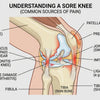
Sore knees are a common complaint that can affect people of all ages and activity levels. From a dull ache to sharp, throbbing pain, a sore knee can significantly affect daily activities, exercise routines, and overall quality of life. The knee is a complex joint, involving bones, cartilage, ligaments, and tendons that work together to allow smooth movement and support your body weight. The kneecap (patella) plays a crucial role,...

Joint Pain
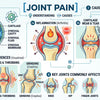
Joint pain is a common ailment that can range from a mild ache to severe, debilitating discomfort, affecting millions worldwide. Our joints, the points where two or more bones meet, are crucial for movement and flexibility. When these vital structures hurt, it can significantly affect daily activities, quality of life, and overall well-being. From the knees and hips to the shoulders and wrists, joint pain can manifest in almost any...

Tendon Pain
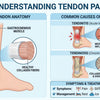
Tendon pain is a common ailment that can significantly impact daily activities and athletic performance. Tendons, the strong, fibrous cords that connect muscle to bone, play a crucial role in movement. When these vital tissues become irritated, inflamed, or damaged, they can cause discomfort ranging from a dull ache to sharp, debilitating pain. What Are Tendons? Tendons are essentially the "ropes" of your musculoskeletal system. Made primarily of collagen, they...

Inside Knee Pain
Experiencing knee pain can be frustrating and often debilitating, affecting daily activities, work, and exercise. This discomfort, felt on the medial side of the knee (the side closer to the other leg), is a common complaint with many possible causes. The knee is a complex joint, involving bones, cartilage, ligaments, and tendons, all working in concert to provide stability and mobility. When any of these inner structures are irritated, injured, or...

General Knee Pain
General knee pain is a common ailment that can affect people of all ages and activity levels, often making everyday movements uncomfortable or difficult. From a dull ache to sharp, intermittent discomfort, understanding the root causes and appropriate management steps is crucial to maintaining an active lifestyle and improving overall well-being. The knee joint is a marvel of biological engineering, connecting the thigh bone to the shin bone and supported...

Stiff Knee
A stiff knee can significantly impact your daily life, making simple actions like walking, bending, or climbing stairs feel challenging. This common issue refers to a feeling of tightness or restricted movement in the knee joint, making it difficult to fully straighten or bend your leg. It’s often accompanied by pain, swelling, or limited range of motion, signaling that something in your knee's complex structure isn't functioning as smoothly as...

Swollen Knee
A swollen knee, often called "water on the knee," happens when excess fluid builds up in or around the knee joint. This common condition can range from a mild annoyance to a sign of a serious underlying issue. The fluid buildup can cause discomfort, pain, stiffness, and limited ability to bend or straighten your leg. Common Causes of a Swollen Knee A swollen knee can arise from various factors, broadly...

Behind Knee Pain
Discomfort or pain behind the knee can be perplexing and often debilitating, affecting daily activities and limiting mobility. The knee is a complex joint, and the area behind it, known as the popliteal fossa, houses a network of important structures, including tendons, ligaments, nerves, and blood vessels. Identifying the specific cause of behind-the-knee pain is crucial for effective management and recovery, as numerous conditions can manifest in this area. Common...

Fluid in Knee
Experiencing discomfort or swelling around your knee? You might be dealing with what's commonly known as "fluid in the knee," or medically termed knee effusion. This happens when excess fluid builds up inside or around the knee joint. It's not a condition in itself, but a symptom that points to an underlying issue that needs attention. Knee fluid can show up in various ways, from subtle puffiness to significant swelling...

Clicking Knees
Knee clicking is common and can produce sounds ranging from pops and cracks to grinding sensations. While these sounds can sometimes be alarming, they are frequently harmless. When Clicking is Harmless Many instances of knee clicking are completely normal and painless. This phenomenon, often referred to as crepitus, can be attributed to several factors: Gas Bubbles: Synovial fluid, which lubricates your joints, contains gases. When you bend or straighten your...

Burning Knee
A burning sensation in your knee can range from a minor annoyance to debilitating pain, often signaling an underlying issue that requires attention. This sensation can feel like intense heat, stinging, or a deep ache, sometimes accompanied by swelling, redness, or stiffness. Experiencing a persistent or worsening burning sensation in your knee can be concerning. Identifying the location of the burn, such as behind the kneecap, on the sides, or around...

Popping Knee
Many people experience a popping sensation in the knee at some point, whether it's a subtle click, a grinding sensation, or a distinct pop. This phenomenon, medically known as crepitus, can range from a harmless occurrence to a sign of an underlying issue. The good news is that most popping knees are benign. Often, the sounds come from gas bubbles forming and collapsing within the synovial fluid, the natural lubricant...

Patella Dislocations
A patella dislocation, commonly known as a dislocated kneecap, occurs when the patella (kneecap) completely moves out of its normal position in the trochlear groove at the front of the thigh bone (femur). This painful injury can happen suddenly, often during sports or activities involving twisting motions, and leaves the kneecap sitting on the outside of the knee. Anatomy of the Kneecap The patella is a small, triangular bone encased...

Knee Hyperextension
Knee hyperextension occurs when the knee joint extends beyond its normal range of motion, bending backward and often causing pain and injury. This common injury can range from a mild strain to a severe ligament tear, affecting athletes and everyday users alike. What is Knee Hyperextension? The knee is a complex hinge joint designed primarily for flexion and extension. When the knee is forced to straighten beyond its natural anatomical...

Knee Dislocations
A knee dislocation is a severe and potentially limb-threatening injury that occurs when the bones of the knee joint are completely separated. Unlike a simple kneecap dislocation (patellar dislocation), a true knee dislocation involves the displacement of the tibia (shin bone) from the femur (thigh bone). This powerful trauma can severely damage the ligaments, blood vessels, and nerves surrounding the joint, necessitating immediate medical attention. Understanding the Anatomy The knee...

IT Band Syndrome
Iliotibial Band Syndrome (ITBS) is a common overuse injury, especially among runners, cyclists, and people who do activities that require repetitive knee bending. It manifests as pain on the outer side of the knee, often making everyday movements and athletic pursuits challenging. What is IT Band Syndrome? The iliotibial band (IT band) is a thick, fibrous band of connective tissue that runs along the outside of your thigh, from your...

Runners Knee
Runner's knee, also known as patellofemoral pain syndrome (PFPS), is a common condition affecting athletes and active individuals, especially runners. It causes pain around or behind the kneecap, often aggravated by activities that repeatedly bend the knee, such as running, jumping, squatting, or climbing stairs. While its name suggests an athletic origin, anyone can develop this condition, which stems from various factors that contribute to improper kneecap tracking. The knee...

MCL Tear
A torn medial collateral ligament (MCL) is a common knee injury, often associated with sports activities, but it can happen to anyone. The MCL is one of the four main ligaments that stabilize the knee joint, connecting the thigh bone (femur) to the shin bone (tibia) on the inside of the knee. Its primary role is to prevent the knee from bending inward excessively. Anatomy of the Knee and the...

ACL Tear
An ACL tear is one of the most common and debilitating knee injuries, frequently seen in athletes but also occurring in everyday life. The anterior cruciate ligament (ACL) is a critical component of the knee's stability, connecting your thigh bone (femur) to your shin bone (tibia). When this ligament tears, it can lead to instability, pain, and a lengthy recovery process. What is the Anterior Cruciate Ligament (ACL)? The knee...

LCL Tear
The lateral collateral ligament (LCL) is a crucial band of tissue located on the outside of your knee. It connects your thigh bone (femur) to your shin bone (fibula), providing essential stability to the knee joint, particularly against forces that push the knee inward (varus stress). An LCL tear, also known as an LCL sprain, occurs when this ligament is stretched or torn. These injuries can range from mild (a...

PCL Tear
A PCL tear, or a tear of the posterior cruciate ligament, is a significant injury to the knee that can impact stability and function. While less common than an ACL (anterior cruciate ligament) tear, this injury is important to understand, including its causes and the path to recovery. The PCL is one of the four major ligaments in your knee, working to connect the thigh bone (femur) to the shin...

Osgood Schlatter Disease
Osgood-Schlatter disease is a common cause of knee pain in growing adolescents, especially those active in sports involving running, jumping, and rapid changes in direction. While the term "disease" might sound alarming, it is actually an overuse injury characterized by inflammation and irritation of the patellar tendon where it attaches to the growth plate at the top of the shinbone (tibia). This condition is largely self-limiting, meaning it typically resolves...

Knee Arthroscopy
Knee arthroscopy is a common surgical procedure that lets medical professionals view, diagnose, and treat problems inside the knee joint without a large incision. This technique involves inserting a small camera, called an arthroscope, into the knee through a tiny cut. The camera displays images on a video monitor, guiding the surgeon through the procedure. It's a minimally invasive approach that can lead to faster recovery times compared to traditional...

Chondromalacia Patellae
Chondromalacia Patellae, often referred to as "runner's knee," is a common condition characterized by the softening and breakdown of the cartilage on the underside of the kneecap (patella). This vital cartilage acts as a natural shock absorber and allows the patella to glide smoothly over the thigh bone (femur) during knee movement. When this cartilage softens or becomes damaged, it can lead to discomfort, pain, and restricted movement in the...

Patellar Tendonitis
Patellar Tendonitis, commonly known as Jumper's Knee, is a condition characterized by inflammation or degeneration of the patellar tendon, which connects your kneecap (patella) to your shinbone (tibia). This vital tendon plays a crucial role in straightening your leg, absorbing impact, and enabling explosive movements like jumping. While often associated with athletes, particularly those in sports involving frequent jumping and quick changes of direction, such as basketball, volleyball, and track...

Knee Bursitis
Knee bursitis is a common condition characterized by inflammation of a bursa, a small, fluid-filled sac that reduces friction and cushions pressure points between bones, tendons, and muscles near your joints. While there are several bursae around the knee, the ones most frequently affected are located over the kneecap (prepatellar bursa), just below the kneecap (infrapatellar bursa), and on the inner side of your knee, lower down (pes anserine bursa)....

Knee Fractures
Knee fractures are serious injuries that can significantly impact mobility and quality of life. As one of the body's largest and most complex joints, the knee is crucial for movement, stability, and weight-bearing. When a fracture occurs in any of the bones that form the knee joint—the patella (kneecap), the distal femur (lower end of the thigh bone), or the proximal tibia (upper end of the shin bone)—it can lead...

Knee Sprain
A knee sprain is a common injury that affects the ligaments supporting your knee joint. These tough, fibrous bands of tissue connect bones and provide stability to the knee. When one or more of these ligaments are stretched or torn, you experience a knee sprain. This injury can range from mild overstretching to a complete rupture, significantly impacting your mobility and daily activities. What Causes a Knee Sprain? Sports Injuries:...

Osteoarthritis Of The Knee
Osteoarthritis of the knee, often referred to simply as knee OA, is a prevalent and often debilitating condition affecting millions worldwide. It is a degenerative joint disease characterized by cartilage breakdown in the knee joint, leading to pain, stiffness, and reduced mobility. Understanding Your Knee: The Basics To grasp osteoarthritis, it helps to understand the knee's structure. The knee is a complex hinge joint where the thigh bone (femur) meets...

Patellofemoral Pain
Patellofemoral pain, often called "runner's knee" or anterior knee pain, is a common condition characterized by discomfort around or behind the kneecap (patella). This condition affects individuals across various activity levels, from athletes to those with less active lifestyles, making everyday movements like climbing stairs, squatting, or even prolonged sitting uncomfortable. The patella, or kneecap, is a small, triangular bone at the front of the knee that protects the joint...

Meniscus Injuries
Meniscus injuries are among the most common knee injuries, affecting individuals across all ages and activity levels. Located within the knee joint, the menisci are crucial cartilage pads that cushion, stabilize, and enable smooth movement. A tear in this vital structure can cause significant pain, limited movement, and a prolonged recovery if not properly managed. What is the Meniscus? Your knee joint houses two crescent-shaped pieces of cartilage called menisci:...

Knee Pain Guide
Knee pain is one of the most common joint problems, affecting people of all ages—from active athletes to individuals with sedentary lifestyles. The knee is the largest and one of the most complex joints in the human body, playing a critical role in supporting body weight and enabling movement such as walking, running, and jumping. Because of its structure and constant use, the knee is particularly vulnerable to injury, overuse,...