ACL Tear
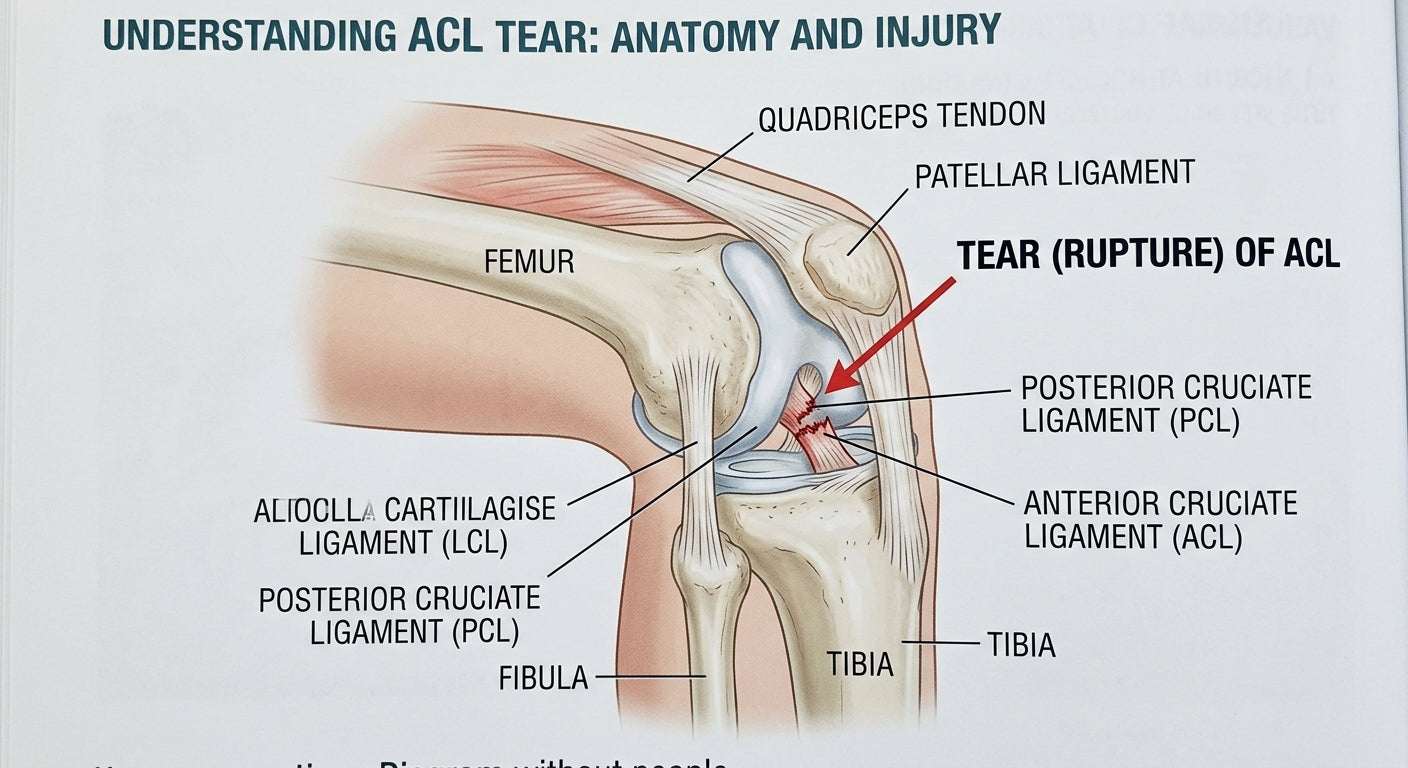
An ACL tear is one of the most common and debilitating knee injuries, frequently seen in athletes but also occurring in everyday life. The anterior cruciate ligament (ACL) is a critical component of the knee's stability, connecting your thigh bone (femur) to your shin bone (tibia). When this ligament tears, it can lead to instability, pain, and a lengthy recovery process.
What is the Anterior Cruciate Ligament (ACL)?
The knee is a complex joint, stabilized by four main ligaments. The ACL runs diagonally in the middle of the knee, playing a vital role in preventing the tibia from sliding in front of the femur and limiting rotational movements of the knee. Its strength is essential for activities that involve pivoting, jumping, and sudden changes in direction.
How Does an ACL Tear Occur?
Most ACL tears are non-contact injuries, meaning they happen without direct impact from another person or object. Common mechanisms include:
- Sudden stops and changes in direction: Often seen in sports like soccer, basketball, and skiing.
- Landing awkwardly from a jump: Particularly common in volleyball and gymnastics.
- Pivoting with a fixed foot: Twisting the knee while the foot remains planted.
- Hyperextension of the knee: Extending the knee beyond its normal range.
- Direct impact on the knee, though less common for isolated ACL injuries.
These movements put immense stress on the ligament, causing it to stretch beyond its capacity and tear, either partially or completely.
Recognizing the Symptoms of an ACL Tear
When an ACL tear occurs, individuals often report a distinct "pop" sound or sensation in the knee at the moment of injury. Other immediate and subsequent symptoms include:
- Severe pain: Often intense and immediate.
- Rapid swelling: The knee typically swells significantly within a few hours due to bleeding within the joint.
- Loss of range of motion: Difficulty bending or straightening the knee.
- Feeling of instability: A sensation that the knee is "giving out" or cannot support weight, especially when trying to pivot or change direction.
- Tenderness to touch: Around the knee joint.
It's important to seek professional evaluation promptly if you suspect an ACL tear to get an accurate diagnosis.
Diagnosing an ACL Tear
A healthcare professional will typically diagnose an ACL tear through a combination of physical examination and imaging. During the exam, specific tests such as the Lachman test and anterior drawer test are performed to assess knee stability and ACL integrity. Imaging, particularly an MRI scan, provides detailed views of the soft tissues within the knee, confirming the presence and extent of the tear, and identifying any other associated injuries (such as meniscus tears or collateral ligament damage). X-rays may also be used to rule out bone fractures.

Treatment Options for an ACL Tear
1. Non-Surgical Management
For individuals with lower activity demands, older adults, or those with partial tears and minimal knee instability, non-surgical management may be an option. This typically involves:
- Physical therapy: A comprehensive program to strengthen the muscles around the knee (quadriceps, hamstrings, calves) to compensate for the torn ligament and improve stability.
- Activity modification: Avoiding activities that put excessive stress on the knee, such as pivoting or jumping in sports.
- Supportive devices: Using external knee supports to provide stability during daily activities and during the initial recovery phase.
While non-surgical recovery can lead to a functional knee, there may be a higher risk of future episodes of instability or associated injuries.
2. Surgical Reconstruction
Surgical reconstruction is often recommended for active individuals, especially athletes, and those experiencing persistent knee instability. The procedure involves replacing the torn ligament with a tissue graft, typically taken from another part of the patient's body (autograft) or from a donor (allograft). Common graft choices include the patellar, hamstring, or quadriceps tendon.
The goal of surgery is to restore knee stability and allow the individual to return to their desired activity level. However, surgery is only the beginning of the recovery process.
The Rehabilitation Journey: A Critical Path to Recovery
Whether treated surgically or non-surgically, rehabilitation is the cornerstone of recovery from an ACL tear. It's a structured program designed to restore strength, flexibility, balance, and ultimately, function to the injured knee. The timeline can be lengthy, often spanning 6-12 months or even longer, depending on the individual and their specific goals.
Key phases of rehabilitation include:
- Initial phase: Focus on reducing pain and swelling, restoring full knee extension, and gently activating muscles.
- Intermediate phase: Progressing to strengthening exercises for the quadriceps and hamstrings, improving balance, and regaining a full range of motion.
- Advanced phase: Incorporating sport-specific drills, agility training, and plyometrics to prepare for a return to high-demand activities.
- Return to sport phase: A gradual and carefully monitored return to activity, often requiring specific functional tests to ensure the knee is ready and to minimize the risk of re-injury.
The Role of Support for an ACL Tear
Throughout the recovery process and sometimes even for prevention, supportive products can play a significant role. These are designed to provide external stability, reduce swelling, manage pain, and offer proprioceptive feedback, which can help individuals feel more confident and secure in their movements.
Different types of supports cater to various stages and needs:
- Compression sleeves: Useful for managing swelling and providing gentle support, especially in the early stages of recovery or for general daily comfort. Many find a best knee compression sleeve helpful for everyday activities.
- Hinged knee supports: These offer greater lateral and medial stability and are often used post-surgery or during the later stages of rehabilitation when returning to more dynamic movements. An adjustable hinged knee brace can provide tailored support as recovery progresses. Athletes, particularly those in high-impact sports, might consider how a hinged knee brace can help protect the joint.
- ACL-specific supports: These are engineered to provide maximum knee stability, helping limit anterior translation of the tibia and rotational forces. An ACL knee brace is often prescribed by professionals to protect the healing ligament or prevent further injury during activity.
- For individuals involved in demanding sports like American football, understanding the importance of a knee brace in American football for injury prevention is key. Likewise, deciding whether to wear a knee brace while playing football can be critical for protecting the knee. The goal of any supportive device is to augment the body's natural stability, not replace it, and should always be used in conjunction with a supervised rehabilitation program. Sometimes, a general knee brace can also provide pain relief and stability.
Prevention Strategies
- Neuromuscular training programs: These programs focus on improving landing mechanics, balance, agility, and strengthening muscles around the knee and hip.
- Proper warm-up and cool-down: Preparing muscles for activity and aiding recovery.
- Strength training: Focusing on balanced strength in the quadriceps, hamstrings, and glutes.
- Technique correction: Learning and practicing correct movement patterns for sports-specific actions.
- Avoiding activities when fatigued.
Living with an ACL Injury: Long-Term Outlook
Recovering from an ACL tear is a journey that requires patience, dedication, and consistent effort. With appropriate treatment and diligent rehabilitation, many individuals successfully return to their pre-injury activity levels, including competitive sports. However, some may experience lingering issues, such as stiffness, occasional instability, or an increased risk of developing knee osteoarthritis later in life. Ongoing strength and conditioning are often recommended to maintain knee health. Seeking guidance from healthcare professionals is paramount throughout this process to ensure the best possible long-term outcomes for ACL tear support and overall knee health.
-
Veröffentlicht in
Knee Injuries