Rotator Cuff Tear
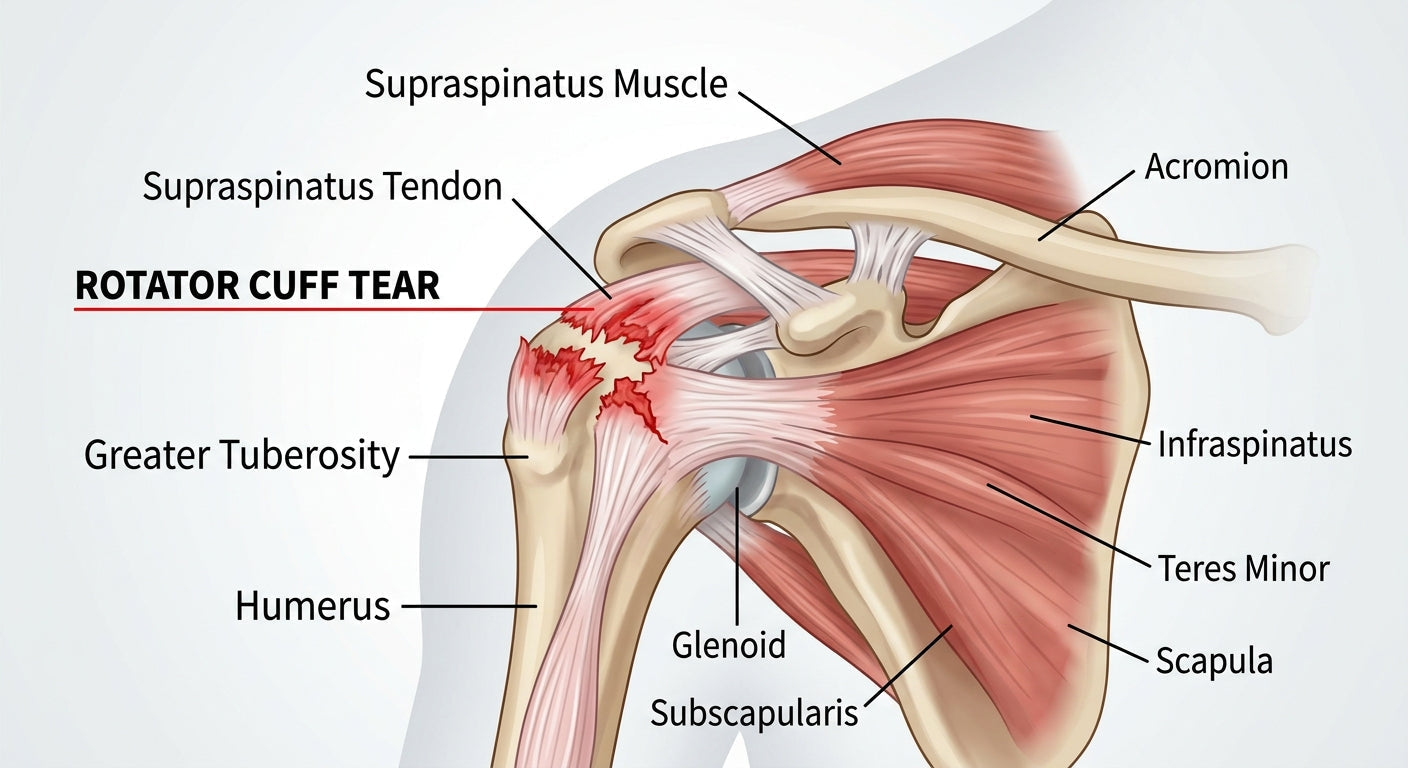
A rotator cuff tear is a common injury that can significantly impact a person's ability to perform everyday activities. It involves damage to one or more of the four muscles and their tendons that surround the shoulder joint and play a crucial role in shoulder movement and stability.
What is the Rotator Cuff?
The rotator cuff is a group of four muscles – the supraspinatus, infraspinatus, teres minor, and subscapularis – that originate from the shoulder blade and attach to the head of the humerus (upper arm bone). These muscles and their tendons form a "cuff" around the shoulder joint, allowing for a wide range of motion, including lifting and rotating the arm, and helping to keep the ball of the upper arm bone securely centered in the shoulder socket.
Types of Rotator Cuff Tears
- Partial Tear: Also known as an incomplete tear, this involves tendon damage but not complete separation from the bone.
- Full-Thickness Tear: In this more severe type, the tendon is completely separated from its attachment to the bone. This can range from a small hole to a complete detachment of the tendon from the bone.
Causes of a Rotator Cuff Tear
- Acute Injury: This often occurs from a sudden, forceful event, such as falling onto an outstretched arm, lifting a heavy object awkwardly, or a direct impact to the shoulder. Athletes involved in sports that require overhead movements, such as baseball pitchers and tennis players, may also experience acute tears.
-
Degenerative Tear: These tears develop gradually over time due to repetitive stress, wear and tear, and age-related tendon degeneration. Factors contributing to degenerative tears include:
- Age: The risk of a rotator cuff tear increases with age, as tendons naturally weaken.
- Repetitive Overhead Activities: Occupations or hobbies that involve frequent overhead lifting or arm movements can put excessive stress on the rotator cuff.
- Poor Blood Supply: As we age, the blood supply to the rotator cuff tendons can diminish, impairing the body's natural ability to repair minor damage.
- Bone Spurs: Bone growths (osteophytes) can form on the undersurface of the acromion (part of the shoulder blade), impinging on the rotator cuff tendons and causing irritation or tears.
Recognizing the Symptoms
- Pain: Often described as a dull ache deep within the shoulder, which may worsen at night or when lying on the affected side. Pain can also intensify with specific arm movements, especially overhead activities.
- Weakness: Difficulty lifting the arm, reaching behind the back, or performing everyday tasks that involve shoulder strength.
- Limited Range of Motion: Stiffness or inability to move the arm through its full range.
- Clicking or Catching Sensation: Some individuals may feel a clicking or grinding sensation when moving the shoulder.
Diagnosis of a Rotator Cuff Tear
Diagnosing a rotator cuff tear typically begins with a thorough physical examination by a healthcare professional. They will assess your shoulder's range of motion and strength and check for tenderness. Imaging tests are often used to confirm the diagnosis and determine the severity of the tear:
- X-rays: While X-rays cannot show soft tissues like tendons, they can help rule out other conditions, such as arthritis or bone spurs, that might be contributing to the pain.
- MRI (Magnetic Resonance Imaging): An MRI is the most common and effective imaging test for visualizing the rotator cuff tendons and identifying the presence, size, and location of a tear.
- Ultrasound: This imaging technique can also provide clear images of soft tissues and can be performed dynamically (while the shoulder is in motion).

Treatment Options for a Rotator Cuff Tear
Treatment for a rotator cuff tear falls into two broad categories: non-surgical and surgical.
Non-Surgical Treatment
Many rotator cuff tears, particularly partial or degenerative tears, can be managed effectively without surgery. Non-surgical options include:
- Rest and Activity Modification: Avoid activities that worsen pain. Adjusting daily routines to protect the shoulder can reduce inflammation and help the tendon heal.
-
Pain Management:
- Medications: Over-the-counter pain relievers like ibuprofen or naproxen can help manage pain and inflammation. In some cases, a healthcare provider might prescribe stronger pain medications.
- Injections: Corticosteroid injections into the shoulder joint can provide temporary relief from pain and inflammation.
-
Physical Therapy: This is a cornerstone of non-surgical treatment. A physical therapist will guide you through exercises designed to:
- Restore range of motion.
- Strengthen the rotator cuff and surrounding shoulder muscles.
- Improve posture and shoulder mechanics.
- Manual therapy techniques may also help alleviate stiffness and pain.
- Supportive Devices: A rotator cuff injury sling may be recommended to immobilize the shoulder during the initial healing phase, provide comfort, and help prevent further injury. Additionally, many individuals find relief and support from wearing a shoulder brace for rotator cuff injuries. Questions often arise about whether shoulder braces for the rotator cuff are truly effective, and the answer often lies in their ability to provide stability and compression. For those wondering, can a torn rotator cuff heal on its own? Consult a professional, as self-healing depends on several factors. A shoulder brace for a torn rotator cuff can help with stability during recovery. A specialized brace for rotator cuff injury may offer targeted support.
Surgical Treatment
Surgery may be considered for a rotator cuff tear when non-surgical treatments haven't provided sufficient relief, the tear is large and acute, or the individual needs a high level of shoulder function for work or sport.
-
When Surgery is Considered:
- Persistent pain and weakness despite non-surgical efforts.
- Large, full-thickness tears (typically >1-2 cm).
- Tears caused by an acute injury, especially in younger, active individuals.
- Significant functional limitations affecting daily life.
-
Types of Surgery:
- Arthroscopic Repair: This minimally invasive procedure involves small incisions and a tiny camera (arthroscope) to visualize and repair the tear. It's often preferred for its lower pain and faster initial recovery.
- Open Repair: Involves a larger incision and direct visualization of the tear. This may be necessary for very large or complex tears.
- Mini-Open Repair: A hybrid approach using a small incision combined with arthroscopic techniques.
-
Recovery Post-Surgery: Surgical recovery involves several phases:
- Immobilization: The arm is typically placed in a sling for several weeks to protect the repaired tendon and allow initial healing.
- Rehabilitation: A structured physical therapy program is vital to regain strength, flexibility, and range of motion. This phase can last for several months.
Prevention Tips
- Strengthening Exercises: Regular exercises that strengthen the rotator cuff muscles and the surrounding shoulder girdle can enhance stability and resilience.
- Proper Technique: Use correct form during sports and activities that involve overhead movements.
- Ergonomic Adjustments: Adjust your workspace to reduce shoulder strain.
- Listen to Your Body: Avoid pushing through pain and take breaks during repetitive tasks.
- Consider wearing a shoulder compression brace during activities or for support if prone to shoulder discomfort. Many wonder: Is a shoulder compression brace good for a rotator cuff injury? The answer often depends on the individual's specific needs and the type of injury.
-
Veröffentlicht in
Shoulder pain