Shoulder Impingement
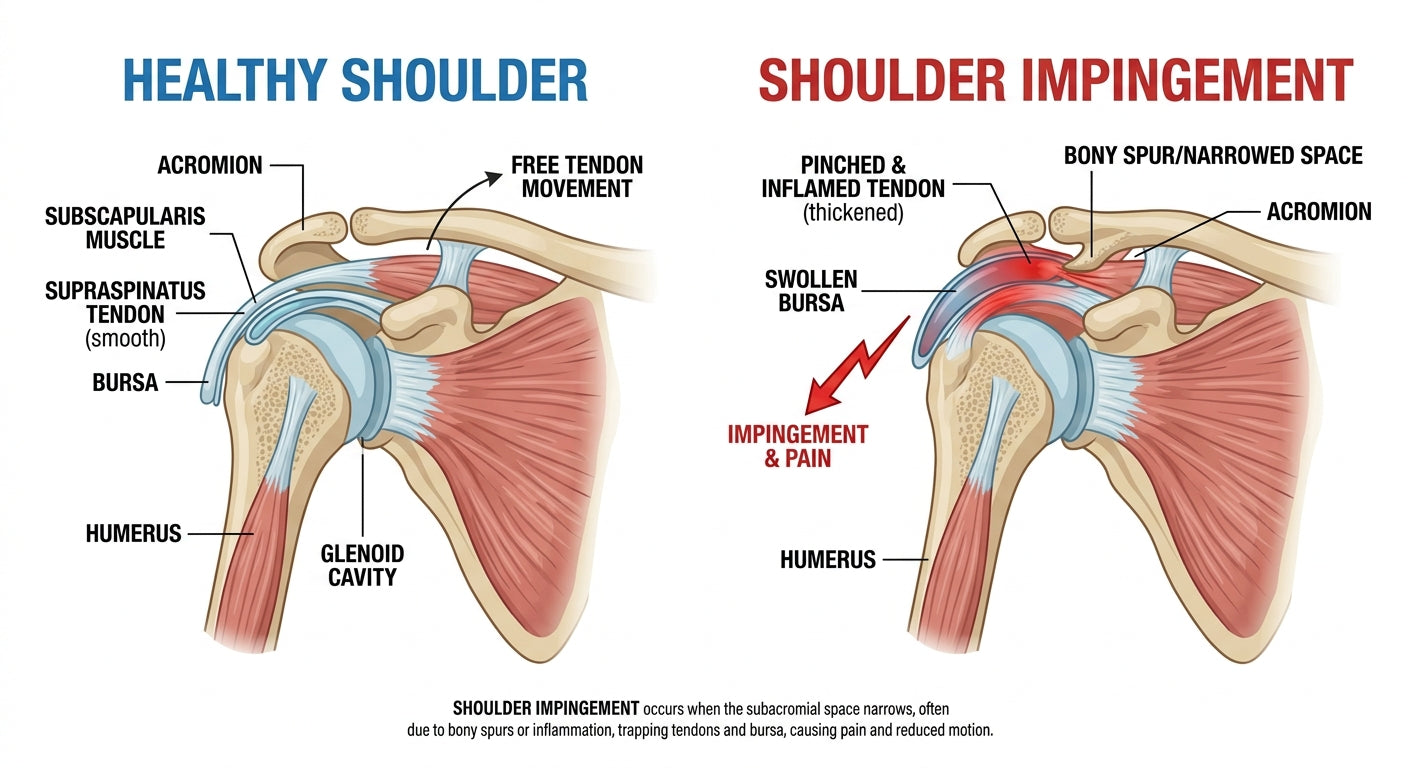
Shoulder impingement, also known as subacromial impingement syndrome, is a common condition characterized by shoulder pain. It occurs when the rotator cuff tendons or the bursa (a fluid-filled sac that reduces friction) get pinched or compressed as they pass through a narrow space in your shoulder called the subacromial space. This can lead to irritation, inflammation, and discomfort, making everyday activities challenging.
What is Shoulder Impingement?
Your shoulder is a complex joint that allows for a wide range of motion. It’s made up of three main bones: the humerus (upper arm bone), the scapula (shoulder blade), and the clavicle (collarbone). The rotator cuff is a group of four muscles and their tendons that surround the shoulder joint, providing stability and enabling arm movement. Above the rotator cuff, part of the scapula forms an arch called the acromion. The space beneath this arch, the subacromial space, is where the rotator cuff tendons and the subacromial bursa reside.
When you lift your arm, these structures glide smoothly within this space. However, if the space narrows or the tendons become swollen, they can get "impinged" (pinched) against the acromion. This pinching sensation is the hallmark of shoulder impingement.
Common Causes of Shoulder Impingement
- Repetitive Overhead Activities: Sports like swimming, tennis, and baseball, or occupations that require frequent overhead arm movements (e.g., painters, construction workers), can place constant stress on the shoulder, leading to inflammation and impingement.
- Bone Spurs: Over time, bone spurs (small bony growths) can form on the acromion, further narrowing the subacromial space.
- Injury or Trauma: A fall or direct impact to the shoulder can cause acute inflammation and swelling, which can initiate impingement symptoms.
- Poor Posture: Slouching or rounded shoulders can alter shoulder joint mechanics, reduce the subacromial space, and increase the likelihood of impingement.
- Muscle Imbalance and Weakness: Weakness in the rotator cuff muscles or imbalances between shoulder muscles can disrupt normal humeral head movement within the joint, contributing to pinching. Understanding the common causes of shoulder injuries can help in prevention.
- Aging: As we age, tendons can naturally degenerate and become less resilient, making them more susceptible to injury and inflammation.
Recognizing the Symptoms
- Pain: Often a dull ache in the front or side of the shoulder, which can radiate down the arm. It frequently intensifies with overhead movements, lifting, or reaching behind the back.
- Weakness: Difficulty lifting the arm, especially against resistance, or a feeling of weakness in the affected arm.
- Limited Range of Motion: Stiffness and reduced ability to move the arm fully, particularly for activities like brushing hair or reaching for objects on high shelves.
- Night Pain: Discomfort that makes it difficult to sleep, especially when lying on the affected side.
- Clicking or Catching Sensation: Some individuals may experience a clicking or catching sensation in the shoulder during movement.

Diagnosis of Shoulder Impingement
Diagnosing shoulder impingement involves a thorough physical examination by a healthcare professional. They will assess your range of motion, test muscle strength, and perform specific tests to reproduce your pain and identify the source of impingement. Imaging studies may also be used:
- X-rays: To rule out other conditions like arthritis or fractures and to check for bone spurs on the acromion.
- MRI (Magnetic Resonance Imaging): Provides detailed images of soft tissues, allowing the doctor to visualize the rotator cuff tendons and bursa, identify inflammation, and detect tears.
Effective Treatment Options
Treatment for shoulder impingement typically begins with conservative methods. Surgery is usually considered only if conservative approaches do not provide sufficient relief.
Conservative Care
- Rest and Activity Modification: Avoid activities that aggravate your pain, especially overhead movements, to help reduce pain. Modifying how you perform tasks can also help.
- Ice and Heat Therapy: Applying ice packs to the affected area can help reduce inflammation and pain, particularly after activity. Heat can help relax muscles.
- Pain Management: Over-the-counter pain relievers, such as NSAIDs (nonsteroidal anti-inflammatory drugs), can help manage pain and inflammation.
-
Physical Therapy: A cornerstone of recovery, physical therapy focuses on:
- Stretching: To improve flexibility and restore range of motion.
- Strengthening: Exercises to strengthen the rotator cuff and scapular stabilizer muscles, improving shoulder mechanics and stability.
- Posture Correction: Addressing poor posture that contributes to impingement.
- Activity Modification Education: Learning safe ways to perform daily tasks and return to sports.
- Injections: Corticosteroid injections into the subacromial space can provide temporary pain relief and reduce inflammation, allowing for more effective physical therapy. These are generally used sparingly due to potential side effects.
- Shoulder Support: For some individuals, wearing a shoulder impingement brace can provide stability and support, helping limit aggravating movements during recovery. Explore shoulder braces for various conditions to aid recovery. A rotator cuff brace or other forms of shoulder support for a torn rotator cuff can be beneficial for those with rotator cuff involvement.
Surgical Intervention
If conservative treatments fail to relieve symptoms after several months, your doctor might recommend surgery. The most common surgical procedure for shoulder impingement is arthroscopic subacromial decompression.
- Arthroscopic Surgery: This minimally invasive procedure involves making small incisions around the shoulder. A tiny camera (arthroscope) is inserted to visualize the joint, and small instruments are used to remove inflamed tissue, bone spurs, and sometimes a small portion of the acromion (acromioplasty) to create more space for the tendons to glide freely.
Recovery and Prevention
- Pain Management: Following your surgeon's instructions for medication.
- Physical Therapy: Gradually progressing through exercises to restore range of motion, strength, and function.
- Activity Restrictions: Avoiding heavy lifting or overhead activities for a specified period.
To prevent shoulder impingement from recurring:
- Maintain Good Posture: Be mindful of your posture, especially during prolonged sitting or standing.
- Regular Strengthening and Flexibility: Continue with exercises that strengthen the rotator cuff and scapular muscles and maintain shoulder flexibility.
- Proper Technique: If you participate in sports or activities that involve repetitive overhead movements, ensure you use proper technique to minimize stress on your shoulders. Consider shoulder support for sports activities to enhance protection.
- Warm-up and Cool-down: Always warm up before physical activity and cool down afterward.
- Listen to Your Body: Avoid pushing through pain. If an activity causes discomfort, modify it or take a break. For those doing resistance training, using shoulder support during lifting and following lifting-protection tips can be very beneficial.
- Address Underlying Issues: If you also experience bursitis, you may need shoulder support, and understanding where you feel shoulder bursitis pain can help pinpoint symptoms.
-
Veröffentlicht in
Shoulder pain