Lower Back Pain
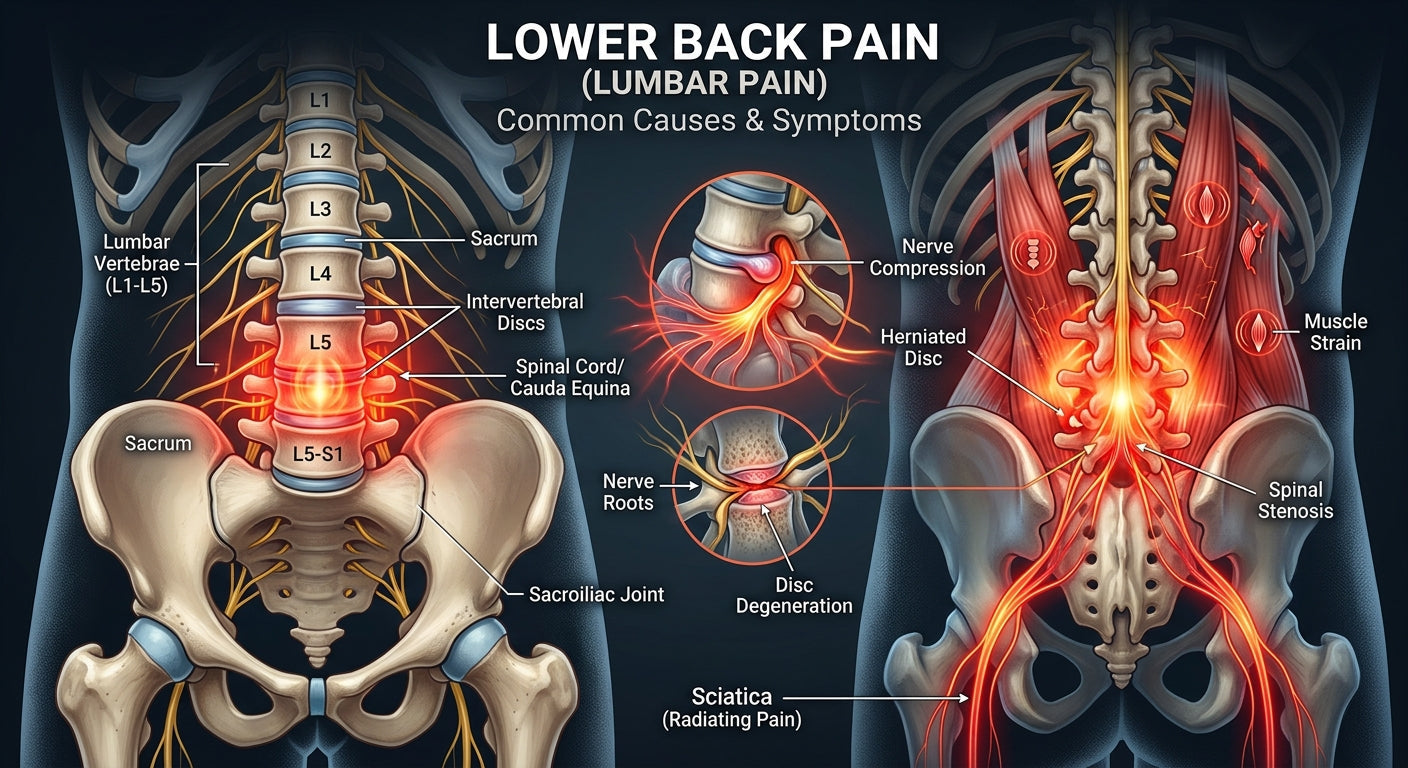
Lower back pain is remarkably common, affecting a significant portion of the global population at some point in their lives. From a dull, persistent ache to sudden, sharp discomfort, it can significantly disrupt daily activities and reduce quality of life. The lumbar region of the spine, designed for both strength and flexibility, is susceptible to many issues because it supports body weight and enables movement.
Causes of Lower Back Pain:
The causes of lower back pain are diverse, spanning from acute injuries to chronic conditions. Many instances stem from mechanical issues involving how the spine, muscles, intervertebral discs, and nerves work together.
- Muscle Strain and Ligament Sprain: Overstretching or tearing lower-back muscles or ligaments is a common culprit, often caused by heavy lifting, sudden awkward movements, or sports injuries.
- Disc Issues: The spinal discs act as cushions between vertebrae. A herniated disc, sometimes referred to as a "slipped disc," occurs when the soft inner material of a disc pushes through its outer casing, potentially pressing on nearby nerves. If you're wondering what a herniated disc feels like, it can range from localized pain to radiating discomfort.
- Sciatica: This refers to pain that radiates along the path of the sciatic nerve, which branches from your lower back through your hips and buttocks and down each leg. It typically affects only one side of your body and often results from a herniated disc or spinal stenosis compressing the nerve. Finding relief from sciatica often involves addressing the underlying compression.
- Osteoarthritis: This degenerative joint disease can affect the lower back, causing cartilage to break down and reducing the cushioning between spinal joints.
- Spinal Stenosis: A narrowing of the spinal canal, which can put pressure on the spinal cord and nerves, leading to pain, numbness, or weakness in the legs.
- Skeletal Irregularities: Conditions like scoliosis (a curvature of the spine) or other congenital anomalies can place uneven stress on the back.
- Poor Posture: Sustained poor sitting or standing posture can place undue stress on the spine and surrounding muscles, contributing to chronic lower back pain. Understanding types of posture and how to maintain a healthy alignment is essential.
- Lifestyle Factors: Lack of physical activity, excessive body weight, and improper lifting techniques can all contribute to the development or worsening of lower back pain.
Symptoms of Lower Back Pain:
Symptoms can vary greatly depending on the cause and severity. They might include:
- Dull, aching pain in the lower back.
- Sharp, shooting pain that radiates down the leg (sciatica).
- Stiffness or reduced range of motion.
- Numbness, tingling, or weakness in the legs or feet.
- Pain that worsens with prolonged standing or sitting.
- Pain that improves with walking or reclining.
When to Seek Professional Help:
While many cases of lower back pain resolve with self-care, it's important to consult a healthcare professional if:
- The pain is severe and doesn't improve with rest.
- It extends down one or both legs, especially below the knee.
- It causes numbness, tingling, or weakness in the legs.
- You experience unexplained weight loss.
- You have new bowel or bladder problems.
- The pain follows a fall, blow to your back, or other injury.
Treatment and Management Options:
Before diving into detailed treatment sections, let's compare some common approaches to managing lower back pain. This visual overview can help you understand the different paths to recovery.

Compare common lower back pain treatments side-by-side—visualizes effectiveness, typical recovery time, and invasiveness to help choose the next step.
Treatment for lower back pain typically begins with conservative methods, moving to more intensive options if necessary.
- Rest and Activity Modification: Brief rest can help, but prolonged bed rest is generally discouraged. Light activity, as tolerated, helps maintain flexibility and strength.
- Heat and Cold Therapy: Applying a heating pad for back pain can relax muscles and improve blood flow, while cold packs can reduce inflammation and numb the area, particularly useful after an acute injury.
- Over-the-Counter Relief: Pain relievers and anti-inflammatory medications can help manage discomfort.
- Physical Therapy: A physical therapist can guide you through exercises to strengthen core muscles (abdominal and back muscles), improve flexibility, and correct posture, all of which are crucial for long-term recovery and prevention.
- Supportive Garments: For some individuals, wearing a supportive garment, such as a back brace, can provide stability and pain relief during activity or recovery. Many people ask, can a back brace help with lower back pain? The answer often depends on the specific condition and proper use. It's also important to understand the disadvantages of wearing a back brace if you don't use it correctly. For those seeking relief, exploring different types of back braces for pain can be a helpful step. You can find various options for overall back support to aid in recovery and daily activities.
- Lifestyle Adjustments: Maintaining a healthy weight, quitting smoking, and managing stress can significantly impact back health.
- Alternative Therapies: Acupuncture, massage, and chiropractic care are options some individuals find beneficial.
- Injections: In some cases, nerve blocks or epidural steroid injections may be recommended to reduce inflammation and pain.
- Surgical Intervention: Surgery is typically a last resort, considered only when conservative treatments have failed, especially in cases involving nerve compression or structural instability.
Preventing Lower Back Pain:
Preventing lower back pain often involves adopting healthy habits and being mindful of your body mechanics.
- Maintain Good Posture: Be conscious of your posture while sitting, standing, and lifting. Use ergonomic chairs and set up your workspace correctly.
- Regular Exercise: Engage in activities that strengthen your core (abdominal and back) muscles and improve flexibility. Low-impact exercises like walking, swimming, and yoga are excellent choices.
- Lift Safely: When lifting heavy objects, bend your knees and keep your back straight, using your leg muscles to do the work. Avoid twisting your body.
- Maintain a Healthy Weight: Excess body weight, especially around the midsection, adds strain to your lower back.
- Stay Active: Avoid prolonged periods of sitting or standing. Take breaks to stretch and move around.
- Quit Smoking: Smoking can reduce blood flow to the spine, accelerating disc degeneration.
- Wear Appropriate Footwear: Shoes with good support can help maintain proper spinal alignment.
-
Posted in
Back pain solutions