Hip Abductor Injuries
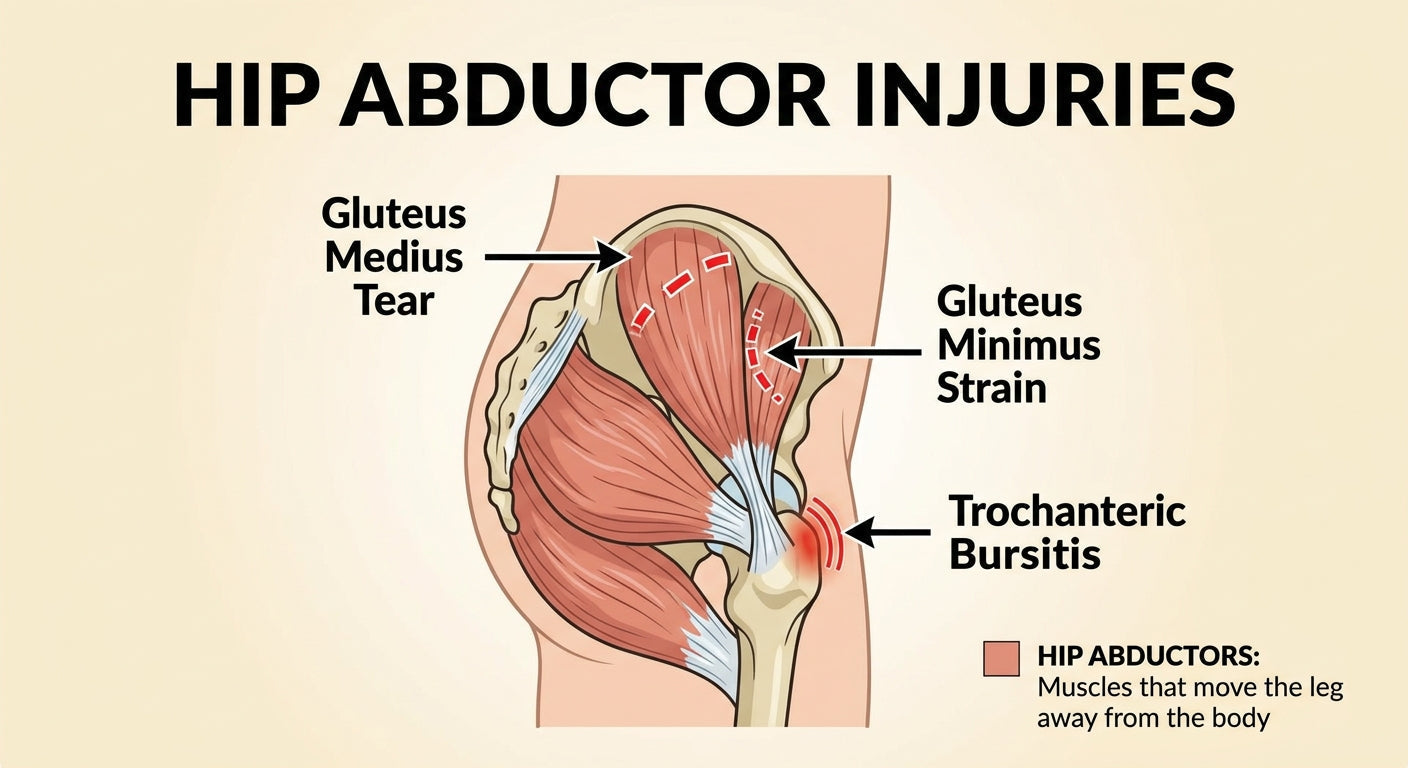
Hip abductor injuries are a common source of discomfort and functional limitations, affecting individuals from athletes to older adults. These injuries primarily involve the muscles on the outer side of your hip, crucial for stabilizing your pelvis, walking, and performing many daily activities.
The hip abductor muscles, primarily the gluteus medius and gluteus minimus, play a vital role in moving your leg away from your body (abduction) and rotating it internally. They also work to stabilize your pelvis during single-leg stance, such as when you walk or run. When these muscles or their tendons become strained, torn, or inflamed, it can cause significant pain and weakness, often showing up as noticeable hip pain when you walk. Ignoring these initial warning signs can sometimes lead to a more severe injury.
These injuries range from mild strains (tendinopathy) to partial or complete tears of the tendons attaching to the greater trochanter of the femur. While acute trauma can cause them, they are frequently the result of repetitive stress or chronic degeneration, particularly in active individuals or those with underlying biomechanical issues. Recognizing the early indicators and seeking appropriate medical evaluation can significantly impact the recovery timeline and overall outcome.
 Compare non-surgical and surgical treatment options for hip abductor injuries, visualize recovery timelines, and quickly and confidently identify diagnostic cues to support treatment decisions.
Understanding the Causes and Symptoms
Hip abductor injuries can stem from various sources. Overuse is a common culprit, often seen in runners, hikers, or individuals whose occupations involve prolonged standing or walking. Sudden, forceful movements, such as a misstep or a direct fall onto the hip, can also cause acute tears. Muscle imbalance, poor core strength, or biomechanical inefficiencies can predispose an individual to these injuries. Sometimes, the issue may stem from other areas of the leg, even affecting the structures that hold the kneecap in place, causing a cascade of issues up the kinetic chain to the hip.
Common symptoms include:
- Pain on the outside of the hip, often worsening with activity, lying on the affected side, or standing on one leg.
- Tenderness to touch over the greater trochanter.
- Weakness when trying to lift the leg out to the side.
- Limping or a Trendelenburg gait (a noticeable dip of the pelvis to the unsupported side when walking).
- Sometimes, clicking or snapping sensations.
Recognizing these indicators early is key to preventing the injury from progressing into a chronic issue, which can lead to persistent hip pain.
Diagnosis of Hip Abductor Injuries
Imaging studies are often used to confirm the diagnosis and determine the extent of the injury:
- X-rays: Primarily to rule out bony pathologies or arthritis.
- Ultrasound: Can be effective in visualizing soft tissues, including tendons, and can detect tears or inflammation.
- MRI (Magnetic Resonance Imaging): Considered the gold standard for soft-tissue assessment, MRI can provide detailed images of the abductor tendons and identify tears, tendinopathy, and inflammation.
Don't dismiss persistent hip discomfort; certain hip pain red flags may indicate a more serious underlying condition that requires urgent medical evaluation.
Treatment Approaches
Non-Surgical Treatment
- Rest and Activity Modification: Avoid activities that worsen pain in the early stages.
- Ice and Anti-inflammatory Medications: Help manage pain and swelling.
- Physical Therapy: A cornerstone of recovery. A tailored program will include exercises to strengthen the hip abductor muscles, improve core stability, enhance flexibility, and correct gait abnormalities. This might involve resistance bands, bodyweight exercises, and manual therapy techniques.
- Injections: Corticosteroid injections can provide temporary pain relief by reducing inflammation, but they are generally not a long-term solution. Platelet-rich plasma (PRP) injections are also being explored for their potential to promote tissue healing.
Surgical Treatment
If conservative treatments fail to provide adequate relief after a period of several months, or for large, acute tears, surgery may be considered. Surgical options typically involve repairing the torn tendon back to the bone. Recovery after surgery can be extensive, often requiring the use of a specialized hip brace after surgery to protect the repair site during the initial healing phases.
Recovery and Rehabilitation
- Pain and Inflammation Control: Initial focus on protecting the injured area.
- Restoration of Range of Motion: Gentle exercises to regain hip mobility.
- Strengthening: Gradual progression of exercises to rebuild strength in the hip abductors and surrounding muscles. This might include exercises with a double-hip support brace to improve stability and ensure proper muscle activation.
- Functional Training: Exercises that mimic daily activities and sport-specific movements.
- Return to Activity: A carefully planned, gradual return to full activity levels to prevent re-injury.
Certain conditions, like piriformis syndrome, can also mimic hip abductor pain and may benefit from specific interventions, sometimes including a piriformis brace.
Prevention Strategies
- Strengthening Exercises: Regular exercises targeting the hip abductors, glutes, and core muscles are paramount.
- Flexibility: Maintaining good hip flexibility can reduce strain on the muscles and tendons.
- Proper Warm-up and Cool-down: Essential before and after physical activity.
- Gradual Progression: Avoid sudden increases in activity intensity or duration.
- Ergonomics: Ensure proper posture and support during prolonged sitting or standing.
- Listen to Your Body: Do not push through pain. Early intervention for discomfort can prevent more serious injuries.
If you have ongoing hip discomfort or are recovering from an injury, exploring supportive hip solutions, such as those offered by Fivali Fitness, can provide added stability during rehabilitation and daily activities.
-
Veröffentlicht in
Hip Injury