Groin Pull
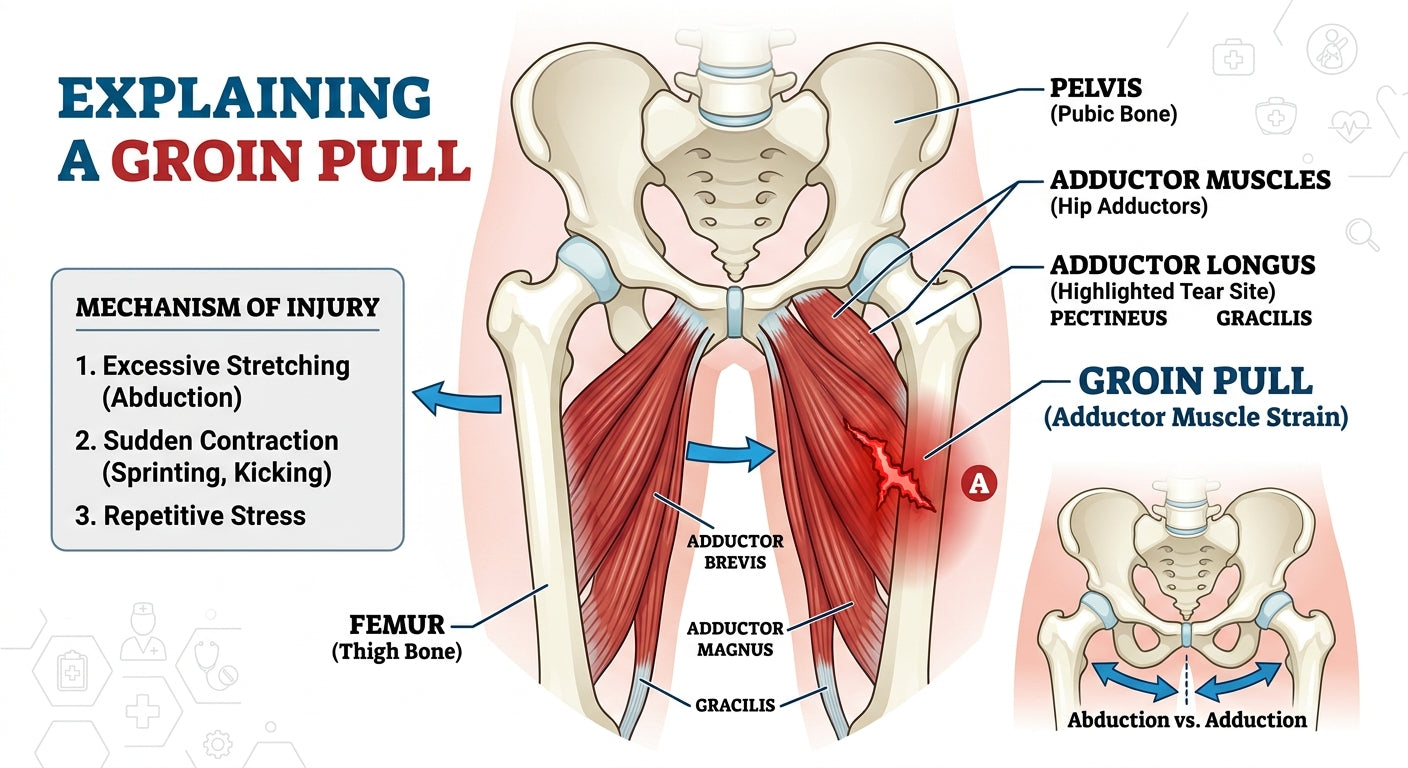
A groin pull, also known as a groin strain, is a common injury affecting the muscles in your inner thigh. These muscles, collectively called the adductor muscles, run from your pelvis down to your thigh bone. They are crucial for bringing your legs together, rotating your leg, and stabilizing your hip. A groin pull occurs when these muscles are stretched or torn, often during sudden movements or intense physical activity.
This injury is common in athletes in sports that require quick changes in direction, explosive starts, or powerful kicking motions, such as soccer, hockey, football, and sprinting. However, anyone can experience a groin pull from activities like heavy lifting or a slip-and-fall.
Understanding Groin Pull Grades and Recovery

- Grade 1 (Mild): A minor stretch or microscopic tears in the muscle fibers. You might feel a mild ache or tenderness, but a full range of motion and strength are usually preserved. Recovery often takes 1-3 weeks.
- Grade 2 (Moderate): A partial tear of the muscle fibers. Pain is more significant, and you may experience noticeable weakness, swelling, and bruising. Movement is restricted and painful. Recovery can range from 3-6 weeks, sometimes longer.
- Grade 3 (Severe): A complete rupture of the muscle. This causes intense pain, significant swelling, bruising, and a complete loss of muscle function. It may even be accompanied by a "pop" sensation at the time of injury. This grade often requires surgical intervention and can take 3-4 months or more for full recovery.
Symptoms of a Groin Pull
- Pain: A sharp, sudden pain in the inner thigh or groin area at the moment of injury, which may evolve into a dull ache. The pain typically worsens with activities that engage the adductor muscles, such as running, jumping, or bringing your legs together.
- Tenderness: The affected area will likely be tender to the touch.
- Swelling and Bruising: These may appear shortly after the injury, especially with more severe strains.
- Weakness: Difficulty or inability to move the affected leg normally or to perform actions like kicking.
- Stiffness: The groin area might feel stiff, especially after periods of rest.
Causes and Risk Factors
- Sports Injuries: Activities involving rapid acceleration, deceleration, quick changes in direction (e.g., cutting, pivoting), or forceful kicking.
- Lack of Warm-up: Skipping a proper warm-up before exercise leaves muscles less pliable and more susceptible to injury.
- Muscle Imbalance: Weakness in the adductor muscles compared to stronger opposing muscles (such as the abductors of the outer thigh) can increase the risk.
- Fatigue: Tired muscles absorb shock less well and react less effectively, making them more prone to injury.
- Previous Groin Injury: A history of groin strains can make you more vulnerable to recurrence.
Diagnosis
A healthcare professional, such as a doctor or physical therapist, will typically diagnose a groin pull through a thorough physical examination. They will assess your symptoms, check for tenderness, swelling, and bruising, and evaluate your range of motion and strength. You may be asked to perform certain movements to pinpoint the source of the pain.
In some cases, especially with severe pain or an unclear diagnosis, a doctor may recommend imaging tests such as an MRI (Magnetic Resonance Imaging) to confirm the extent of the injury and rule out other conditions. This is especially important if hip pain red flags suggest a more serious issue.
Effective Treatment and Recovery
Initial Self-Care (RICE Method)
For mild to moderate groin pulls, the RICE method is often recommended for the first 24-48 hours:
- Rest: Avoid activities that cause pain. Give your muscles time to heal.
- Ice: Apply ice packs to the affected area for 15-20 minutes every 2-3 hours to reduce swelling and pain.
- Compression: A thigh support brace or a compression wrap can help reduce swelling and provide support. For targeted compression, consider a thigh compression sleeve.
- Elevation: Keep your leg elevated above your heart when resting to help minimize swelling.
Over-the-counter pain relievers can also help manage discomfort.
Rehabilitation and Physical Therapy
- Gentle Stretching: Starting with light, pain-free stretches to restore flexibility.
- Strengthening Exercises: Gradually increasing the strength of your adductor muscles and surrounding hip muscles. This might involve resistance bands, light weights, and bodyweight exercises. Wearing a hip brace during the early stages of activity might offer additional support.
- Proprioception and Balance Training: Exercises to improve your body's awareness of its position and movement, which is vital for preventing future injuries.
- Sport-Specific Drills: For athletes, a gradual return to activity involves drills that mimic movements in their sport, ensuring the muscle can handle the demands.
Progress slowly and listen to your body. Pushing too hard too soon can lead to re-injury and prolong recovery. If you're experiencing persistent discomfort or seeking relief from leg pain, consulting a professional is always beneficial. For certain conditions, a sciatica brace might also be considered if related nerve issues are present.
Preventing Groin Pulls
- Warm Up Properly: Before any physical activity, do 5-10 minutes of light cardio, then dynamic stretches that move your joints and muscles through their full range of motion.
- Stretch Regularly: Include static stretches for your groin and inner thigh muscles in your cool-down routine. Hold each stretch for 20-30 seconds.
- Strengthen Core and Hip Muscles: A strong core and balanced hip musculature (including adductors, abductors, glutes, and hamstrings) provide stability and support, reducing injury risk.
- Gradual Increase in Activity: Avoid sudden increases in exercise intensity, duration, or frequency. Allow your body time to adapt.
- Proper Technique: Learn and use correct form for your sport or activity to minimize undue stress on your muscles.
- Listen to Your Body: Don't push through pain. If you feel groin discomfort, rest and recover.
When to Seek Medical Attention
While many groin pulls can be managed with self-care and rehabilitation, it's important to know when to see a healthcare provider. Consult a doctor if:
- You experience severe, sudden pain, especially if you heard a "pop" at the time of injury.
- You cannot bear weight on your leg or walk with significant difficulty.
- Severe swelling or bruising worsens.
- Your symptoms do not improve after a few days of self-care.
- You have tingling, numbness, or weakness that extends down your leg, as this could indicate nerve involvement.
-
Veröffentlicht in
Hip Injury