Knee Fractures
Knee fractures are serious injuries that can significantly impact mobility and quality of life. The knee, being one of the largest and most complex joints in the body, is crucial for movement, stability, and weight-bearing. When a fracture occurs in any of the bones that form the knee joint—the patella (kneecap), the distal femur (lower end of the thigh bone), or the proximal tibia (upper end of the shin bone)—it can lead to severe pain, swelling, and an inability to use the leg. Understanding the types, causes, symptoms, and treatment options for knee fractures is vital for effective recovery and preventing long-term complications.
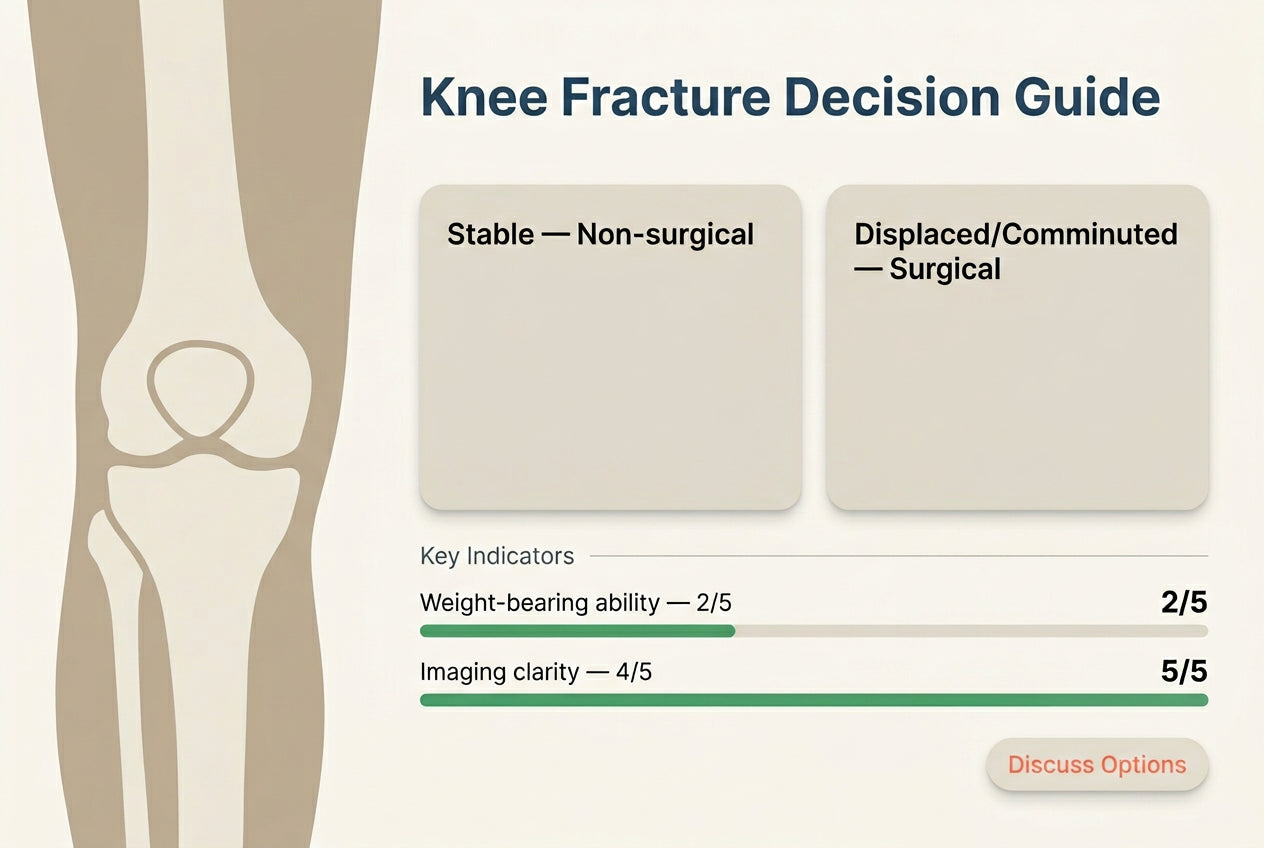
Deciding on the best course of action for a knee fracture is a critical step, often made in consultation with medical professionals. The severity and type of fracture will largely determine whether a non-surgical or surgical approach is recommended.
Types of Knee Fractures
- Patellar Fractures: A fracture of the kneecap (patella) typically results from a direct blow or a fall onto the knee. The patella protects the joint and helps extend the leg. Fractures can range from stable, non-displaced cracks to complex, comminuted fractures where the bone breaks into multiple pieces. In some cases, a specific type of support known as a patella knee brace may be used during recovery.
- Tibial Plateau Fractures: These fractures occur at the upper part of the tibia (shin bone), specifically where it meets the femur to form the knee joint. Often caused by high-energy trauma, such as falls from height or vehicle accidents, these fractures can also affect the cartilage and ligaments of the knee, potentially leading to long-term issues like arthritis if not properly treated.
- Distal Femur Fractures: Fractures of the lower end of the thigh bone, just above the knee joint, are common in older individuals with weakened bones due to osteoporosis or in younger individuals following high-impact trauma. These fractures are often severe due to the significant forces involved.
Causes of Knee Fractures
- Direct Impact: A direct blow to the knee, such as hitting the dashboard in a car accident or a fall directly onto the kneecap.
- Falls: Falling from a significant height or simply tripping, particularly in older adults with compromised bone density.
- Sports Injuries: High-impact sports or activities that involve twisting or pivoting motions can lead to fractures.
- Osteoporosis: This condition weakens bones, making them more susceptible to fracture from less severe trauma.
- Underlying Medical Conditions: Rarely, certain tumors or infections can weaken bone and lead to pathological fractures.
Recognizing the Symptoms
- Severe Pain: Intense pain that worsens with movement or weight-bearing.
- Swelling and Bruising: Rapid onset of swelling around the knee, often accompanied by bruising.
- Inability to Bear Weight: Difficulty or complete inability to put weight on the injured leg.
- Deformity: A visible change in the shape of the knee or leg, though this is not always present.
- Restricted Movement: Limited range of motion or inability to straighten or bend the knee.
- Popping Sensation: Some individuals report hearing or feeling a "pop" at the time of injury.
Diagnosis of Knee Fractures
- Physical Examination: Assessing swelling, tenderness, range of motion, and stability.
- X-rays: Standard imaging to visualize the bone structure and identify the fracture type and displacement.
- CT Scan: Provides detailed cross-sectional images, essential for complex fractures, particularly tibial plateau and distal femur fractures, to assess joint involvement.
- MRI Scan: While not always necessary for diagnosis, an MRI can reveal associated soft-tissue injuries, such as ligament tears or cartilage damage, which can influence treatment decisions. It's important to understand the full extent of the injury, as walking on a torn meniscus can worsen the condition, much like walking on a fractured bone.
Treatment Options for Knee Fractures
Treatment approaches vary widely based on the fracture type, severity, and the patient's overall health and activity level.
Non-Surgical Treatment
For stable, non-displaced fractures, non-surgical management may be appropriate. This typically involves:
- Immobilization: Using a cast or brace to keep the knee still, allowing the bone to heal. This can involve a full leg cast or a hinged knee support that limits motion.
- Weight-Bearing Restrictions: Patients are usually advised to avoid weight-bearing on the injured leg for a period, often requiring the use of crutches or a walking boot. It's crucial to understand when to begin and when to stop wearing a walking boot to ensure proper healing.
- Pain Management: Medications to control pain and reduce inflammation.
- Physical Rehabilitation: Once initial healing begins, a structured rehabilitation program is essential for restoring strength, flexibility, and range of motion.
Surgical Treatment
More complex, displaced, or unstable fractures typically require surgical intervention. Common surgical procedures include:
- Open Reduction and Internal Fixation (ORIF): The surgeon realigns the bone fragments (open reduction) and then secures them in place with metal plates, screws, or pins (internal fixation). This is common for patellar, tibial plateau, and distal femur fractures. Following surgery, a post-op knee brace is often prescribed to protect the healing joint.
- Partial or Total Knee Replacement: In severe cases, especially for older patients with significant joint damage or highly comminuted fractures that cannot be repaired, a partial or total knee replacement might be considered.
- External Fixation: In cases of severe open fractures or when the soft tissues are too damaged for internal fixation, an external frame may be used to stabilize the bones from outside the body.
Rehabilitation and Recovery
- Physical Rehabilitation: A cornerstone of recovery, focusing on restoring strength, flexibility, and balance. A physical therapist will guide exercises tailored to your specific injury and progress.
- Gradual Weight-Bearing: Following your surgeon's instructions for when to start putting weight on your leg is critical. Progressing too quickly can re-injure the bone.
- Supportive Devices: Using a patella knee brace or other forms of knee support like a knee stabilizer can provide stability and protection as you heal. Understanding how long should you wear a knee brace is an important part of your recovery journey.
- Lifestyle Adjustments: Modifying activities, especially high-impact sports, may be necessary during the healing period and potentially for the long term.
Prevention of Knee Fractures
- Bone Health: Maintain strong bones by eating a diet rich in calcium and vitamin D and by engaging in weight-bearing exercises.
- Safety Measures: Use caution on slippery surfaces, clear tripping hazards in your home, and wear appropriate protective gear during sports.
- Fall Prevention: For older adults, balance exercises and addressing vision issues can help prevent falls.
When to Seek Medical Attention
If you experience severe knee pain, swelling, or an inability to move your leg after an injury, seek immediate medical attention. Prompt diagnosis and treatment are crucial for the best possible outcome. Delaying treatment can lead to complications such as improper healing, chronic pain, or long-term joint problems. It's important to differentiate such acute injuries from other issues, such as chronic knee pain, where a knee brace for pain relief might be a common consideration.
A knee fracture is a serious injury that requires careful management. Understanding your condition and actively participating in your recovery plan will significantly improve your chances of a successful return to your daily activities. Just as it's important to know whether can you walk on a fractured ankle, understanding the specific limitations and recovery protocols for a fractured knee is essential.
-
Veröffentlicht in
Knee Injuries