Popping Knee
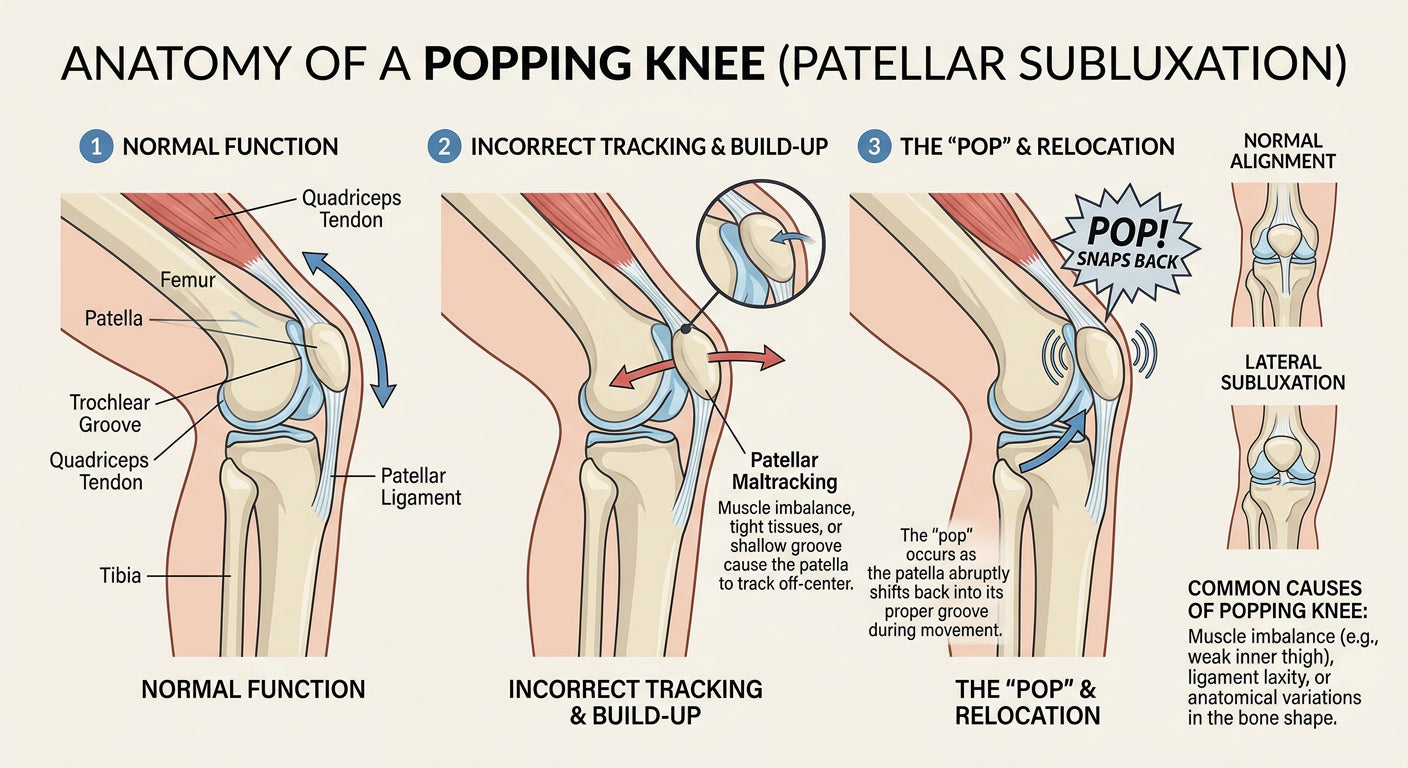
Many people experience a popping sensation in the knee at some point, whether it's a subtle click, a grinding sensation, or a distinct pop. This phenomenon, medically known as crepitus, can range from a harmless occurrence to a sign of an underlying issue.
The good news is that most instances of a popping knee are benign. Often, the sounds are simply caused by gas bubbles forming and collapsing within the synovial fluid, the natural lubricant in your joints. This process, called cavitation, is similar to cracking your knuckles and typically causes no pain or discomfort. It's a common event and usually nothing to worry about.
Popping of the knee, accompanied by pain, swelling, instability, or difficulty moving the joint, warrants closer attention. These symptoms serve as red flags, suggesting that the noise may indicate a more significant problem that requires evaluation.

When a popping knee is accompanied by concerning symptoms, several clinical issues could be at play.
Common Causes of Painful Popping or Clicking
- Ligament or Tendon Movement: Sometimes, a tight tendon or ligament can snap over a bony protrusion as your knee bends or straightens, creating a popping sound. This might occur without pain, but if inflammation develops, it can become uncomfortable.
- Meniscus Tears: The menisci are C-shaped cartilage pads that cushion your knee joint. A tear in a meniscus can cause catching, clicking, or a significant pop, often accompanied by pain and swelling. You might notice your knee clicking when walking with this type of injury.
- Cartilage Damage (Osteoarthritis): As the protective cartilage that covers the ends of your bones wears down, the bones can rub against each other, producing grinding, creaking, or popping sounds. This is a common sign of osteoarthritis, and many wonder, " Is cracking knees a sign of arthritis? While not always, persistent painful crepitus can be an indicator.
- Patellofemoral Pain Syndrome (Runner's Knee): This condition occurs when there's irritation at the junction of your kneecap (patella) and thigh bone (femur). It can lead to pain around or behind the kneecap, especially during activities like running, climbing stairs, or squatting, and may involve clicking or popping. Learn more about Runner's Knee.
- Ligament Injuries: A significant pop heard at the time of injury, especially if followed by severe pain, swelling, and instability, can indicate a torn ligament, such as the anterior cruciate ligament (ACL). In such cases, an ACL knee brace might be recommended for support during recovery.
- Loose Bodies: Small fragments of bone or cartilage can break off and float within the joint space. These "loose bodies" can get caught between the moving parts of the knee, causing catching, locking, and popping sensations.
Treatment and Management Options
Treatment for a popping knee depends entirely on its cause. For harmless popping without pain, no specific treatment is needed. However, if there's an underlying injury or condition, your doctor might recommend:
- Conservative Management: This often includes rest, ice, compression, and elevation (RICE), along with over-the-counter pain relief. Modifying activities that exacerbate the symptoms can also be helpful.
- Physical Therapy: Strengthening the muscles around the knee, improving flexibility, and correcting movement patterns can alleviate joint stress and improve function.
- Supportive Gear: Depending on the diagnosis, your healthcare provider might suggest a knee brace or sleeve. For those experiencing persistent discomfort, various options provide support for knee pain.
- Injections: In some cases, injections like corticosteroids or hyaluronic acid may be used to reduce inflammation or improve joint lubrication.
- Surgical Intervention: For severe injuries like significant meniscus tears, severe ligament tears, or when conservative treatments fail, surgery may be necessary to repair or reconstruct damaged tissues.
Living with a Popping Knee
Taking proactive steps to strengthen your knees, maintain a healthy weight, and use proper body mechanics can also significantly contribute to long-term knee health and help prevent issues that lead to a painful, popping knee. For those who frequently notice their knees pop when walking without pain, it's typically just your body's normal joint mechanics at work.
-
Veröffentlicht in
Knee Injuries