Swollen Knee
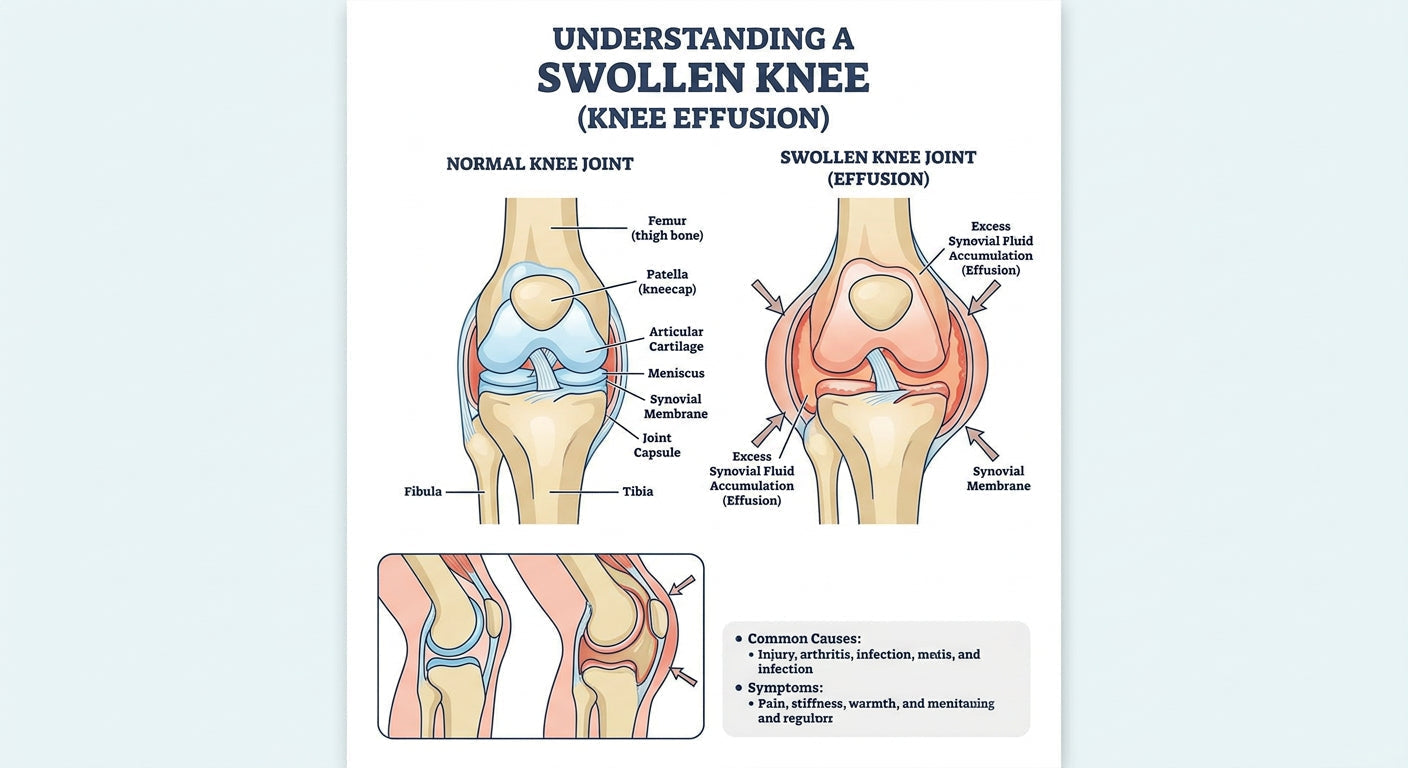
A swollen knee, often referred to as "water on the knee," occurs when excess fluid accumulates in or around the knee joint. This common condition can range from a mild annoyance to a sign of a serious underlying issue. The fluid buildup can lead to discomfort, pain, stiffness, and limit your ability to bend or straighten your leg. 
Common Causes of a Swollen Knee
A swollen knee can arise from various factors, broadly categorized into injuries, medical conditions, and overuse.
Injuries
Direct trauma or sudden twisting movements are frequent culprits.
- Ligament Tears: Injuries to ligaments, such as the anterior cruciate ligament (ACL) or medial collateral ligament (MCL), often cause significant swelling due to bleeding within the joint. A torn ACL, for example, is a common athletic injury that typically results in rapid swelling. You might also consider seeking out an appropriate ACL knee brace for support during recovery.
- Meniscus Tears: The menisci are cartilage pads that cushion the knee. A tear can cause pain, clicking, and swelling, which may develop gradually. Understanding whether you should use a knee brace for a meniscus tear can be beneficial for managing symptoms and supporting recovery.
- Fractures: Breaks in any of the bones around the knee joint (femur, tibia, patella) can cause immediate and severe swelling.
- Patellar Dislocation: When the kneecap slips out of its groove, it can cause considerable swelling and pain.
Medical Conditions
Several underlying health issues can manifest as a swollen knee.
- Arthritis: Various forms of arthritis can cause knee swelling. Osteoarthritis, the "wear and tear" type, involves cartilage breakdown and bone-on-bone friction, leading to inflammation and fluid. Inflammatory conditions such as rheumatoid arthritis and psoriatic arthritis also cause joint swelling as part of a systemic inflammatory response. If you're managing arthritis, exploring the best knee brace for arthritis can offer relief and support.
- Gout and Pseudogout: These conditions involve crystal deposits in the joint, triggering episodes of acute, painful swelling.
- Bursitis: Inflammation of the small fluid-filled sacs (bursae) that cushion the outside of your knee joint can cause localized swelling.
- Infection (Septic Arthritis): A bacterial or fungal infection within the joint is a serious condition that causes rapid, painful swelling, redness, and fever. This requires immediate medical attention.
- Cysts: A Baker's cyst (popliteal cyst) behind the knee can sometimes feel like joint swelling, though it's typically a bulge of the joint capsule filled with fluid.
Other Factors
- Fluid Accumulation: Sometimes, excess fluid in the knee might simply be the body's response to inflammation or injury, leading to a condition commonly known as "water on the knee." Learning how to get rid of fluid on the knee can involve various approaches, from rest to aspiration.
- Overweight: Carrying extra body mass places increased stress on your knee joints, making them more susceptible to injury and inflammation, which can result in swelling. If you're experiencing knee discomfort while carrying extra weight, understanding which knee support is best for overweight individuals might provide relief.
Symptoms to Watch For Beyond Swelling
- Pain: The severity and location of pain can vary widely depending on the cause. It might be dull and aching or sharp and intense.
- Stiffness: The knee may feel stiff and difficult to bend or straighten, especially after periods of inactivity.
- Warmth and Redness: The skin around the swollen knee may feel warm to the touch and appear red, particularly if there's inflammation or infection.
- Limited Range of Motion: You might find it challenging to fully extend or flex your leg.
- Instability: A feeling that your knee might "give out" or buckle, especially with ligament injuries.
- Clicking, Popping, or Grinding Sensations: These can indicate cartilage damage or a meniscus tear.
- Fever or Chills: These systemic symptoms, along with rapid swelling, are red flags for infection.
When to Seek Professional Guidance
Not all swollen knees require immediate medical attention, but certain signs warrant prompt evaluation by a healthcare professional:
- Sudden, severe swelling: Especially after an injury where you heard a "pop."
- Inability to bear weight on the affected leg.
- Significant pain that does not improve with rest and basic care.
- Redness, warmth, and tenderness around the knee, particularly if accompanied by fever or chills.
- Deformity of the knee joint.
- Persistent swelling that doesn't subside after a few days of self-care.
- Recurrent episodes of swelling without an obvious cause.
Initial Self-Care and Home Management
For mild swelling or when waiting for professional advice, the R.I.C.E. method can help manage symptoms:
- Rest: Avoid activities that aggravate your knee. Give your joint time to recover.
- Ice: Apply an ice pack wrapped in a cloth to the affected area for 15-20 minutes every 2-3 hours. This helps reduce inflammation and pain.
- Compression: Gently wrap the knee with an elastic bandage to help reduce swelling. Ensure it's snug but not so tight that it cuts off circulation.
- Elevation: Prop your leg up on pillows above heart level to help drain fluid from the knee.
Over-the-counter pain relievers, such as non-steroidal anti-inflammatory agents (NSAIDs), can also help reduce pain and swelling, but always use them as directed.
Treatment Options
- Medication: Depending on the cause, your healthcare professional might prescribe anti-inflammatory medications, antibiotics (for infections), or medications for specific conditions like gout.
- Physical Therapy: A physical therapy program can help strengthen the muscles around the knee, improve flexibility, and restore proper function. This is often crucial for rehabilitation after injury or surgery.
-
Injections:
- Corticosteroid Injections: Can reduce inflammation and pain directly in the joint.
- Viscosupplementation: Involves injecting hyaluronic acid into the joint to improve lubrication, often used for osteoarthritis.
- Aspiration: If there's a large amount of fluid causing significant pain or limiting mobility, a healthcare professional might aspirate (drain) it. This can provide immediate relief.
- Supportive Devices: Depending on the injury or condition, your healthcare professional might recommend supportive devices. These can provide stability, reduce pain, and assist in recovery. For persistent support for knee pain, there are various options available. While considering these factors, remember that the best knee brace for you will depend on your specific needs and a professional's recommendation.
- Surgery: In cases of severe injury (like complete ligament tears or extensive cartilage damage) or when conservative treatments fail, surgery may be necessary. This could involve repairing torn structures, removing damaged cartilage, or, in severe cases of arthritis, performing joint replacement.
Prevention and Long-Term Management
Preventing a swollen knee often involves managing underlying conditions and taking precautions during physical activity:
- Maintain a Healthy Weight: Excess body mass puts extra strain on your knees, increasing the risk of injury and arthritis. Effective weight management can significantly alleviate knee stress.
- Strengthen Leg Muscles: Strong quadriceps and hamstrings help support and stabilize the knee joint.
- Proper Warm-up and Cool-down: Always prepare your muscles before exercise and stretch afterward.
- Use Proper Technique: When participating in sports or lifting heavy objects, ensure correct form to minimize stress on the knees.
- Listen to Your Body: Don't push through pain. Rest when needed.
- Wear Appropriate Footwear: Supportive shoes can impact knee health.
- Manage Chronic Conditions: If you have arthritis or gout, adhere to your treatment plan to control flare-ups.
-
Veröffentlicht in
Knee Injuries