Knee Arthroscopy
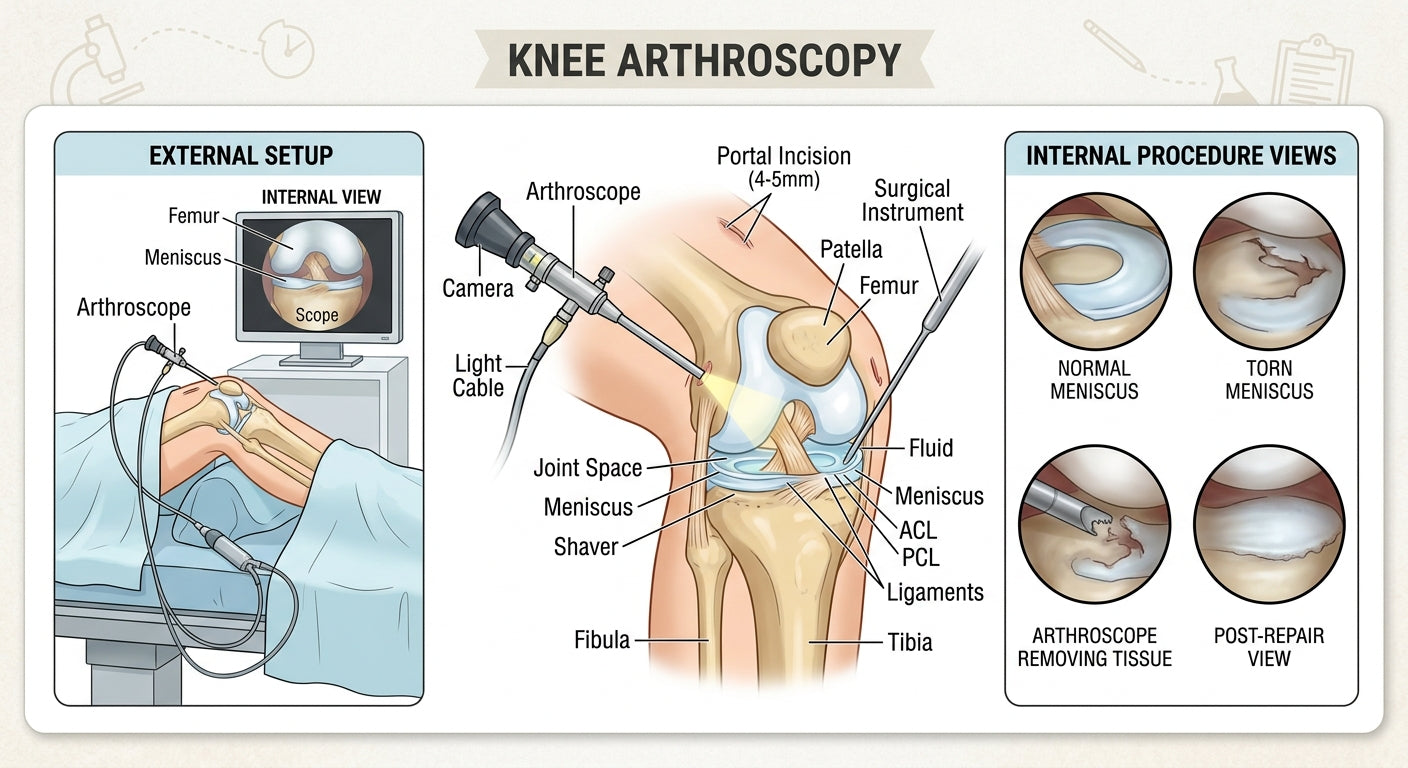
Knee arthroscopy is a common surgical procedure that allows medical professionals to view, diagnose, and treat problems inside the knee joint without making a large incision. This technique involves inserting a small camera, called an arthroscope, into the knee through a tiny cut. The camera displays images on a video monitor, guiding the surgeon through the procedure. It's a minimally invasive approach that can lead to faster recovery times compared to traditional open surgery.
Knee discomfort can stem from various sources, ranging from athletic injuries to degenerative conditions. When conservative treatments like rest, physical therapy, and medication don't provide sufficient relief, or when the precise nature of the knee problem requires a clearer diagnosis, knee arthroscopy is often recommended. It's particularly effective for issues involving cartilage, ligaments, and other joint structures.
Common Conditions Treated by Knee Arthroscopy
- Meniscus Tears: The meniscus is a C-shaped piece of cartilage that acts as a shock absorber. Tears in the meniscus are among the most frequent knee injuries. If you're wondering if walking on a torn meniscus can worsen the condition, it's a valid concern many patients have.
- Ligament Reconstruction: This procedure is often used to repair or reconstruct torn ligaments, such as the anterior cruciate ligament (ACL) or posterior cruciate ligament (PCL).
- Cartilage Damage: Loose fragments of cartilage or bone can be removed, and damaged articular cartilage can be smoothed or repaired.
- Synovitis: Inflammation of the joint lining (synovium) can be addressed by removing the inflamed tissue.
- Patellar (Kneecap) Problems: Issues like a dislocated kneecap or patellar tracking problems can sometimes be corrected arthroscopically.
- Removal of Loose Bodies: Small pieces of bone or cartilage that float within the joint can cause pain and catching sensations.
The Knee Arthroscopy Procedure
Before the procedure, you'll receive anesthesia, which could be general (you're asleep), regional (your leg is numbed), or local (only the knee area is numbed). The surgeon will then make a few small incisions, typically about a quarter-inch long, around the knee joint.
Through one incision, the arthroscope is inserted, allowing the surgeon to visualize the inside of the knee. Saline solution is often pumped into the joint to expand it and provide a clearer view. Through other incisions, specialized surgical instruments are inserted to perform the necessary repairs, removals, or reconstructions. Once the procedure is complete, the saline solution is drained, and the incisions are closed with stitches or adhesive strips.
Preparing for Your Surgery
Preparation for knee arthroscopy usually involves a consultation with your medical team to discuss your medical history, current health, and medications. You might need to stop certain medications, such as blood thinners, for a week or two before surgery. You'll also likely receive instructions on fasting before the procedure. Arranging for someone to drive you home after the surgery and assist you during the initial recovery period is essential. Your medical team may also discuss options like a knee brace for torn meniscus for use post-operatively.
Recovery and Rehabilitation
Recovery after knee arthroscopy is generally quicker than with traditional open surgery. Most individuals can go home the same day. You will likely experience some pain, swelling, and stiffness, which can be managed with pain relief and RICE therapy (Rest, Ice, Compression, Elevation).
Physical therapy is a crucial part of rehabilitation. A rehabilitation program will help restore strength, flexibility, and range of motion to your knee. The specific exercises and timeline will depend on the extent of your surgery and individual healing. It's important to understand that while a knee brace help a torn meniscus during recovery, consistent physical therapy and adherence to professional guidance are key. You might also be advised on when should you wear a knee brace as you gradually return to normal activities.
Full recovery time varies, but many individuals can return to light activities within a few weeks and more strenuous activities over several months. It's vital to follow your professional's recommendations to ensure optimal healing and prevent re-injury. You may need a specialized post-op knee brace during this period to provide support and limit movement.
Risks and Complications
While knee arthroscopy is considered very safe, like any surgical procedure, it carries some potential risks, including:
- Infection
- Blood clots (deep vein thrombosis)
- Nerve or blood vessel damage
- Excessive bleeding or swelling
- Persistent pain or stiffness
- Failure of the surgery to relieve symptoms
Discussing these potential risks and benefits thoroughly with your medical professional before deciding on surgery is crucial.
When to Consider Knee Arthroscopy
The decision to undergo knee arthroscopy is a personal one, made in consultation with your medical professional. It's often considered when non-surgical treatments have failed to improve symptoms, or when there's a specific injury, such as a severe meniscus tear, that requires surgical repair for proper healing. For example, some tears might not heal on their own, even if you wonder, can a torn meniscus heal on its own? This procedure offers a precise way to diagnose and address the joint's internal mechanics. If you're experiencing significant pain behind the knee or other debilitating symptoms that impact your daily life, it may be time to explore this option.
If you are experiencing symptoms such as clicking, locking, instability, or chronic pain, especially if it feels like bone-on-bone knee pain, a thorough evaluation by a medical professional can help determine whether knee arthroscopy is appropriate for your condition. A supportive knee brace for pain may also be recommended as part of your overall management plan, whether pre- or post-surgery.
-
Veröffentlicht in
Knee Injuries