Patella Dislocations
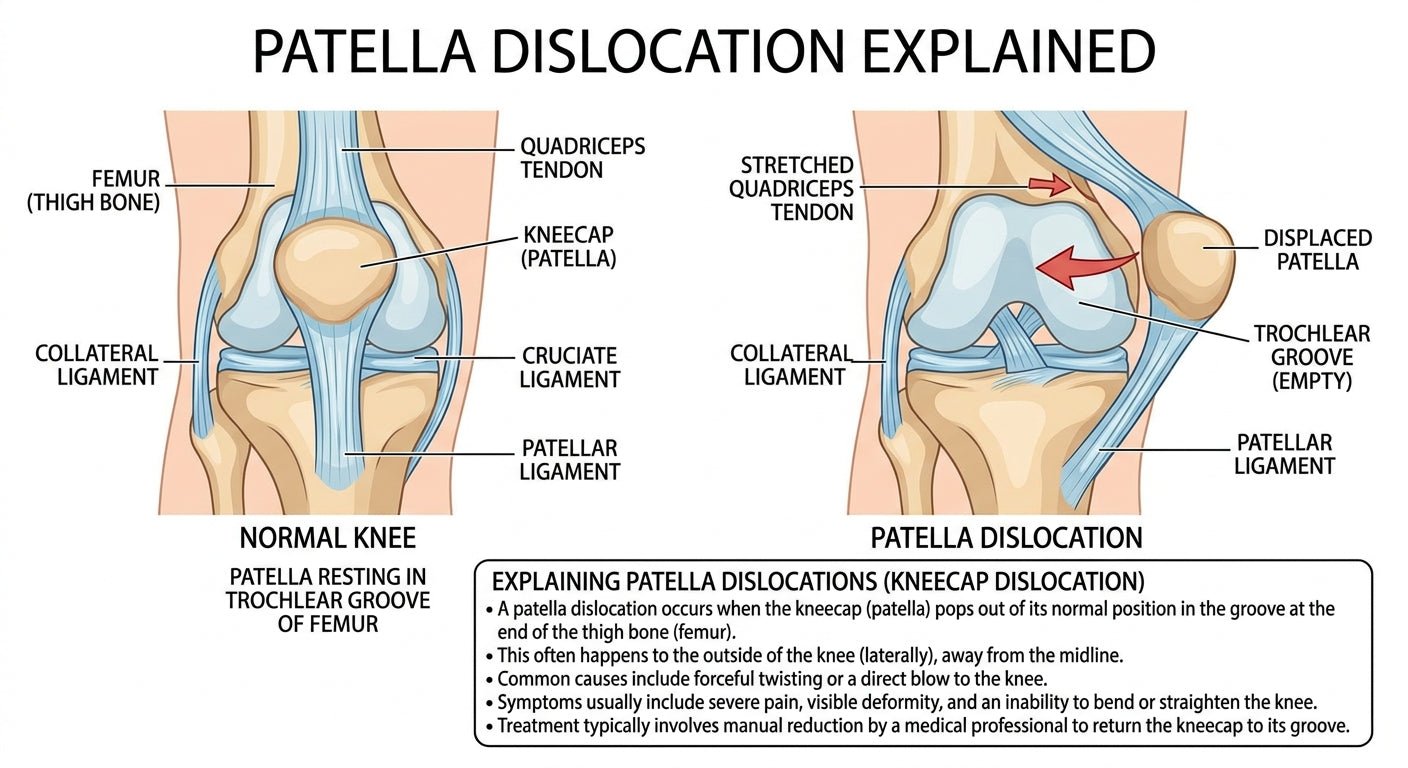
A patella dislocation, commonly known as a dislocated kneecap, occurs when the patella (kneecap) completely moves out of its normal position in the trochlear groove at the front of the thigh bone (femur). This painful injury can happen suddenly, often during sports or activities involving twisting motions, and leaves the kneecap sitting on the outside of the knee.
Anatomy of the Kneecap
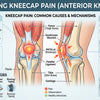
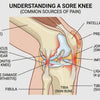
The patella is a small, triangular bone encased within the quadriceps tendon, which connects the thigh muscles to the shin bone. It slides smoothly within a groove on the femur, acting as a pulley to enhance the power of the leg muscles. Stability of the kneecap is maintained by various structures, including the quadriceps muscle, the patellar tendon, and, importantly, the medial patellofemoral ligament (MPFL). This ligament is a key stabilizer, resisting outward movement of the kneecap. Understanding what holds the kneecap in place is fundamental to comprehending how dislocations occur.
Causes of Patella Dislocations
Patella dislocations can result from direct trauma or indirect forces:
- Direct Trauma: A direct blow to the kneecap, for instance, during a fall or a contact-sport incident, can force it out of place. This can be a very impactful event, and many wonder what happens when you hit your kneecap really hard.
- Twisting Injuries: This is the most common cause, often resulting from sudden changes in direction while running or jumping, or from awkward landings. The foot may be planted while the body twists, placing undue stress on the knee.
-
Anatomical Predispositions: Certain individuals are more prone to patella dislocations due to factors such as:
- Shallow Trochlear Groove: If the groove where the kneecap sits is too shallow, it provides less stability.
- Patella Alta: A high-riding kneecap, meaning it sits higher than normal, making it less engaged in the groove.
- Muscle Imbalance: Weakness in the vastus medialis obliquus (VMO), part of the quadriceps, can lead to the kneecap being pulled outwards.
- Generalized Ligament Laxity: Some individuals naturally have looser ligaments throughout their bodies, which can increase joint instability.
- Valgus Alignment ("Knock-knees"): This alignment can increase the outward pull on the kneecap.
Symptoms of a Patella Dislocation
- Visible Deformity: The kneecap is often displaced, typically shifted outward.
- Severe Pain: Intense pain is common as the kneecap moves and soft tissues are stretched or torn.
- Inability to Straighten the Leg: Attempting to move the leg can be excruciating, and the leg may feel "locked."
- Swelling and Bruising: These develop shortly after the injury due to tissue damage and bleeding.
- Popping Sensation: Some individuals report hearing or feeling a "pop" at the time of injury.
- Feeling of Instability: Even after the kneecap is reduced (put back into place), a feeling of apprehension or instability may persist.
Diagnosis
A healthcare professional will typically diagnose a patella dislocation based on a physical examination, assessing the knee's alignment, tenderness, and range of motion. X-rays are usually performed to confirm the dislocation, rule out any associated fractures (especially of the kneecap or femur), and check for predisposing anatomical factors. In some cases, an MRI may be recommended to assess soft-tissue damage, particularly of the MPFL or articular cartilage.
Treatment Options
-
Conservative Treatment:
- Reduction: The first step is to gently maneuver the kneecap back into its groove. This is often done by a healthcare professional and can sometimes happen spontaneously.
- Immobilization: After reduction, the knee is often immobilized in a brace or splint for a few weeks to allow injured tissues to heal and reduce initial pain.
- Pain Management: Rest, ice, compression, and elevation (R.I.C.E.) are crucial for managing pain and swelling. Non-prescription pain relievers can also be used.
- Physical Rehabilitation: A structured physical therapy program is vital to restore strength, range of motion, and stability. This typically involves exercises to strengthen the quadriceps (especially the VMO), hamstrings, and hip muscles, as well as proprioceptive (balance) training.
- Supportive Devices: Using a supportive knee brace or patella strap can help provide external stability during the healing process and when returning to activities. Many ask do patella straps work for support.
-
Surgical Intervention: Surgery may be considered for recurrent dislocations, significant ligament damage (like a completely torn MPFL), or if there are loose bone or cartilage fragments within the joint. Common surgical procedures include:
- MPFL Reconstruction: This involves repairing or reconstructing the medial patellofemoral ligament using a graft.
- Tibial Tubercle Osteotomy: In cases where the patellar tendon attachment is misaligned, this procedure can realign the bone to improve tracking.
- Trochleoplasty: This surgery reshapes a shallow trochlear groove to create a deeper, more stable path for the kneecap.

Rehabilitation and Recovery
- Initial Protection Phase (0-6 weeks): Focus on controlling pain and swelling, gentle range-of-motion exercises, and muscle activation without stressing healing tissues. Weight-bearing may be restricted initially.
- Intermediate Strengthening Phase (6-12 weeks): Gradually increase knee flexion, introduce strengthening exercises for the quadriceps, hamstrings, and hip abductors/adductors. Proprioceptive exercises like single-leg stands begin.
- Advanced Strengthening and Return-to-Activity Phase (3-6 months+): This phase focuses on functional training, agility drills, and sport-specific exercises. The goal is to safely return to full activity. This might include activities like strapping knees for running as part of sports preparation. Using a supportive brace, such as a knee brace for pain, can be beneficial during this phase.
Preventing Recurrence
- Consistent Strengthening: Maintain strong quadriceps, hamstrings, and hip muscles. A strong vastus medialis obliquus (VMO) is particularly important for kneecap stability.
- Balance and Proprioception Training: Exercises that challenge balance help improve the body's ability to react to sudden movements and maintain joint stability.
- Proper Technique: Learn and use correct form during sports and exercises to avoid awkward landings or twisting movements.
- Warm-up and Cool-down: Always prepare muscles for activity and aid recovery afterward.
- Appropriate Footwear: Wear shoes that provide good support and traction for your activity.
- Consider Supportive Devices: For individuals with a history of dislocations or a feeling of instability, certain knee supports can offer external stabilization. For example, some might look for the best knee brace for patellar tendonitis for overall knee stability, even if it's not strictly for tendonitis.
- Anatomical Assessment: If you have known anatomical predispositions, working with a physical therapist or specialist can help develop a targeted prevention plan.
It's also important to understand the complex network of structures that hold the patella in place to proactively protect your knees.
-
Veröffentlicht in
Knee Injuries