IT Band Syndrome
Iliotibial Band Syndrome (ITBS) is a common overuse injury, particularly prevalent among runners, cyclists, and individuals involved in activities that require repetitive knee bending. It manifests as pain on the outer side of the knee, often making everyday movements and athletic pursuits challenging.
What is IT Band Syndrome?
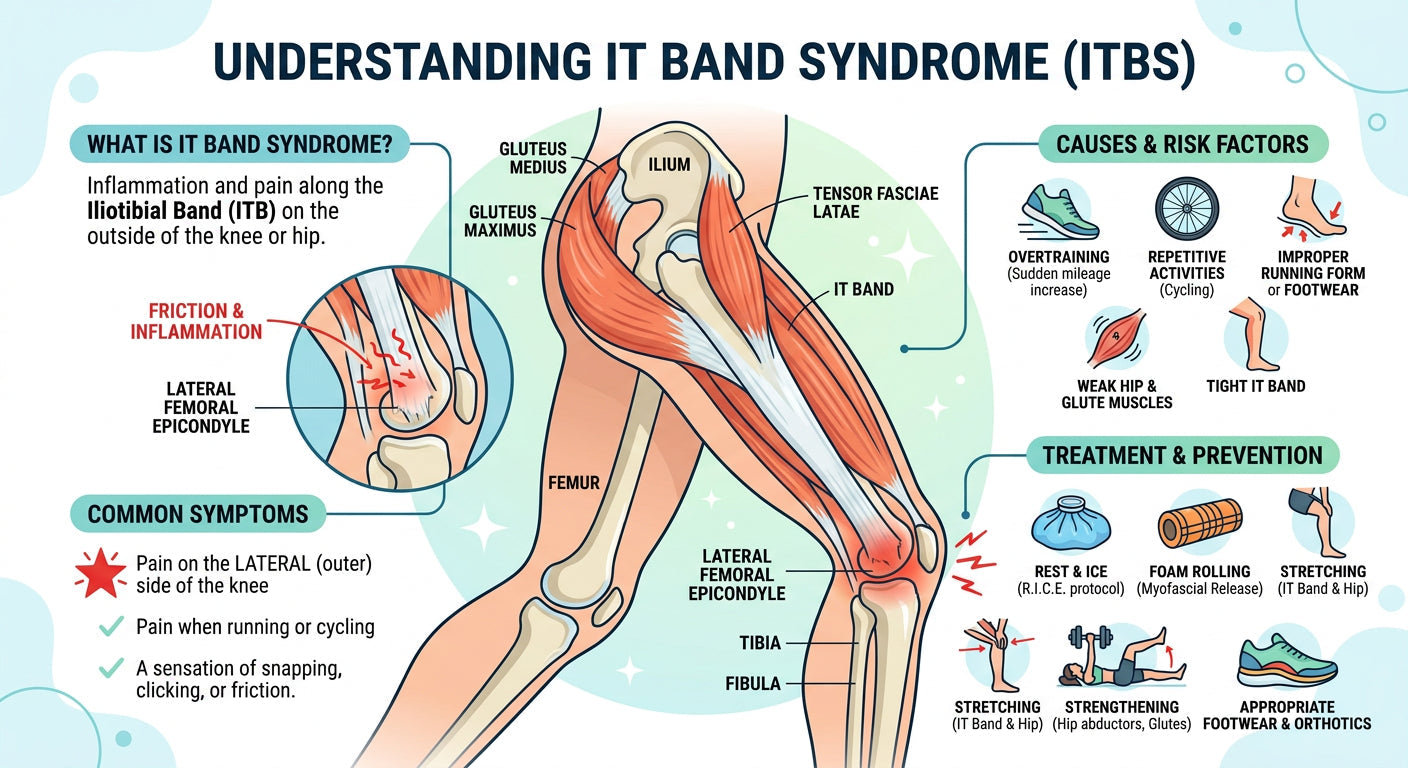
The iliotibial band (IT band) is a thick, fibrous band of connective tissue that runs along the outside of your thigh, from your hip to just below your knee. Its primary function is to extend, abduct, and externally rotate the hip and to stabilize the knee. IT Band Syndrome occurs when this band becomes inflamed and irritated, typically where it crosses the outer part of the knee joint. This irritation often results from repetitive friction or compression of the IT band over the lateral femoral epicondyle (the bony prominence on the outside of your thigh bone) during movement.
Causes and Risk Factors of IT Band Syndrome
- Overuse and Training Errors: A sudden increase in mileage, intensity, or downhill running can put excessive stress on the IT band. Inadequate recovery periods also play a significant role.
-
Biomechanical Imbalances:
- Weak Hip Muscles: Weakness in the hip abductors (muscles on the sides of your hips, such as the gluteus medius) and glutes can cause the pelvis to tilt forward and the knee to move inward, increasing tension on the IT band.
- Tight Muscles: Tightness in the IT band, hip flexors, quadriceps, and hamstrings can alter movement mechanics.
- Leg Length Discrepancy: A difference in leg length can lead to compensatory movements that strain the IT band.
- Foot Mechanics: Issues such as overpronation (when the foot rolls inward excessively) can alter leg alignment and affect the IT band. While an overpronation brace might help with foot alignment, addressing the root cause is key.
- Improper Form and Equipment: Poor running form, worn-out footwear, or incorrect bike setup can all contribute to ITBS.
- Surface and Terrain: Running on banked surfaces (such as the side of a road) or on hard surfaces consistently can exacerbate the problem.
Symptoms of IT Band Syndrome
- Starts gradually and worsens with continued activity.
- May be a sharp, stabbing, or aching sensation.
- Is often most noticeable during activities like running, cycling, or climbing/descending stairs.
- Can sometimes radiate up the thigh or down to the calf.
- Might include a snapping or knee clicking sensation on the outside of the knee, particularly when bending and straightening the leg.
- Is usually absent at rest.
If your knee hurts only when running, IT Band Syndrome is a strong possibility, especially if the pain is localized to the outer side of the knee.
Diagnosis of IT Band Syndrome
Diagnosing IT Band Syndrome typically involves a physical examination by a healthcare professional. They will assess your pain, range of motion, and muscle strength, and perform specific tests to elicit pain along the IT band. Imaging tests like X-rays or MRIs are generally not needed to diagnose ITBS, but may be used to rule out other conditions such as meniscus tears or collateral ligament injuries.
Treatment and Management Strategies
Managing IT Band Syndrome usually involves a multi-faceted approach, focusing on reducing inflammation, correcting biomechanical issues, and gradually returning to activity.

Rest and Activity Modification
The first step is to reduce or temporarily stop activities that aggravate the pain. This doesn't necessarily mean complete immobilization; rather, it means finding a pain-free level of activity. Cross-training with activities like swimming or elliptical can help maintain fitness without stressing the IT band.
Ice Therapy
Applying ice to the painful area for 15-20 minutes several times a day can help reduce inflammation and pain.
Stretching and Foam Rolling
Regular stretching and foam rolling can improve flexibility and reduce tension in the IT band and surrounding muscles. Focus on the IT band, hip flexors, quadriceps, and hamstrings. Be gentle when foam rolling directly on the IT band, as it can be very tender.
Strengthening Exercises
Weakness in the hip abductors, glutes, and core muscles is a major contributor to ITBS. A targeted strengthening program is essential for long-term recovery. Exercises like side leg raises, clam shells, glute bridges, and planks can significantly improve stability and reduce IT band strain.
Physical Therapy
A physical therapist can provide a personalized treatment plan, including manual therapy, targeted exercises, and gait analysis to identify and address underlying biomechanical issues. They can also advise on when to use supportive items, such as an it band brace, and offer guidance on a gradual return to activity. If you're wondering about a general knee brace for pain, they can help determine if it's appropriate for your specific condition.
General Bracing Considerations
For athletes, decisions about support can be critical. When considering if should i wear an ankle brace while running or other types of support, it's beneficial to consult resources that explain the mechanics and potential benefits.
Prevention of IT Band Syndrome
- Gradual Progression: Increase your training volume, intensity, or duration by no more than 10% per week.
- Warm-up and Cool-down: Always include dynamic warm-ups before exercise and static stretches after.
- Strength and Flexibility: Incorporate hip- and core-strengthening exercises, along with regular stretching, into your routine.
- Proper Footwear: Wear appropriate athletic shoes that are not worn out. Consider professional gait analysis if you suspect issues with your foot mechanics. For runners, a runners knee brace might be considered as a preventative measure if you have a history of knee discomfort.
- Vary Training Surfaces: Avoid consistently running on banked roads. Alternate between different surfaces to reduce repetitive stress.
Quick Relief for Leg Pain
While IT Band Syndrome often requires a more sustained management approach, understanding how to get rid of leg pain immediately can offer temporary comfort. Rest, ice, gentle elevation, and over-the-counter pain relief can help manage acute discomfort while you work on addressing the underlying causes of your IT Band Syndrome.
-
Veröffentlicht in
Knee Injuries