TFCC Injury
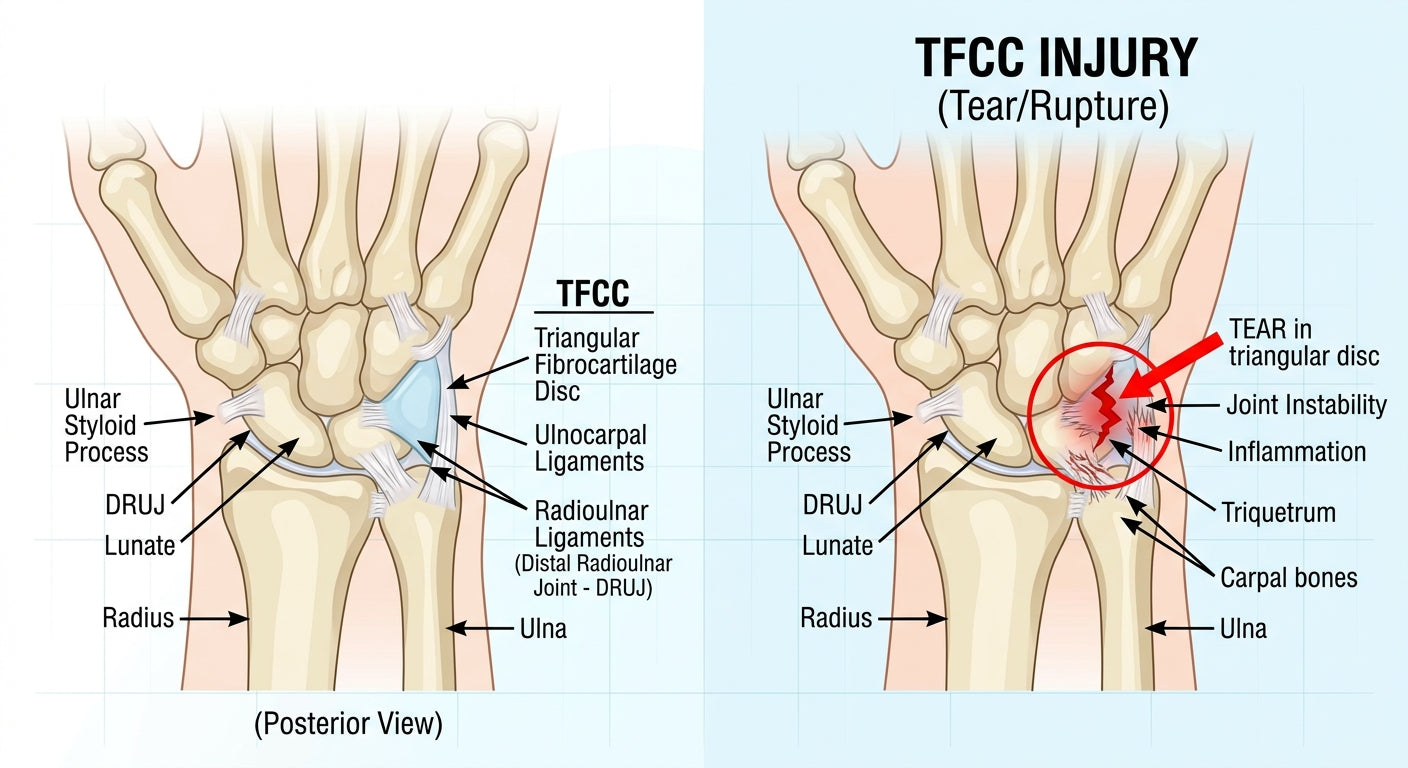
Experiencing persistent pain on the pinky-finger side of your wrist can be more than just a minor annoyance; it might indicate a Triangular Fibrocartilage Complex (TFCC) injury. This common condition affects the intricate structures that stabilize your wrist, impacting daily activities and overall hand function.
Understanding Your TFCC
The Triangular Fibrocartilage Complex (TFCC) is a crucial structure located in the wrist, between the ulna (the forearm bone on the pinky-finger side) and the small wrist bones. It's a network of ligaments and cartilage that acts as a cushion, absorbs shock, and helps connect the forearm bones to the wrist. The TFCC allows for stable rotation and movement of the forearm and wrist, making it vital for activities ranging from turning a doorknob to playing sports. An injury to this complex can compromise stability and cause significant discomfort.
Causes of TFCC Injury
TFCC injuries typically fall into two main categories: traumatic injuries and degenerative tears.
-
Traumatic Injuries (Type 1): These often result from a specific event, such as:
- Falling onto an outstretched hand (a common mechanism).
- A direct blow to the wrist.
- Sudden, forceful twisting of the wrist.
- Sports activities involving repetitive wrist rotation or impact, like tennis, gymnastics, or golf.
-
Degenerative Tears (Type 2): These develop over time due to wear and tear, often associated with:
- Age-related degeneration of the cartilage.
- Conditions that cause the ulna to be longer than the radius (ulnar positive variance), leading to increased stress on the TFCC.
- Repetitive stress from certain occupations or activities.
Recognizing the Symptoms
- Pain: Localized pain on the pinky-finger side of the wrist, which may worsen with twisting, gripping, or weight-bearing activities.
- Clicking or Popping: A sensation of clicking, popping, or grinding within the wrist, especially with movement.
- Weakness: Difficulty with gripping objects, lifting, or performing tasks that require wrist strength.
- Swelling: While not always present, some swelling or tenderness may occur on the affected wrist.
- Reduced Range of Motion: Limited ability to move the wrist, particularly when rotating the forearm.
Diagnosing a TFCC Injury
Imaging techniques commonly used include:
- X-rays: Primarily to rule out fractures or other bone abnormalities, and to assess for ulnar variance.
- MRI (Magnetic Resonance Imaging): Often the most effective tool for visualizing the soft tissues of the TFCC, helping to identify tears and their severity.
- Arthrogram (MRI with contrast): Sometimes used to enhance the visibility of tears.
- Wrist Arthroscopy: In some cases, a minimally invasive surgical procedure where a small camera is inserted into the wrist joint to directly visualize the TFCC can confirm the diagnosis and allow for immediate treatment.
Treatment Options for TFCC Injury
Conservative management is often the first line of defense for many TFCC injuries, especially for less severe tears. This approach aims to reduce pain, promote healing, and restore wrist function without surgery. Key components of conservative care include:
- Rest: Avoid activities that aggravate the wrist. This might mean modifying work tasks or pausing sports.
- Immobilization: Wearing a wrist brace or splint for pain can help stabilize the wrist and allow the injured TFCC to heal. Different types of support are available, from soft compression to more rigid options, sometimes with an aluminum plate for enhanced support, such as a wrist brace for sports.
- Pain Management: Over-the-counter anti-inflammatory medications can help manage pain and swelling. In some cases, a healthcare provider might recommend corticosteroid injections into the wrist joint to reduce inflammation.
- Physical Therapy: A structured rehabilitation program is vital. It focuses on gentle range-of-motion exercises, strengthening exercises for the wrist and forearm, and proprioceptive training to improve stability and coordination.
- Activity Modification: Learning how to adjust daily movements and sports techniques can prevent re-injury and support healing. For those experiencing wrist pain from tendonitis, proper support and activity modification are particularly important.

Surgical Interventions
If conservative treatments do not provide sufficient relief or for more severe TFCC tears, surgery may be considered. The type of surgery depends on the nature and location of the tear.
- Arthroscopic Debridement: For degenerative tears or frayed edges, a surgeon may use arthroscopic techniques to smooth out the damaged cartilage.
- TFCC Repair: If the TFCC is torn and amenable to repair, sutures may be used to reattach the torn ligaments or cartilage. This is often done arthroscopically.
- Ulnar Shortening Osteotomy: In cases of ulnar positive variance (where the ulna is longer than the radius), a small section of the ulna may be removed to decompress the TFCC.
Recovery and Rehabilitation
Recovery from a TFCC injury, whether conservative or surgical, requires patience and adherence to a rehabilitation plan. Following immobilization, a progressive physical therapy program will focus on regaining flexibility, strength, and full function of the wrist. This process can take several weeks to many months. During this period, wearing appropriate wrist braces or supportive gear can be beneficial. It's also important to understand how to choose a wrist support that fits your specific needs as you heal. For instance, if you have a sprained wrist support can provide the necessary stability.
Living with a TFCC Injury
- Ergonomic Adjustments: Modifying your workspace or tools to reduce wrist strain.
- Proper Lifting Techniques: Use both hands and keep your wrist in a neutral position when lifting.
- Regular Exercise: Maintaining overall fitness and strength can support wrist health.
- Listen to Your Body: Avoid activities that cause pain and gradually increase your activity level as your wrist heals.
- Supportive Devices: Continuing to use a wrist splint for pain or other supports during high-risk activities, especially if you experience ulnar wrist pain, can provide ongoing stability. For conditions like carpal tunnel, specific wrist braces for carpal tunnel offer targeted stability and support.
Preventing Future TFCC Injuries
- Strengthening and Flexibility: Incorporate exercises that strengthen your forearm muscles and improve wrist flexibility into your routine.
- Proper Technique: When participating in sports or repetitive tasks, ensure you use correct form and technique to minimize wrist strain.
- Warm-up: Always warm up before physical activity to prepare your muscles and joints.
- Ergonomics: Optimize your work and living environments to support neutral wrist positioning.
- Gradual Progression: Avoid sudden increases in activity intensity or duration that could overload your wrist.
When to Seek Medical Attention
If you suspect you have a TFCC injury or if you experience persistent wrist pain, swelling, clicking, or weakness, it is important to consult a healthcare professional. Early diagnosis and intervention can significantly improve outcomes and prevent further complications. A specialist can help you determine the best ulnar wrist brace or other appropriate support and guide you through your recovery journey.
-
Veröffentlicht in
Wrist Injury