Wrist Arthritis
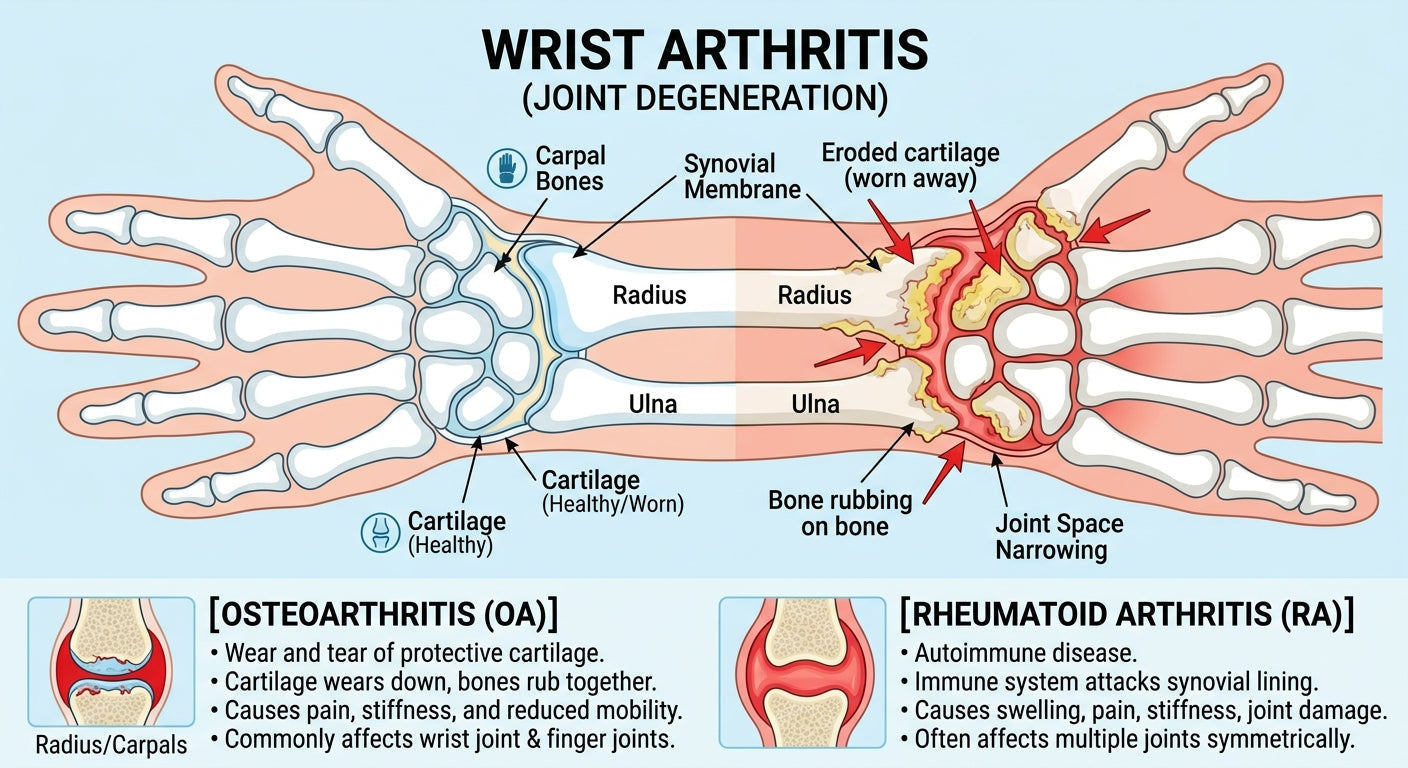
Wrist arthritis is a common, often debilitating condition that can significantly affect daily life, causing pain, stiffness, and reduced hand function. It occurs when the cartilage that cushions the ends of the bones in the wrist joint wears down, leading to bone-on-bone friction.
What is Wrist Arthritis?
At its core, arthritis means inflammation of a joint. In the wrist, this inflammation affects the complex network of bones and small joints, particularly the eight carpal bones and the ends of the forearm bones (radius and ulna). The smooth, slippery cartilage covering these bone ends allows for effortless movement. When this cartilage deteriorates, the bones begin to rub directly against each other, causing pain, swelling, and difficulty with everyday activities like gripping, twisting, or lifting. Over time, the joint can become deformed, further limiting movement and increasing discomfort.
Types of Wrist Arthritis
Osteoarthritis
Often called "wear and tear" arthritis, osteoarthritis is the most common type. It typically develops gradually as the protective cartilage in the wrist joint erodes. It's more common in older adults but can also occur in younger individuals, especially following a wrist injury.
Rheumatoid Arthritis
This autoimmune disease occurs when the body's immune system mistakenly attacks its own healthy joint tissues, including the synovium (the lining of the joints). Rheumatoid arthritis often affects both wrists symmetrically and can lead to significant inflammation, pain, and joint deformity. It can also cause systemic symptoms throughout the body.
Post-traumatic Arthritis
As the name suggests, this type of arthritis develops after a physical injury to the wrist, such as a fracture, dislocation, or ligament tear. Even if an injury heals properly, the initial trauma can accelerate cartilage damage and lead to arthritis years later. This is particularly common in joints that have experienced significant impact.
Symptoms of Wrist Arthritis
- Pain: Often described as a dull ache, which can worsen with activity and improve with rest. It might be constant or intermittent.
- Stiffness: Especially noticeable in the morning or after periods of inactivity. It can make movements challenging.
- Swelling: Inflammation around the joint can cause visible swelling and warmth.
- Grinding or Clicking Sensations: As cartilage wears down, bones rub together, causing a grinding or clicking sensation (crepitus).
- Weakness: The affected wrist may feel weak, making it difficult to grip objects or perform strength-demanding tasks. If weak wrists are hindering your daily activities, seek advice.
- Limited Range of Motion: Over time, the ability to bend, extend, or rotate the wrist may decrease significantly.
- Deformity: In advanced stages, the joint may appear misshapen due to bone spurs or cartilage loss.
Causes and Risk Factors
- Age: The risk of osteoarthritis increases with age.
- Previous Wrist Injuries: Fractures, sprains, or dislocations can predispose individuals to post-traumatic arthritis.
- Repetitive Stress: Certain occupations or activities that involve repetitive wrist movements can contribute to cartilage wear.
- Genetic Predisposition: A family history of arthritis, especially rheumatoid arthritis, can increase risk.
- Autoimmune Diseases: Rheumatoid arthritis is a prime example where the immune system attacks joint tissues.
- Obesity: While more commonly linked to knee and hip arthritis, excess weight can contribute to systemic inflammation and stress on joints.
Diagnosis
Diagnosing wrist arthritis typically involves a thorough physical examination, a review of medical history, and imaging tests:
- Physical Examination: A healthcare professional will assess the wrist for tenderness, swelling, range of motion, and strength. They may perform specific tests to pinpoint the affected joints.
- X-rays: These are crucial for visualizing the bone structure, cartilage space, bone spurs, and any signs of joint damage.
- MRI or CT Scans: These advanced imaging techniques can provide more detailed views of cartilage, ligaments, and soft tissues, helping to differentiate between types of arthritis or rule out other conditions.
- Blood Tests: For suspected rheumatoid arthritis, blood tests can detect specific antibodies and inflammatory markers.

Treatment Options
Treatment for wrist arthritis aims to reduce pain, improve function, and slow joint damage. Treatment often starts conservatively and may escalate to surgery if non-surgical methods are insufficient.
Non-Surgical Treatments
- Rest and Activity Modification: Avoiding activities that aggravate the wrist can help reduce inflammation and pain.
- Pain Management: Over-the-counter pain relievers, such as NSAIDs (nonsteroidal anti-inflammatory drugs), can help relieve pain and swelling. For more severe pain, you may need prescription medications.
- Physical Therapy: A physical therapist can provide exercises to improve wrist strength, flexibility, and range of motion. They might also suggest techniques for joint protection and energy conservation.
- Immobilization: Wearing a wrist splint or support can stabilize the joint, reduce pain, and provide rest. It's often debated whether you should sleep with a wrist brace on; consult a healthcare provider. For general wrist discomfort, a wide range of wrist support options is available.
- Injections: Corticosteroid injections can provide temporary pain relief and reduce inflammation directly in the joint. Viscosupplementation, though more common in larger joints, is also being explored.
- Heat and Cold Therapy: Applying heat can relax stiff joints and muscles, while cold packs can reduce swelling and numb pain.
- Lifestyle Adjustments: Maintaining a healthy weight and incorporating anti-inflammatory foods into your diet can help manage symptoms. Seeking natural wrist pain relief can be a helpful complementary approach.
Surgical Treatments
When non-surgical options no longer provide adequate relief, you may consider surgery. Surgical procedures aim to reduce pain, correct deformity, and improve function. Options include:
- Arthroscopy: A minimally invasive procedure where a small camera is inserted into the joint to examine and treat cartilage damage or remove loose bodies.
- Fusion (Arthrodesis): This procedure fuses the wrist bones to create a single, solid bone. While it eliminates pain by preventing joint movement, it also reduces flexibility.
- Partial Fusion: Fusing only some of the wrist bones, preserving some motion while reducing pain.
- Proximal Row Carpectomy (PRC): Removal of three carpal bones in the proximal (near) row of the wrist to create more space and reduce bone-on-bone contact. This procedure preserves some motion.
- Wrist Arthroplasty (Joint Replacement): Involves replacing the damaged wrist joint with artificial components, similar to knee or hip replacements. This option aims to preserve motion and relieve pain.
Living with Wrist Arthritis
Managing wrist arthritis is an ongoing process. Adopting strategies to protect your joints and maintain overall well-being is essential:
- Ergonomics: Adjusting your workstation and daily habits to minimize wrist stress can make a big difference.
- Assistive Devices: Using tools that help with gripping, opening jars, or other tasks can reduce strain.
- Regular Exercise: Gentle exercises your physical therapist recommends can help maintain joint flexibility and strength.
- Listen to Your Body: Pay attention to pain signals and adjust activities accordingly to prevent flare-ups.
-
Veröffentlicht in
Wrist Injury