Thumb Sprain
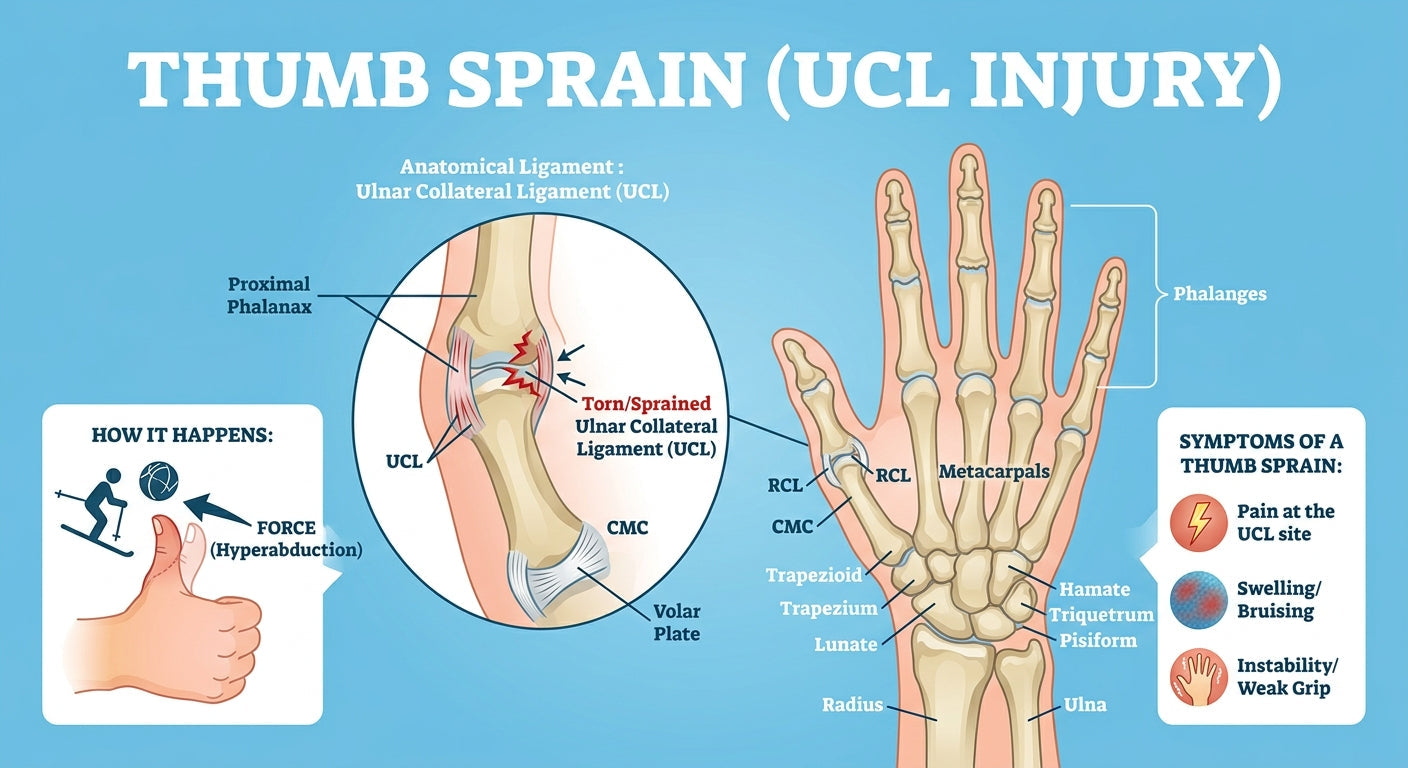
A thumb sprain is a common injury that can significantly impact your daily activities, from typing to grasping objects. This injury occurs when the ligaments supporting your thumb are stretched or torn. Often called "skier's thumb" or "gamekeeper's thumb," it typically affects the ulnar collateral ligament (UCL) at the base of the thumb where it connects to the hand.
What is a Thumb Sprain?
The thumb is a complex and crucial part of the hand, providing unique dexterity and strength. It relies on a network of ligaments, which are strong, fibrous tissues that connect bones and stabilize joints. When these ligaments are overstretched or torn due to sudden force, a thumb sprain occurs. The Ulnar Collateral Ligament (UCL) is the most frequently injured ligament in the thumb. It helps prevent your thumb from bending too far backward or away from your palm.
Causes of a Thumb Sprain
- Falls: Falling onto an outstretched hand, especially if the thumb is forced backward or to the side.
- Sports Injuries: High-impact sports like skiing (where the thumb gets caught in a pole strap), basketball, football, or volleyball can lead to hyperextension or abduction (forcing the thumb away from the hand). Activities requiring repetitive thumb movements, such as sports, may also require specific protective measures, such as a volleyball thumb support.
- Direct Impact: A direct blow to the thumb.
- Repetitive Stress: While less common for acute sprains, chronic overuse can sometimes contribute to ligamentous laxity or inflammation.
Recognizing the Symptoms
- Pain: Localized at the base of the thumb, often worsening with movement or when pinching/gripping objects. If you're asking why my thumb hurts when I press on it, a sprain could be the reason.
- Swelling and Bruising: Inflammation and discoloration around the injured joint.
- Tenderness: The area around the ligament is sensitive to touch.
- Difficulty with Movement: Limited range of motion, especially when trying to grasp, pinch, or move the thumb away from the palm.
- Weakness: A noticeable reduction in strength when performing tasks that involve the thumb.
- Instability: In more severe cases, the joint may feel loose or unstable and may be accompanied by a clicking or popping sensation.
Grades of Thumb Sprains:
- Grade 1 (Mild): The ligament is stretched but not torn. There may be mild pain and swelling, but the joint remains stable.
- Grade 2 (Moderate): The ligament is partially torn. You'll likely experience more pain, swelling, and some instability.
- Grade 3 (Severe): The ligament is completely torn, leading to significant pain, swelling, and notable instability of the joint. This can feel like a complete separation or detachment.
 Compare care paths at a glance: clear symptom cues, recommended actions, and realistic recovery timelines to help readers choose the right next step for a thumb sprain.
Treatment and Recovery
The treatment for a thumb sprain depends largely on its severity. Prompt and appropriate care is essential for proper healing and to prevent long-term complications.
Initial Care (RICE Protocol)
For mild to moderate sprains (Grade 1 and 2), initial management often involves the RICE protocol:
- Rest: Avoid activities that cause pain or stress to the thumb. Give the ligament time to heal.
- Ice: Apply ice packs to the injured area for 15-20 minutes at a time, several times a day, to reduce swelling and pain.
- Compression: A sprained thumb wrap can help minimize swelling and provide gentle support. You might also learn how to wrap a sprained thumb or how to tape a sprained thumb for added stability.
- Elevation: Keep your hand elevated above your heart to further reduce swelling.
Immobilization
To allow the ligament to heal without further strain, your healthcare provider may recommend immobilization. This often involves wearing a device for several weeks:
- Thumb Immobilizer: A device that restricts the movement of the thumb while allowing other fingers to move. Options might include a spica splint or a thumb support with straps.
- Casting: In some cases, a short arm cast may be necessary for greater stability, especially for more severe Grade 2 sprains.
Medication
Over-the-counter pain relievers, such as ibuprofen or acetaminophen, can help manage pain and reduce inflammation. Your doctor may prescribe stronger pain medication if needed.
Physical Therapy and Rehabilitation
- Improve range of motion.
- Strengthen the thumb and hand muscles.
- Enhance grip strength and dexterity.
Surgical Intervention
For severe Grade 3 sprains in which the ligament is completely torn, or if conservative treatments fail, doctors may recommend surgery. Surgery aims to repair the torn ligament and restore joint stability. Recovery after surgery is typically longer and involves extensive rehabilitation.
Recovery Timeline
- Grade 1: 2-4 weeks with proper rest and protection.
- Grade 2: 4-8 weeks, often requiring longer immobilization and physical therapy.
- Grade 3: 6-12 weeks, and potentially several months for full recovery, especially if surgery is involved. This is significantly different from a broken thumb recovery time, which often takes longer.
Avoid rushing back into activities, as this can lead to re-injury or chronic instability.
When to See a Doctor
- Severe pain or swelling.
- Numbness or tingling in the thumb.
- Deformity of the joint.
- Inability to move your thumb or perform simple pinching motions.
- Persistent pain or instability even after a few days of home care.
A proper diagnosis is crucial for differentiating a sprain from a fracture or other serious injuries. They can recommend a suitable wrist or thumb support, or other appropriate support, including wrist support for pain, if needed.
Prevention
- Wear appropriate protective gear during sports activities that put your thumb at risk.
- Using proper technique in sports and exercises.
- Strengthening your hand and forearm muscles.
A thumb sprain can be painful and inconvenient, but with timely, proper care, most people can fully recover.
-
Veröffentlicht in
Wrist Injury