Wrist Sprain
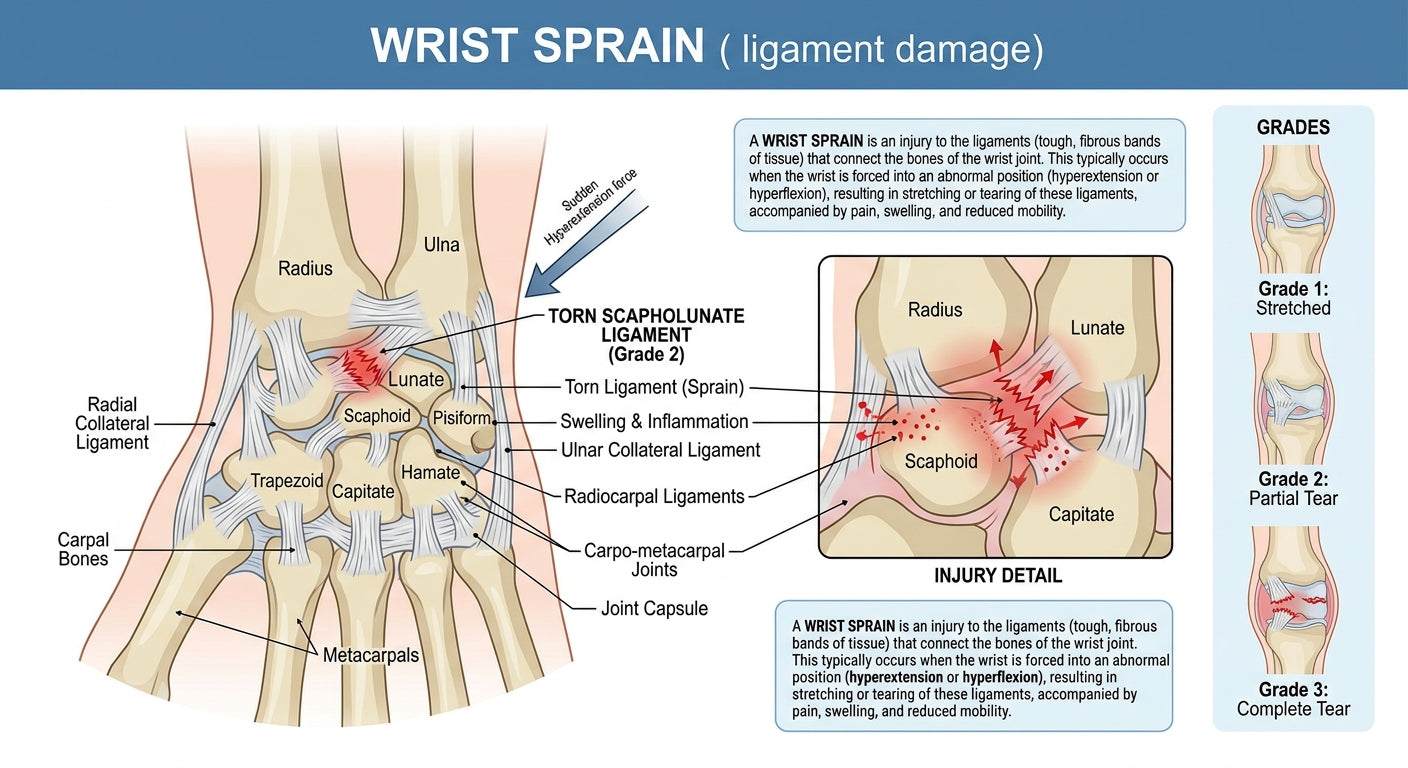
A wrist sprain occurs when the ligaments—tough, fibrous tissues that connect bones to each other—in your wrist are stretched or torn. This common injury can result from various activities, including falls onto an outstretched hand (FOOSH), sports injuries, or sudden, forceful movements that twist the wrist beyond its normal range of motion.
Types and Severity of Wrist Sprains
- Grade 1 (Mild): Involves stretching of the ligament with microscopic tears. Usually causes mild pain, swelling, and tenderness, but joint stability is maintained.
- Grade 2 (Moderate): Characterized by a partial tear of the ligament. Pain is more pronounced, accompanied by noticeable swelling, tenderness, and some loss of wrist function. There might be mild joint instability.
- Grade 3 (Severe): Involves a complete tear of the ligament, sometimes resulting in avulsion (where the ligament pulls a piece of bone away). This grade presents with severe pain, significant swelling, bruising, and substantial instability, often requiring more intensive intervention.
 Compare sprain severity, expected recovery, and immediate RICE steps at a glance — a practical visual to guide next actions and consultations.
Symptoms of a Wrist Sprain
Common signs include:
- Pain at the time of injury, which may worsen with movement.
- Swelling around the wrist joint.
- Tenderness to the touch.
- Bruising, which might appear hours or days after the injury.
- A popping or tearing sensation at the moment of injury (more common in severe sprains).
- Limited range of motion or difficulty moving your hand or fingers.
- A feeling of instability in the wrist.
When to Seek Professional Guidance
While mild wrist sprains can often be managed at home, it’s important to know when to consult a healthcare professional. You should seek guidance if:
- You experience severe pain that doesn't improve with home care.
- There's significant swelling or bruising.
- You cannot move your wrist or bear any weight on your hand.
- You notice a deformity in your wrist or hand.
- Your symptoms don't improve after a few days of self-care.
- You suspect a fracture or a severe ligament tear.
A healthcare provider can accurately diagnose the extent of your wrist sprain using a physical examination and, if necessary, imaging tests such as X-rays to rule out fractures or an MRI for a detailed view of the ligaments.
Treatment and Recovery for a Wrist Sprain
- Rest: Avoid activities that cause pain or stress in the wrist. Give your wrist time to heal.
- Ice: Apply ice packs for 15-20 minutes every 2-3 hours to reduce swelling and pain.
- Compression: Use a compression bandage or sprained wrist support to help minimize swelling.
- Elevation: Keep your wrist elevated above your heart, especially when resting, to further reduce swelling.
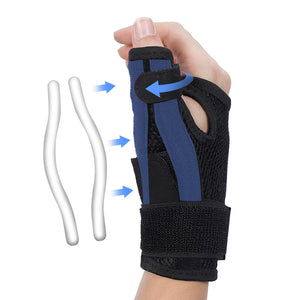
For Grade 2 sprains, beyond RICE, you may need immobilization with a wrist splint or a more rigid support. A wrist brace for a sprain can limit movement and protect the healing ligaments. For instance, a quality wrist splint can offer firm immobilization. As part of your recovery, you might wonder whether wrist braces help with tendonitis if you experience other wrist discomfort.
Physical therapy often plays a crucial role in rehabilitation, especially for moderate-to-severe sprains. Exercises focus on restoring strength, flexibility, and range of motion to prevent stiffness and weakness. Follow a structured program from a professional to support full recovery. If you have a concomitant injury, such as a sprained thumb, you may need a thumb wrap.
Severe (Grade 3) wrist sprains may require more aggressive treatment, including prolonged immobilization, or in some cases, surgical repair to reconstruct torn ligaments.
Preventing Future Wrist Sprains
- Strengthen Muscles: Regular exercises that strengthen the forearm and wrist muscles can improve joint stability.
- Improve Flexibility: Gentle stretching can enhance your wrist's range of motion.
- Proper Technique: When you play sports or do activities that stress your wrist, use correct form and technique.
- Wear Protective Gear: Consider wearing a wrist brace or wraps during high-impact sports or activities where falls are common.
- Mind Your Surroundings: Watch for slippery surfaces or obstacles that could lead to falls.
- Listen to Your Body: If you feel pain or fatigue in your wrist, rest and avoid overexertion.
If you have wrist tendonitis, it is important to know whether you should wear a wrist brace, since support principles can overlap across different wrist conditions.
-
Veröffentlicht in
Wrist Injury