Colles and Smith Fractures
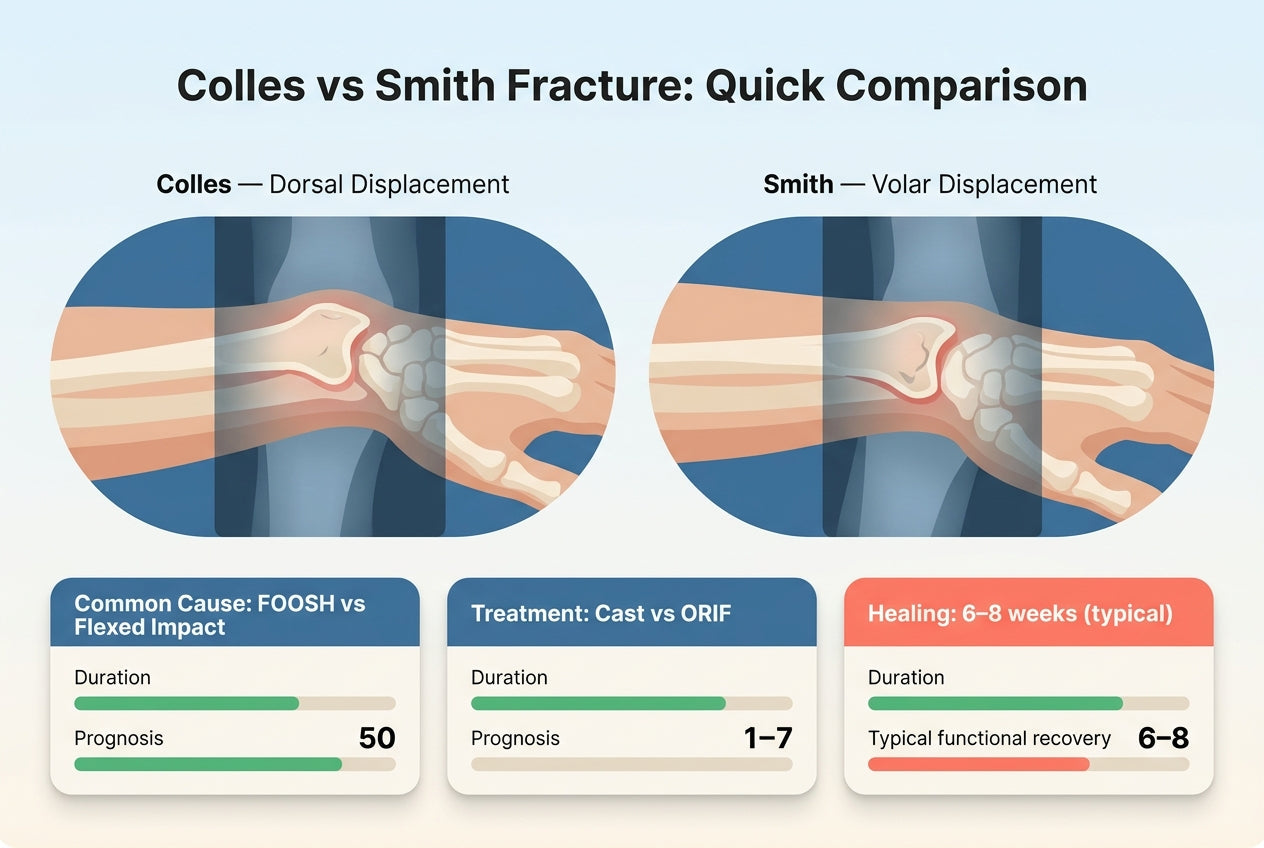
Colles and Smith fractures are common types of wrist injuries involving the distal radius, the larger of the two bones in your forearm, located near your wrist. These fractures specifically affect the end of the radius bone, just above the wrist joint. While both are distal radius fractures, they are distinguished by the direction of the bone fragment displacement and, consequently, their typical causes and appearance. U
A Colles fracture is characterized by the broken end of the radius tilting backward (dorsally). It is often referred to as a "dinner fork deformity" because the wrist appears to curve like an inverted dinner fork. This type of fracture commonly occurs from falling on an outstretched hand (FOOSH) with the wrist extended, a very common scenario in slips, falls, or sports injuries.
In contrast, a Smith fracture, sometimes called a "reverse Colles fracture," involves the broken end of the radius tilting forward (volarly or palmarly). This injury typically results from a fall onto the back of the hand or a direct blow to the back of the wrist, causing the wrist to flex. While less common than Colles fractures, Smith fractures can also lead to significant pain and functional impairment.
Regardless of the specific type, both Colles and Smith fractures cause immediate symptoms such as severe pain, swelling, bruising, and noticeable deformity in the wrist. Movement will be significantly restricted and painful. Seeking prompt medical attention is essential for an accurate diagnosis and the best possible recovery.
Diagnosis of Colles and Smith Fractures
Diagnosing these fractures typically begins with a thorough physical examination. A healthcare professional will assess the wrist for pain, swelling, deformity, and tenderness. They will also check for any signs of nerve damage, such as numbness or tingling in the hand and fingers. X-rays are the primary diagnostic tool for confirming the fracture, determining its exact location and degree of displacement, and assessing whether the joint surface is involved. In some complex cases, a CT scan might be used to get a more detailed view of the bone structure and assess for subtle injuries not clearly visible on X-rays.
Treatment Approaches
The treatment for Colles and Smith fractures depends on several factors, including the type and severity of the fracture, the degree of displacement, and the patient's age, activity level, and overall health.
Non-Surgical Treatment
- Reduction: If the bone fragments are displaced, the bone must first be "reduced," or set back into its correct anatomical position. This procedure, often performed under local anesthesia, ensures proper alignment for healing.
- Immobilization: After reduction, the wrist is immobilized in a cast or splint. This prevents movement and holds the bones in place while they heal. The cast typically extends from below the elbow to just below the knuckles. The duration of immobilization varies but is usually several weeks. It's important to keep the cast dry and clean. During this period, you might find it helpful to explore a variety of wrist braces for future support or a specific wrist brace for pain during recovery or post-recovery activities.
Surgical Treatment
Surgery may be necessary for more complex fractures, such as those that are significantly displaced, unstable, involve the joint surface, or are open (where the bone breaks through the skin). Surgical options include:
- Closed Reduction and Percutaneous Pinning: Pins are inserted through the skin and into the bone to hold the fragments in place.
- Open Reduction and Internal Fixation (ORIF): An incision is made to directly access the fracture, allowing the surgeon to realign the bones and fix them in place with metal plates and screws.
- External Fixation: A frame is placed outside the wrist, with pins inserted into the bone to stabilize the fracture from the outside; often used for severe, comminuted fractures.
After surgery, the wrist will typically be immobilized in a cast or splint to protect the healing bone.
Rehabilitation and Recovery
Rehabilitation is a critical component of recovery for both Colles and Smith fractures, regardless of whether treatment was surgical or non-surgical. Once the cast or splint is removed, the wrist may feel stiff and weak. A physical or occupational therapist will guide you through a personalized exercise program designed to:
- Restore Range of Motion: Gentle exercises will help regain flexibility in the wrist, fingers, and forearm.
- Improve Strength: Gradually, strengthening exercises will be introduced to rebuild muscle strength around the wrist joint.
- Enhance Function: Exercises focusing on fine motor skills and grip strength will help you return to daily activities.
During your rehabilitation, using a wrist splint for pain relief can provide crucial support and comfort. It's also important to follow your therapist's instructions diligently to prevent complications such as stiffness or reinjury. You may need a specialized wrist splint with an aluminum plate support for enhanced stability during certain activities. Understanding how to relieve wrist pain through stretching and proper support is key to a smoother recovery.
Recovery timelines vary greatly depending on the individual and the severity of the fracture. Most people regain good to excellent function, but some stiffness or mild discomfort can persist for months. It's also common to wonder whether to sleep with a wrist brace on during recovery to ensure proper healing and minimize discomfort.
Potential Complications
- Malunion: The bone heals in an abnormal position, leading to deformity and impaired function.
- Nonunion: The bone fails to heal.
- Stiffness: Persistent limited range of motion.
- Nerve Damage: Particularly median nerve compression, which can manifest as Carpal Tunnel Syndrome requiring specialized wrist braces.
- Arthritis: Post-traumatic arthritis may develop in the wrist joint years after the injury.
- Tendon Problems: Irritation or rupture of tendons.
For ongoing support, especially after a sprain or fracture, an effective brace for a sprained wrist can provide comfort and stability as you gradually return to your activities.
-
Veröffentlicht in
Wrist Injury