When and How Long to Wear a Posture Support Safely

With Memorial Day weekend just around the corner and the unofficial start of summer bringing long road trips, hours of yard work, and active backyard barbecues, you might suddenly find yourself hyper-aware of your posture. After hours slouched over a steering wheel or hauling bags of mulch, that familiar stiffness sets in. It’s usually around this time of year—when we want to look and feel our best for summer activities—that many of us start looking for solutions to pull our shoulders back and stand a little taller.
This inevitably leads to a common crossroads: Many beginners wonder, are back braces good for posture?
If you are exploring posture support for the first time, you probably have a few pressing questions. The most critical among them isn't just about what to buy, but rather how to use it safely. Misunderstanding how these tools work is the fastest route to disappointment—or worse, increased discomfort.

The "Training Wheels" Approach to Posture Correction
To get the most out of a posture support, it helps to rethink its purpose entirely. A common misconception is that a posture corrector acts like a rigid shell, doing all the heavy lifting for your spine.
In reality, if you’re wondering do back straighteners work, the answer lies in a biological concept called proprioception—your body's ability to sense its movement and position in space.
Think of a posture support as a set of training wheels for your back. Training wheels don't ride the bike for you; they gently tap the ground to remind you to find your balance. Similarly, a properly fitted posture aid provides sensory feedback. When you start to slouch, you feel a gentle corrective pull against your skin. This physical cue signals your brain to activate your own back and core muscles to correct your stance. True posture improvement comes from this active muscle engagement, not from passive reliance on a strap.
Building Your Safe Usage Plan
Because these supports are meant to retrain your muscles and brain, timing is everything. Understanding how long should you wear a back brace during the day is the secret to unlocking their benefits while avoiding negative side effects.
Step 1: The Gradual Introduction
Your muscles need time to adapt to this new awareness. Starting too aggressively will only lead to fatigue and soreness.
- Week 1: Start with just 15 to 30 minutes a day.
- Week 2: Slowly increase the duration to 30 to 60 minutes, broken up into two sessions if needed.
- The Golden Rule: Never exceed 2 to 4 hours of total wear time in a single day.
Step 2: Cue-Based Wear (The "High-Risk" Strategy)
Rather than wearing your support continuously, use it strategically. Identify the parts of your day when you are most prone to slouching. For many, this is during "high-risk" activities like:
- Sitting at a computer desk for extended hours
- Looking down at a smartphone or tablet
- Driving long distances (like that upcoming summer road trip)
By employing the support only during these activities, you train your brain to associate these specific environments with sitting up straight.

The Danger of Overuse: Why More Isn't Better
The biggest "aha" moment for most beginners is realizing that wearing a support less is actually more effective.
If you strap yourself into a tight support for 10 hours a day, your body eventually stops working. Your core and back muscles figure out that they don't need to hold you up anymore because the straps are doing it for them. Over time, this leads to disuse atrophy—your muscles actually weaken. When you finally take the support off, your posture may end up worse than when you started because the foundational muscles have lost their strength.
This is a crucial concept to grasp, especially when people ask how long should you wear a back brace for lower back pain. Whether for the upper shoulders or lower back, the goal is always to prevent dependency. The support should guide you, not carry you.
Integrating Support with Strengthening Exercises
A posture support is only one half of the equation. To eventually "take the training wheels off," you must build the muscular strength necessary to hold proper posture naturally. Whenever you wear your support, try to incorporate a few minutes of targeted movement.
Simple Desk-Friendly Exercises:
- Chin Tucks: While sitting straight, gently pull your chin straight back (giving yourself a double chin) to align your neck with your spine. Hold for 5 seconds.
- Wall Angels: Stand with your back against a wall, arms raised at 90-degree angles. Slowly slide your arms up and down the wall while keeping your back and arms flat against it.
- Shoulder Blade Squeezes: Imagine holding a pencil between your shoulder blades. Squeeze them together, hold for 3 seconds, and release.

The "Aha" Moment: Why Your Gear Matters
Once you understand the science of gradual, cue-based wear, you realize why the design of the support you choose is incredibly important.
If your goal is to wear a support for 30 minutes while working at your desk to gently remind your muscles to engage, you cannot succeed with a stiff, restrictive, or scratchy harness. It will be too painful to wear, and you'll abandon your safe usage plan by week two.
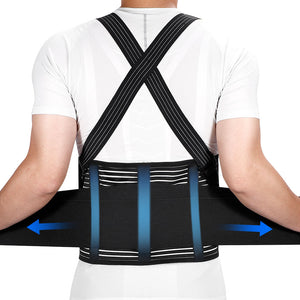
This is exactly why your real-life wearing plan requires gear that adapts to you. You need materials that are breathable enough for summer weather, and most importantly, highly adjustable so you control the level of tension. An ideal choice, like a fivali back brace, focuses on this necessary comfort and adaptability, ensuring the physical cue is gentle rather than forceful.
Frequently Asked Questions
Is it safe to wear a posture support to bed?
No. You should never wear a posture support while sleeping. When you are asleep, you cannot actively engage your muscles. The device will be restrictive, uncomfortable, and completely ineffective for building muscle memory.
How tight should it be?
It should feel like a gentle hug or a light pull. If you experience tingling, numbness, pain, or if the straps dig painfully into your armpits, it is far too tight. Loosen it until it merely acts as a physical reminder when you start to slouch.
When people ask, "are posture correctors good for you?", what is the real verdict?
They are highly effective if used correctly. They are excellent awareness tools when used for short durations and combined with a healthy routine of stretching and strengthening. They are not magical overnight fixes, but rather valuable components of a broader lifestyle change.
Your Next Steps Toward Better Posture
Improving your posture is a marathon, not a sprint. Now that you understand the physiological mechanisms behind these tools and the importance of a phased, gradual approach, you are well-equipped to start your journey safely.
Before you jump in, take a moment to assess your daily routine. Pinpoint those "high-risk" slouching moments—whether it's checking emails in the morning or unwinding on the couch at night. Once you have your usage plan outlined, your next step is to explore supportive gear designed with the adjustability and comfort necessary to turn those daily habits into lasting, healthy posture.