Carpal Tunnel Syndrome
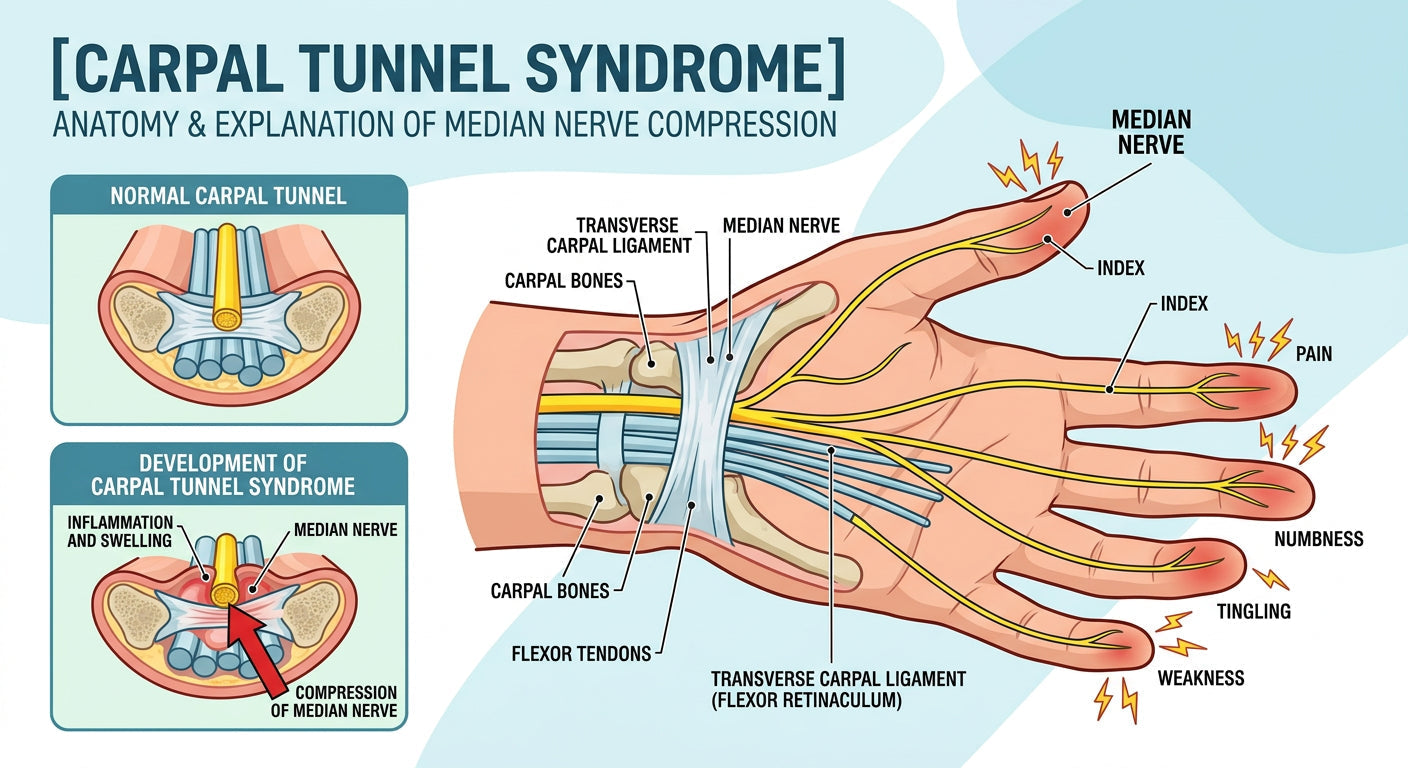
Carpal Tunnel Syndrome (CTS) is a common condition that affects the hand and wrist, characterized by pain, numbness, and tingling. It occurs when the median nerve, which runs from your forearm into the palm of your hand, becomes compressed or squeezed at the wrist. This nerve provides sensation to your thumb, index finger, middle finger, and part of the ring finger, and also controls some of the small muscles at the base of your thumb.
What Causes Carpal Tunnel Syndrome?
The exact cause of Carpal Tunnel Syndrome is often multifactorial, with several factors contributing to its development. The carpal tunnel itself is a narrow passageway of bone and ligament located on the palm side of your wrist. Swelling or inflammation within this tunnel can put pressure on the median nerve. Common causes include:
- Repetitive Hand and Wrist Movements: Activities involving prolonged or repetitive wrist flexion and extension, such as typing, assembly-line work, or certain sports, can contribute to irritation and swelling that compresses the median nerve. Recognizing the early warning signs of repetitive strain injury can be crucial.
- Anatomical Factors: Some people naturally have smaller carpal tunnels, making them more susceptible to nerve compression.
- Underlying Health Conditions: Certain medical conditions can increase the risk of CTS, including diabetes, thyroid disorders, rheumatoid arthritis, and obesity. Pregnancy can also cause temporary CTS due to fluid retention.
- Wrist Injuries: Fractures or dislocations of the wrist can alter the carpal tunnel anatomy and put pressure on the median nerve.
Recognizing the Symptoms of Carpal Tunnel Syndrome.
- Numbness and Tingling: Often described as a "pins and needles" sensation in the thumb, index, middle, and half of the ring finger. This sensation may extend up the arm towards the shoulder. Many people experience hand numbness when the elbow is bent, which can sometimes be confused with or co-occur with CTS.
- Pain: Aching or burning pain in the hand, wrist, and sometimes radiating up the forearm. The pain can be particularly bothersome at night, often waking individuals from sleep.
- Weakness: A sensation of weak wrists or difficulty gripping objects, dropping things, or performing fine motor tasks. This can progress to atrophy of the thumb muscles if left untreated.
- Electric Shock-like Sensations: Occasionally, individuals report shock-like sensations radiating into the affected fingers.
Diagnosis
Diagnosing Carpal Tunnel Syndrome typically involves a thorough medical history, physical examination, and sometimes nerve tests. During the physical exam, a healthcare professional may perform specific tests, such as the Phalen's maneuver (holding wrists in full flexion) or Tinel's sign (tapping over the median nerve at the wrist), to elicit symptoms. Nerve conduction studies and electromyography (EMG) can confirm nerve compression and rule out other conditions.

Treatment Options for Carpal Tunnel Syndrome
Conservative Treatments: For mild to moderate symptoms, conservative methods are usually the first line of defense. These aim to treat carpal tunnel pain without surgery.
- Rest and Activity Modification: Reducing or modifying activities that aggravate symptoms can help. Taking frequent breaks and performing gentle stretches are beneficial.
- Ice Application: Applying ice packs to the wrist can help reduce inflammation and swelling.
- Wrist Splinting: Wearing a wrist splint, especially at night, helps keep the wrist in a neutral position, preventing hyperflexion or hyperextension that can compress the nerve. Many individuals also find relief with a supportive wrist brace during daily activities.
- Medications: Over-the-counter pain relievers like NSAIDs (nonsteroidal anti-inflammatory drugs) can help with pain and inflammation. In some cases, a healthcare professional might recommend corticosteroid injections into the carpal tunnel to reduce swelling.
- Physical Therapy: Specific exercises and stretches can help improve wrist and hand strength, flexibility, and nerve gliding.
Surgical Treatment
If conservative treatments do not provide relief or if nerve damage is progressing, surgery may be recommended. The most common surgical procedure is a carpal tunnel release. This involves cutting the transverse carpal ligament, which forms the roof of the carpal tunnel, to create more space for the median nerve and relieve pressure. This procedure can be performed with an open incision or endoscopically (via small incisions with a camera). Recovery typically involves physical therapy to regain strength and function. For those seeking a wrist brace for pain, post-surgical support is also available.
Prevention Strategies
- Ergonomic Adjustments: Ensure your workstation is set up ergonomically. Keep your wrists in a neutral, straight position when typing or performing tasks. Use ergonomic keyboards and mouse devices if needed.
- Regular Breaks and Stretches: Take frequent, short breaks from repetitive tasks to gently stretch your hands and wrists.
- Maintain Good Posture: Good posture can indirectly reduce pressure on the nerves in your neck and arms.
- Manage Underlying Conditions: Effectively managing conditions like diabetes or rheumatoid arthritis can help prevent CTS.
- Strength and Flexibility: Regular exercises that strengthen the wrist and hand muscles and improve flexibility can be beneficial.
-
Veröffentlicht in
Wrist Injury